A Tragedy for the World: The End of the New START Treaty and What Comes Next
A Tragedy for the World: The End of the New START Treaty and What Comes Next
by John Whitehead
The New START Treaty, an important nuclear arms control agreement between the United States and Russia, expired on February 5th, 2026. Although the Russian government offered to maintain the treaty’s limits on nuclear weapons for at least another year, the Trump administration opted not to accept that offer and simply let the treaty end.
The end of New START is a tragedy for the world. The lack of the treaty’s formal limits on US and Russian nuclear weapons means either or both nations might choose to build more weapons. Such nuclear build-ups might in turn encourage other nuclear-armed nations, such as China, to build more nuclear weapons of their own.
The end of New START also has the subtler effect of undermining the kind of transparency and cooperation among nations necessary to reduce the nuclear threat. The fewer international agreements there are to limit nuclear weapons and to exchange information on such weapons, the less trust there will be among nuclear-armed nations and the less likely they will be to pursue such agreements in the future.
The United States and Russia need to negotiate a new nuclear arms control agreement to replace New START. Until such an agreement is reached, they need to maintain New START’s limits on nuclear weapons.
How Did We Get Here?
The New Strategic Arms Reduction Treaty (START) was signed by US President Barack Obama and Russian President Dmitri Medvedev in 2010 and went into effect in 2011. New START limited the United States and Russia to each possessing 1,550 deployed strategic nuclear warheads. “Deployed” means the warheads are not simply kept in storage but are loaded onto missiles, bombers, or submarines and can be used relatively quickly. “Strategic nuclear warhead” means the warheads have a very high (by nuclear weapons standards) destructive power.
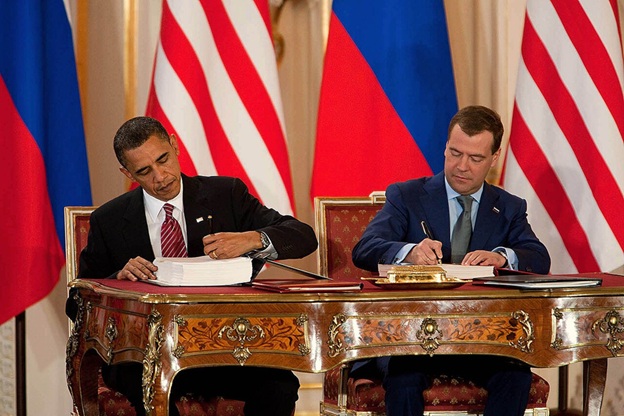
Beyond the limits on nuclear weapons, New START also required regular information exchanges between the United States and Russia about the weapons covered by the treaty and allowed inspections within each country to check compliance.
For peace activists, New START had definite flaws. The limit of 1,550 strategic weapons still gave each country more than enough nuclear weapons to destroy humanity. Further, the treaty did not cover non-strategic nuclear weapons, which are comparatively less powerful but still enormously destructive.
Still, the treaty continued the general trend since the 1980s of reducing the numbers of nuclear weapons of world. The treaty also provided some transparency about what the two nations with the largest nuclear arsenals were doing with their weapons.
The Covid-19 pandemic led to a suspension of nuclear inspections under New START, but the treaty received a five-year extension in 2021, under the Biden administration. After that, New START has grown progressively more precarious.
In September 2022, following the Russian invasion of Ukraine, Russia stopped sharing information about the nuclear weapons covered by New START. Early in 2023, Russia suspended its participation in the treaty. Shortly thereafter, the United States curtailed its own information sharing about nuclear weapons.
Despite the tense US-Russian relationship, maintaining New START’s nuclear limits seemed possible. Last September, Russian President Vladimir Putin extended an apparent olive branch by proposing to abide by the treaty’s limits on nuclear weapons for at least one more year. US President Donald Trump initially seemed sympathetic to the idea.
However, the Trump administration ultimately did not pursue the Russian offer. The president seemed unconcerned about New START’s end, telling the New York Times in January, “If it expires, it expires. We’ll do a better agreement…. I’d rather do a new agreement that’s much better.”
Why Did We Get Here?
Why the Trump administration did not take the Russian offer, especially given the short-term initial commitment involved—adhering to New START limits for only a year—is puzzling.
One possible reason is that the administration aspires for a broader nuclear arms control agreement that involves countries other than the United States and Russia. This could be the “better deal” Trump referred to.
Such an aspiration was recently expressed by Thomas DiNanno, the under secretary of state for arms control and international security, at a UN-sponsored disarmament conference. DiNanno said that “The next era of arms control can and should continue with clear focus, but it will require the participation of more than just Russia at the negotiating table.”
The administration may be particularly concerned with bringing China to the negotiating table. In his January interview with the Times, Trump said, “I actually feel strongly that if we’re going to do [a New START extension], I think China should be a member of the extension. China should be a part of the agreement.”
However, if the administration ignored an opportunity to maintain New START limits in pursuit of some hypothetical future arms control negotiations involving China, that was a woefully misguided calculation. Attempts to negotiate a three-nation treaty involving China are unlikely to succeed. A Chinese Foreign Ministry representative has explicitly said China “will not participate in nuclear disarmament negotiations at this stage.”
Chinese reluctance to participate in arms control negotiations is understandable. Although China has reportedly been expanding its nuclear weapons arsenal, the country still has dramatically fewer nuclear weapons than either Russia or the United States—China has roughly 600 weapons relative to the thousands possessed by the other two nations. Expecting China to limit or reduce its nuclear arsenal in tandem with the United States and Russia is, from a Chinese standpoint, unreasonable and unfair.

Another influence on the Trump administration’s refusal to accept the Russian offer may simply be a general aversion to international agreements. Trump and his associates may prefer not to have American actions constrained by treaties and may have let New START end so US nuclear weapons would no longer be subject to the treaty’s limits.
Such an attitude raises the ominous possibility that the administration’s next step will be to expand the US strategic nuclear weapons arsenal. This could involve taking weapons currently in storage and deploying them on missiles again.
Expanding the US nuclear arsenal would not only be dangerous in itself but could spur the Chinese to even more intense efforts to expand their own nuclear arsenal, thus achieving exactly the opposite of what the Trump administration says it wants. Grave as it is now, the nuclear threat could become even more severe in the near future.
What Do We Do Next?
For peace activists, our basic goal has not changed. We need to lobby for the United States and Russia to negotiate a new nuclear arms control treaty to replace New START. Until such a new agreement is reached, both nations must refrain from increasing their nuclear arsenals beyond the New START limits. That was the goal before New START’s expiration, and it continues to be the goal afterwards.
US citizens should contact their representatives in the House and their Senators to urge them both to support renewed nuclear arms control negotiations with Russia and to oppose any increase in the number of US nuclear weapons. The Arms Control Association provides a guide on how to send such messages to members of Congress.
Americans can also send messages to President Trump by email or phone (202-456-1111) urging him to pursue arms control negotiations and to abide by New START limits. Sending these messages makes it clear to the president that many people want to reduce the nuclear threat.
Nevertheless, the failure of the Trump administration to grasp even such a low-hanging fruit as the Russian offer to abide by New START for just one more year suggests we will see little positive from the president in this area. Meaningful progress on nuclear arms control may well have to wait for a different administration.
Peace activists therefore need to prepare for a long-term, sustained effort to advocate for new nuclear arms control agreements. We need to keep this issue in the public eye until a more favorable political situation emerges.
=========================
For some of our many posts on nuclear weapons policy, see:
Reasons to Fear, Reasons to Hope: The Nuclear Threat after 80 Years
Persuading People to Act against the Nuclear Threat: Some Findings and Recommendations
Nuclear Disarmament as a Social Justice Issue
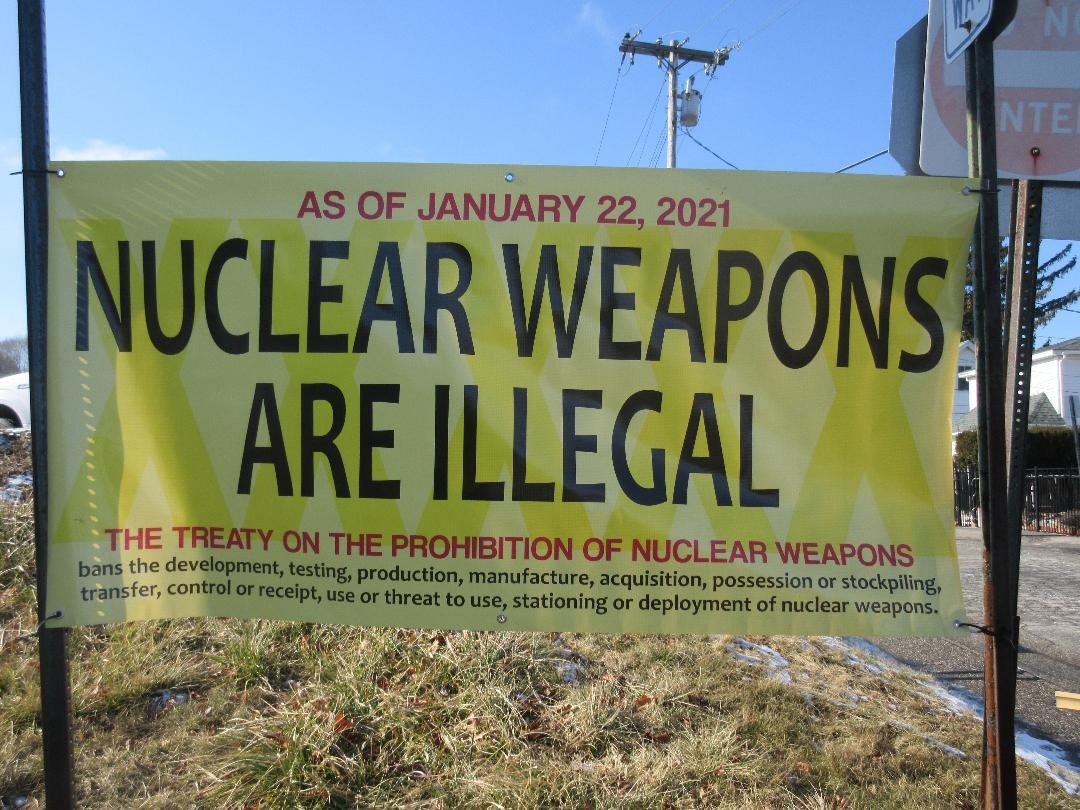
A Global Effort to Protect Life: The UN Treaty Banning Nuclear Weapons
Nukes and the Pro-Life Christian


Leave a Reply