In Vitro Fertilization
by Jim Hewes
The Alabama Supreme Court affirmed that embryos are children — bringing significant attention to the future of In Vitro Fertilization (IVF) treatments in the state. The ruling followed lawsuits filed by several couples who were suing for wrongful death after an IVF clinic carelessly dropped and destroyed their frozen embryonic children. Then Alabama lawmakers passed legislation protecting the practice of IVF in the state, which the governor signed into law.
The first “test tube baby” (Louise Brown) was born in 1978, a term that carried a negative connotation at the time. Since then, more than 12 million of these babies have been conceived through in vitro fertilization. In the United States between 1 and 2 percent of all children born each year are conceived through IVF. The latest data reported in March 2026 show that over 100,000 babies resulting from IVF were born in a single year.
Embryos
In addressing the issue of IVF, it’s essential to affirm that how a child is conceived has no bearing on his or her inherent dignity and incalculable value. Human dignity is intrinsic, never earned or achieved. Children conceived through IVF are worthy and precious. Likewise, children conceived by any circumstance –prostitution, incest, rape, human trafficking, adultery, a casual relationship, etc.— are equally precious. Every child must be treated and loved the same regardless of the circumstances of conception.
A central concern is the fate of embryonic children of immeasurable value. The human embryo is a person, and so deserves love, respect, and protection.
If a couple chooses to create multiple embryos, what happens to those who are not transferred? Human beings don’t belong in a glass petri dish, nor should they be frozen indefinitely or used for research or destroyed as surplus.
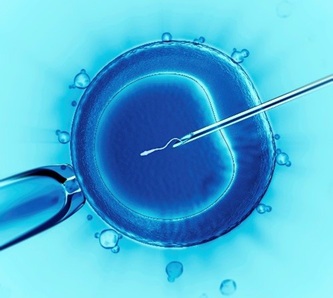
This includes the embryonic children’s lives ended by “selective abortions” because they’re found defective or unwanted. These practices raise serious moral questions about how embryonic life is treated.
In reality, IVF involves the treatment of these tiny vulnerable lives as a commodity, property possessed by the parents. “Quality control” is a form of eugenics when only the “best” embryos are used. The others, the ‘leftovers,’ are eliminated by selective abortion, destroyed in the lab, or frozen indefinitely.
The Loss of Embryonic Life
Writing in Public Discourse, Stephen Austin explains that in 2019, out of a million embryos involved in IVF cycles, 84,000 made it to term. The remaining 900,000 didn’t make it to birth. The medical process has an extremely high failure rate.
In addition, there’s what happens with those estimated 400,000 to 1,500,000 embryonic children, the castoffs of a well-funded industry, where couples who choose IVF face cruel choices yearly. They’re typically asked to pay $600 or more a year to keep their embryonic children in a frozen limbo (with possible embryo degeneration) rather than have them just “discarded.”
IVF and Abortion: A Shared Logic
Katy Faust, in her book Them Before Us: Why We Need a Global Children’s Rights Movement argues:
Abortion and third-party reproduction are two sides of the same child-commodifying coin. Both abortion and reproductive technologies determine a child’s rights based on whether the child is wanted. Abortion advocates say “If children are unwanted, you can force them out of existence even if it violates their right to life.” Advocates of third-party reproduction say “If children are very wanted, you can force them into existence even if it violates their right to their mother and father.”
The focus of IVF and abortion is on the adults’ dreams, hopes, longings, suffering, fear, and desires. The child is secondary, then required to accommodate adult feelings. . . In both industries, children must be regarded as objects of rights, not objects of adult preferences.
International Legal Approaches
Some countries’ practices show us alternatives to the “wild, wild west” of current IVF practices in the United States.
Although far from perfect and not stopping every preventable injustice done to embryonic children, Germany enacted an Embryo Protection Law during the 1990s, which included provisions outlawing the freezing of human embryos. Italy has similar legislation in force. Both countries closely regulate in vitro fertilization treatments and allow the production of no more than three embryos at a time, all of which must be implanted into their mother. This is still wrong, but less of a “wild west” approach.
Both countries forbid the production of extra embryos, experimentation on embryos, embryo cloning, and genetic testing of embryos – even knowing that such laws might lower the percentage of “success.”
Such restrictions could go a long way towards stemming the tide of human exploitation, so that IVF is no longer commonplace.
Restorative Reproductive Medicine
 NaPro Technology and Creighton are forms of natural family planning that incorporate scientific research and advanced medical techniques for predicting ovulation and levels of fertility. See also Springs in the Desert, and Stephanie Gray Connors’ book Conceived by Science.
We can also raise awareness of the positive options of adoption, foster care, and spiritual parenthood.
============================
For other of our posts from author Jim Hewes, see
Abortion and Other Issues of Life: Connecting the Dots
Reflections from My Decades of Consistent Life Experience
Exposing Injustice Through Graphic Images
Death Penalty and other Killing: The Destructive Effect on Us


One concern with in-vitro fertilization (and cloning) is that children conceived naturally might be looked down on or considered too undesirably unpredictable.