Changing our Thinking & Preventing Another World War
by John Whitehead
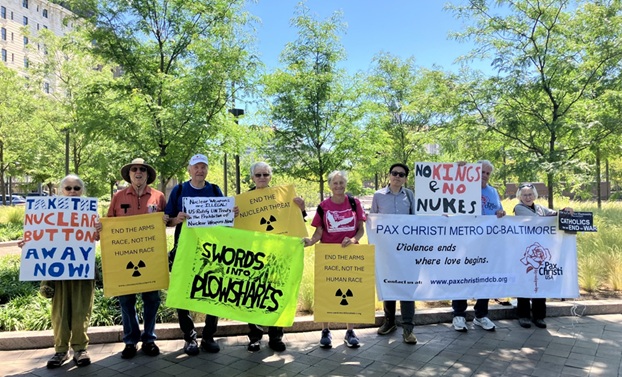
The Consistent Life Network held its most recent vigil against the threat from nuclear weapons on May 16th. In the past, the vigil has been held outside the White House. However, the area around the White House is currently closed off to the public, so we had to gather elsewhere in Washington, DC.
The May 16th vigil took place at Pershing Park, which was in its own way an appropriate location for a witness against violent threats to human life.
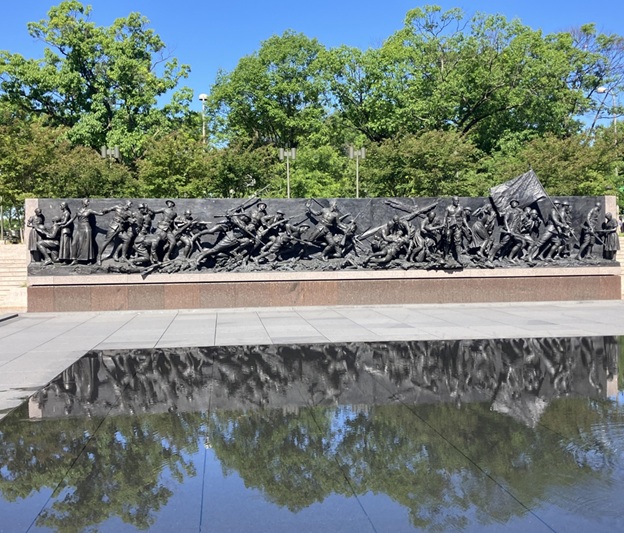
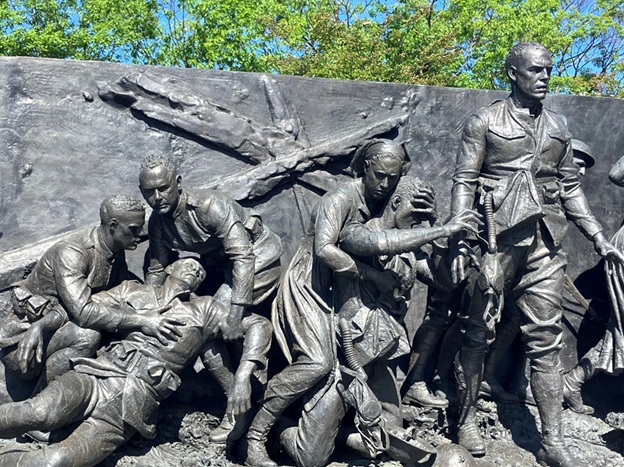
Pershing Park is the site of a monument dedicated to remembering the First World War. The First World War was a global catastrophe that claimed millions of lives, including the lives of over 100,000 Americans. The First World War also helped to sow the seeds of later global catastrophes.
The First World War was followed by the even more bloody and destructive Second World War, which claimed tens of millions of lives. The Second World War led to the invention of nuclear weapons, which were used to destroy the cities of Hiroshima and Nagasaki. The world wars of the 20th century brought us into the nuclear age we live in today.
The Third World War
In the nuclear age, we live under the constant threat of a Third World War, fought with nuclear weapons. A Third World War would claim billions of lives and would be the final global catastrophe for humanity.
Today, more than 100 years after the First World War and more than 80 years after the Second World War and the invention of nuclear weapons, the nuclear threat remains very real and severe. In fact, it has grown more severe in recent years.
The two countries that possess the largest numbers of nuclear weapons are the United States and Russia. The current tensions between the United States and Russia could escalate into war. The ongoing war in Ukraine, which has pitted Russia against the United States and other nuclear-armed nations that belong to NATO, could be the spark that sets off a global firestorm.
Meanwhile, the network of international treaties that were meant to limit the numbers of nuclear weapons in the world and to reduce the nuclear threat have gradually fallen apart. The New START Treaty, which limits the numbers of American and Russian nuclear weapons, tragically expired without being renewed earlier this year.
In light of the nuclear threat, two major pieces of legislation currently before the US Congress seek to establish new limitations on nuclear weapons (H.Res 100/S.Res 61) and to pursue other measures to reduce the dangers of nuclear war (H.Res 317/S.Res 323). Americans can and should lobby their representatives and senators to support both these pieces of legislation.
However, responding effectively to the nuclear threat requires more than just political action in the conventional sense. Responding to the nuclear threat requires a change in thinking. Not just a change in the thinking of politicians, but in all of us.
Two Changes
We need to become more aware of and informed about the nuclear threat.
The world’s leaders are unlikely to act against the nuclear threat if the world’s peoples are ignorant of or indifferent to the threat. People need to know:
- the harm nuclear weapons can cause
- how many nuclear weapons there are in the world
- which nations possess nuclear weapons
- how nuclear war might occur
- what measures have been taken and can be taken in the future to reduce the threat
Some progress is being made in this area, but more needs to be done. Activists, educators, faith leaders, and journalists need to speak out on this issue.
Awareness and discussion of the global nuclear threat should be as common as awareness and discussion of global climate change. I would note that these two threats are related: nuclear weapons destroy not only people but the environment, and the struggle against nuclear weapons can and should be tied into the larger cause of protecting the environment.
One place to start in learning more about the nuclear threat are the resources of the Back from the Brink campaign. Back from the Brink offers an online “Beginner’s Guide to Nuclear Weapons” and other educational resources. The International Campaign to Abolish Nuclear Weapons also has useful educational materials.
We need to change our larger ideas about international relations.
We need to reject the nationalistic, competitive, and often paranoid ideas that frequently dominate relationships among nations.
These views include the idea that our own country’s good is all that matters and that we don’t need to pay attention to the welfare of other countries or the welfare of the planet. They include the idea that if another nation displays suspicion or hostility toward us, we should always respond in kind. Above all, they include the idea that building a bigger, more powerful military is how we make our country safe in the long run.
These ideas are sometimes praised for being “realistic,” but they are not. Mutual suspicion, hostility, and military competition lead to arms races and increase the dangers of war. Building large, powerful militaries increases the likelihood that policymakers will use them to fight wars.
These ideas also stand in the way of the cooperation that is necessary to address global problems that affect all humanity, not least the threat of nuclear weapons. Such ideas are not realistic but woefully short-sighted.
Rather than falling back into fear and hostility, we need to recognize the value of reducing tensions and trying to build cooperative relationships among countries. Even if conflicts among countries persist, as they likely will, we need to be prudent enough to recognize that it is in everyone’s interests to reduce the danger that conflicts will escalate to the nuclear level.
Let’s change our thinking, educate ourselves and others, and act prudently so that the First and Second World Wars are never followed by a Third World War.
=====================
For more posts on this topic, see:
A Tragedy for the World: The End of the New START Treaty and What Comes Next
Mourning the Dead and Protecting the Living: Remarks from the August 9th Peace Vigil
Persuading People to Act against the Nuclear Threat: Some Findings and Recommendations
Nuclear Disarmament as a Social Justice Issue
Nukes and the Pro-Life Christian: A Conservative Takes a Second Look at the Morality of Nuclear Weapons
Or check out the Nuclear Weapons section in our list of all our posts.


Leave a Reply