My Personal Journey on Veganism, War, and Abortion
by Frank Lane

Frank Lane
I’ve been an ethical vegan for about 28 years and a vegetarian for 16 years before that. My passionate conviction came from a profound sense of the sacredness and wonder of my existence, the natural world, especially the unborn, animals, and trees.
I was a registered conscientious objector to war and refused to kill when asked by my country. But on the flip side of that principle, I am a black belt in martial arts, where I learned how to severely protect by force for those that could not protect themselves.
This may sound like a dichotomy of principles, but I think not. A soldier will give his/her life or take life, for the greater good based on principle. It is our principles that determine our ethics.
When I am fighting for the greater good, I become my principles.
At 16, I broke away from the whole of the war machine and became part of the whole of the peace movement. I became an individual part of bringing peace to a warring world. This is when my principles started to fall into place, especially the first time I was told, “Meat is Murder.” I was stunned by the inference that one could be thought of as a murderer for killing animals.
I had to consider deeply how my act of contributing to the slaughter of millions of animals a day was affecting peace on the planet and in my soul.
When I was called for military service, it turned my world upside down, because I was being asked to kill my unknown brothers and sisters.
The killing of babies or veal calves or the Holocaust of Jews and the disabled demonstrate a lack of reverence for life. When we lose our respect for the sacredness of life, as in the case of viewing those with disabilities as having less value than other life, we break the link with the holiness of life. Living this honoring of the sacredness of life makes us spiritual beings.
In a public demonstration, activists gathered thousands of baby dolls, poked holes in them and painted them blood red to mimic an aborted baby. They then threw them like garbage onto the lawn of the White House to depict only one hour’s worth of aborted babies.
To add insult to injury, the activists demanded in jest that at least the abortion industry should organize a system to gather the aborted and process the carnage for animal food! This was done to draw a parallel to using the body parts of Holocaust victims for other purposes, such as using their bones for bone china or needles.
When anyone becomes aware of the suffering, it is an opportunity for personal growth. But at the same time we can close our eyes in denial. This is especially true when we experience a level of awareness and compassion for the bloodbath horrors of torture, agony, and suffering of animals, babies in the womb, or those in concentration camps. Our participation, however removed from these acts of abject torment, makes us cogs in the machine of mass murder.
I found solace in the notion that “All Life is Sacred,” bringing me to peace with a respect for all life. So when I was asked to take another person’s life by my country, I knew this was the most significant demand ever placed on me. My answers come from the highest respect for life, “Thou Shalt Not Kill.”
So, with that notion in mind, I took a college ecology class to learn how to save the world. I was shocked when the professor told us to go out and kill an overpopulated species to balance out the “ecology.”
Here was the hard and determining test for abortion; when the life of the mother was at peril and an abortion became a medical necessity. This gives perspective on how to decide on the issue of taking life for the greater good.
The underlying guiding morality became clear: all life is sacred, and worthy of respect, even when killing is required. The American Indians honored the animals they killed for survival with great reverence. The word “survival” is the operative word that we must consider in these moral decisions.
We must ask: does our existence depend on the killing and suffering of animals? A soldier, doctor, politician, and butcher, all kill with a level of discernment. There are rules and regulations to our moral ethics of killing that appease our conscience.
One only needs to watch the horrific terror animals go through in a slaughterhouse to see unspeakable horror. Babies are stolen from their mothers, raped to become pregnant, left shaking with fear from the smell of blood and by hearing the cry of other animals. There is nothing more frightening than this holocaust of torture, pain, and suffering. If this living hell had to have glass walls, it would never exist.
Abortion has become as common and acceptable as destroying the environment for hamburgers.
Abortion is the original “Inconvenient Truth.” Without compassion for all life, we limit our spiritual convictions. Just as all things are connected, so is our compassion to every creation of life.
Your level of awareness will dictate your behavior. Your spiritual awareness will dictate your spirituality. It was this awakening that led me to honor the sacredness of life and a non-violent diet. That same awakening from ego, selfishness, lack, and fear turned my heart to the sanctity of the unborn.
There is a time to live and a time to die. As an ethical vegan and person of faith in the sacredness of all life, I find this awareness trumps all other conditions, leading my soul to seek a congruency for the honoring of creation for myself, others, the animals and planet.
=================================
For more of our blog posts that include veganism as a concern, see:
Beyond the Human – Plus Everyday Peace Actions
Parallels of Veganism and Prolife-ism
Movies with Racism Themes: “Gosnell” and “The Hate U Give”
by Rachel MacNair
A note at the beginning of the movie Gosnell: The Trial of America’s Biggest Serial Killer lets us know it’s based entirely on court transcripts and eyewitness accounts, being as true to events as a movie can attempt. The Hate U Give, on the other hand, is fiction. Yet it’s clearly based on actual events currently in the news – U.S. police killings of unarmed African Americans. Both show the nuances and complexities of real life, and of racism.
 The title of The Hate U Give has an acronym: T.H.U.G. The full phrase is: the hate you give fouls everyone up (non-swear-word version). The movie is an excellent illustration of the point, which comes up frequently.
The theme of racism appears early in Gosnell, because in addition to all the sensitivities of investigating an abortion doctor, Kermit Gosnell is black. So is there a racist component in picking on him?
Yet it’s made clear in the movie (in a point we reported when this case became a major news story) that Gosnell put white women upstairs under more pleasant and professional circumstances. It was black and brown women who were selected to be in the most horrifying conditions of his facility.
The revolting state of his abortion practice, as well as his house where the basement was flea-infested, may puzzle many. But my own studies in psychology give a possible explanation: he was emotionally numb and detached from other people as symptoms of being severely traumatized. Killing people is traumatizing, and I’ve found this across all different forms of killing (including abortion, war, executions, police shootings, and criminal homicide). Gosnell’s behavior while being investigated shows these particular symptoms in abundance.
His behavior also portrays a difference between Perpetration-Induced Traumatic Stress (PITS), a form of Posttraumatic Stress Disorder, and a more recent concept: Moral Injury (MI). MI has the advantage of covering much more by way of symptoms, since it includes substance abuse and spiritual struggles. But it has a major restriction, one that helps explain why it arose in military veteran therapist circles and is primarily applied there. It requires, in the case of an act of killing, that the killing is seen by the person doing the killing as something he or she did wrong. Most violence, including what soldiers are expected to do, is done by people quite sure that what they’re doing is right. That keeps the MI label from applying. That label certainly didn’t apply here, as Gosnell declared he wouldn’t take a plea deal because he had done nothing wrong.
Thinking the violence is justified also applies in the case of police shootings. The racism in The Hate U Give is obvious, since it’s the reason why a young man reaching for his hairbrush was mistaken for someone reaching for a gun and shot dead. The idea of justifying the shooting on the idea it could have been a gun was exposed as racist: another cop confirmed that had he been a white man, the same behavior would have brought a yelled instruction to move away from the car, rather than a shooting.
The subtlety that racism can have was also on display: among the white students who walked out of school in a Black Lives Matter protest were those gleeful that they could now miss a chemistry test. This naturally distressed the black heroine of the movie, who’s also a student at the primarily white school. She was in the passenger seat at the time of the shooting, and the victim was a childhood friend of hers, so of course her sense of trauma was intense. But when one of her white friends expresses sympathy for the white officer having to go through family and job troubles and stigma because of the shooting, the underlying racist assumptions become clear to the audience. The white student herself can’t see them.
So both movies offer insights on the current problems of racism in U.S. society, and they both end positively with the immediate problem dealt with. Yet neither one addresses the far more permanent and society-wide solutions. For Gosnell, that’s making abortion unthinkable. For The Hate U Give, community policing is a major alternative. If police officers and the communities they serve have frequent friendly interaction, the officer is far less likely to say the racist things that, in this case, made the interaction far more tense than there was any reason for – the stop was only for failing to signal when changing lanes. Nor would the officer be so freaked out about a fellow reaching into his car if he’d conversed with the same fellow just last week.
Among those who favor abortion availability, their proposed solution is to have upstanding places such as Planned Parenthood available as an alternative to such back-alley practices. This ignores the fact that PP was quite available all through the years that Kermit Gosnell operated and didn’t seem to have stopped him; it was the court case that stopped him. And he would have been stopped earlier if the state of Pennsylvania weren’t deliberately ignoring health code violations inflicted on his non-white clients. Also, another movie is on the way to address this proposed solution: on March 22, 2019, the movie Unplanned, based on Abby Johnson’s book of the same name, is due out. It tells Abby Johnson’s story of having been Planned Parenthood facility manager who left and joined the pro-life movement. Abby showed us some clips at the Sidewalk Advocates for Life conference, and it promises to be an excellent follow-up to the Gosnell movie in showing that “reputable” abortion centers aren’t the solution to unreputable ones.

The Hate U Give is a movie that came out around the same time as Gosnell, which is why it was chosen for comparison. There are many excellent movies on themes of lethal aspects of racism (for this year, BlacKkKlansman also deserves a mention). There have been many throughout the years and will undoubtedly be many more.
I think Gosnell should also be in that category. It was ranked #10 in audience size on the weekend it came out, but I had to travel way across town to find a theater showing it. I normally walk to the movies I want to see. So it didn’t get the kind of coverage most other movies do. But it shows a case where abortion is one of the lethal impacts of racism.
=============================================
For more of our posts on movie and television reviews, see:
Hollywood Movie Insights (The Giver, The Whistleblower, and The Ides of March)
Hollywood Movie Insights II (Never Look Away, The Report, and Dark Waters)
Jasmine, Aladdin, and the Power of Nonviolence /
The Darkest Hour: “Glorifying” War?
The Message of “Never Rarely Sometimes Always”: Abortion Gets Sexual Predators Off the Hook
For more on lethal racism, see:
Historical Black Voices: Racism Kills
How to Move from Theory to Practice: Reading “A Consistent Life”
by John Whitehead

Mary Grace Coltharp
Let’s say you’ve succeeded in winning someone over to the consistent life ethic. This person now wants to defend human life against abortion, the death penalty, euthanasia, war, and the myriad other threats to life. Now the question arises, “What should I do to promote the consistent life ethic?” A valuable new resource is now available for such a budding activist: A Consistent Life: The Young Advocate’s Guide to Living Peace & Justice Daily by Mary Grace Coltharp and Aimee Murphy, published by Consistent Life Network member group Rehumanize International.

Aimee Murphy
The authors, an intern for Rehumanize and the group’s executive director, respectively, carefully lay out a full year’s worth of study and activities to deepen someone’s commitment to advancing the consistent life ethic. Although aimed at students and other young people, the guide is useful for anyone trying to do consistent-life-ethic work in their community.
The book has 52 chapters, for each week in a year, with each week dedicated to exploring a different aspect of the consistent life ethic. The authors write about these different aspects of the ethic in an admirably positive way. Rather than presenting the week’s theme as opposition to a particular injustice, each theme is presented as recognizing the humanity of a different vulnerable or oppressed group—“re-humanizing” those who are too often dehumanized. Each week’s theme begins with the introductory phrase “Who you will rehumanize:” with the focus of this rehumanization including groups such as “human beings at the embryonic stage of development,” “human beings who are or have been incarcerated,” “human beings victimized by human trafficking,” or “elderly human beings and those living with terminal illnesses.”
For almost every week, the authors have identified five different activities by which guide users can deepen their commitment to the relevant group. These activities are nicely balanced, combining direct service to those at risk from violence, lobbying for laws and public policy, learning more about these issues, and raising awareness. The guide also frequently encourages artistic expression. In the section “Who you will rehumanize: human beings living with mental illnesses,” for example, the week’s recommended activities are:
- Look into organizations to see where you can volunteer and how you can help. Some organizations to look at are: National Alliance on Mental Illness, Suicide Prevention Lifeline, American Foundation for Suicide Prevention, Suicide Awareness Voices of Education.
- Write a song. Be creative and express yourself and the issues of mental health stigma or something else related.
- Find a song, share, discuss. Try to find something with a positive message, maybe about getting help if you need it.
- Look into how the government, state or federal, funds mental health care. Is it enough? Can it be improved? How?
- Call or write a government official about improvements. Maybe the Department of Health and Human Services could be doing more. You don’t have to know everything about an issue, just demonstrate that this issue matters to your representative’s constituents.
Activities under rehumanizing “human beings victimized by racism” include “Re-evaluate yourself and your thinking. Think seriously and don’t write off racism as not affecting you” and “Research influential court cases within the topic of America’s long battle with and fight for equal rights.” Activities under rehumanizing “preborn human beings and their parents” include “Invite your pro-life friends over to create handmade signs for a march for life” and “Volunteer with a [pregnancy resource center.]” Each week’s activities are also carefully structured, with the most challenging activity coming at the end of the week.
An aspect of the recommended activities that is particularly thoughtful and welcome is the frequent inclusion of self-care activities such as “Today take a bath or nap to rejuvenate” or “Rehumanize yourself. You could read a heartwarming story that will lift your spirits.” Quotations from notable people such as Gandhi, Martin Luther King, and the anti-death penalty activist (and Consistent Life Network endorser) Sister Helen Prejean are also interspersed throughout the book. A list of recommended reading and viewing appears at the end, with the Consistent Life Network’s book Consistently Opposing Killing included among them.
 The guide will be a valuable resource for student organizations, faith communities, and other groups that want to promote the consistent life ethic in their communities. The diverse array of topics covered and the broadly defined activities allow different groups to develop their own unique activism that emphases the issues most relevant to them and their communities. The guide allows for such flexibility to the extent of leaving the book’s final week of activities blank: activists can decide for themselves which theme and activities to pursue that week.
I would offer a couple minor criticisms of the guide’s treatment of war. In keeping with Rehumanize International’s mission statement opposing “unjust war,” the guide refers to rehumanizing “human beings impacted by unjust wars.” The term “unjust war” is a controversial one within the consistent life ethic movement, as pacifists would reject the qualification “unjust” as implying war ever could be justified. Acknowledging and addressing this philosophical diversity within the movement would have been helpful.
Further, even if one accepts the concept of “just and unjust” wars, the book offers little information or guidance on how an activist should determine whether a particular war is unjust. A quoted passage reviewing two Just War Theory principles is certainly welcome (not least because it is a quotation from something I wrote!) but a full account of Just War Theory is lacking. Should the guide have a future edition, a summary of Just War Theory principles or a reference to resources that provide such a summary would be worth including.
These are quibbles, however. A Consistent Life is generally an excellent resource for consistent life ethic activists wishing to translate their convictions into practice. It deserves a wide distribution and readership.
==========================================
For more book reviews on our blog, see:
A Way Beyond the Abortion Wars? / reviewed by Bill Samuel, book by Charles C. Camosy
Defenders of the Unborn: The Pro-life Movement Before Roe v. Wade / reviewed by Carol Crossed, book by Daniel K. Williams
The Tragedy of Carrie Buck: A Review of Imbeciles / reviewed by Mary Lou Bennett, book by Adam Cohen
The Impact of Abortion on Child Abuse
by Rachel MacNair
 Here’s the reasoning for an assertion that abortion availability helps reduce child abuse:
- Abuse can be caused when children were born unwanted and are therefore resented.
- There may be fewer births in those groups most likely to engage in child maltreatment.
And here’s the reasoning to think abortion availability helps increase child abuse:
- It removes a taboo on hurting children.
- It leads to children being treated as consumer product, rather than human beings, adding a requirement of “wantedness” that children shouldn’t have to meet.
And of course abortion may have no impact at all. But let’s look at the evidence to see which reasoning works best with the facts.
Types of Abuse
- Neglect.
That the children were never wanted – yet not placed for adoption – is one explanation for why they’re neglected.
Other possible explanations: parents are ignorant of what children need; are too self-absorbed to notice their children’s needs; were raised this way themselves; have an idealized view of having children without knowing what kind of work is involved; intended to have a baby but aren’t interested in the child that the baby turned into; substance abuse; or mental illness. These reasons call for interventions that have nothing to do with the availability of abortion.
- Physical abuse and emotional abuse.
This could happen when the child was never wanted – but not placed for adoption – and therefore her or his presence is resented.
It could also happen for the opposite reason: the child is super-wanted, but with unrealistic expectations. The child is supposed to follow the father into the family business, but shows no interest. Or is expected to be brilliant in math but is mathematically inept. The child is a real person who refuses to be perfect.
Also: the child is a scapegoat for other frustrations; the parents were raised this way and understand this is how it’s done; substance abuse; or mental illness.
Nevertheless, if unwantedness is one of the reasons, then abortion availability should reduce abuse in at least those cases involving undesired children.
- Sexual abuse.
In this case, it’s quite clear that unwantedness isn’t the problem – the children are “wanted” for the wrong reason.
The Rise and Fall of Child Abuse Rates
Focusing on the U.S.: Child abuse rates skyrocketed after the 1973 Roe v Wade decision legalizing abortion in all 50 states.
However, correlation isn’t causation. An alternative explanation is that it wasn’t that more child abuse was actually happening, but that people were more sensitive and reporting it more. Also, different criteria have been used to determine and measure abuse. Therefore, figures and rates aren’t always comparable.
Then, around 1990, the child abuse rates in the United States started a downward trend. At the same time, so did abortion rates.
The connection between the two may be coincidence, of course. The theory that abortion and child abuse are connected as two similar forms of violence would predict that lowering abortion would be associated with lower child abuse. But human behavior isn’t that simple.
When looking at outcomes for an entire society, there are all kinds of explanations. We can never know whether child abuse rates wouldn’t have been higher yet without abortion.
Still, evidence that abortion availability might have any kind of impact on child abuse rates requires more detailed study than merely the change in rates.
Studies: The Case that Abortion Helps Prevent Abuse
In a sample of unmarried mothers receiving welfare assistance, child abuse and neglect were associated with unplanned childbearing.
Two researchers used the varying times at which abortion became legalized in different U.S. states before 1973’s nation-wide legalization. Then they considered reports of child abuse, taking the children’s age into account to see whether abortion would have been available when they were conceived. Results suggest legalization lowered reported cases. Legal restrictions on abortion (as opposed to a ban), however, showed unclear results.
In a more targeted approach, there was a long-term analysis of fatal injury to children in states that have passed regulations such as parental consent, informed consent, and waiting periods. This found an association between such regulations and increased injury.
Studies: The Case that Abortion Helps Promote Abuse
 But if abortion is violence, this suggests an even more targeted approach: are mothers who have abortions more likely to be abusive to their children? Several studies say yes; none that looks at this directly says no.
For example, one looked at women identified by Baltimore Child Protective Services. Researchers compared women with no pregnancy loss, those whose loss was involuntary (miscarriage or stillbirth) and those with induced abortion. The women with abortions were 114% more likely to be identified as having abused their children compared to either those women with no loss or those with miscarriages.
Then there is this question: what of children who rather than being unwanted are super-wanted?
In 1980 Edward Lenoski published a study of 674 children in an emergency room who were battered by a parent and compared them to 500 other children from the same emergency room. This showed:
- 91% of the parents of abused children said they had wanted the pregnancy; 63% of the non-abused said so;
- 93% of the parents were married at the time of the birth of the abused child; 60% of the non-abused were;
- the mother of the abused children began wearing maternity clothes at an average of 114 days into the pregnancy, as compared to an average of 171 days for the mothers of the non-abused children;
- The child was named after a parent (usually, the father’s name with “Jr.”) in 24% of the abused cases, but only 4% of the non-abused cases.
Since these are children for whom abortion was never contemplated, the role of abortion isn’t covered in this study. But the role of “wantedness” may, in some cases, increase rather than reduce the risk of child abuse
In those cases where the child is super-wanted, the ready availability of abortion could make things worse. It emphasizes the importance of the wantedness of children. Less abuse may accompany accepting children for who they are rather than for who their parents want them to be.
Sexual Abuse
Sexual abuse is a different category. The problem isn’t that the child’s unwanted, but is wanted for the wrong reason. See here for a study that reported a positive association of abortion access with sexual abuse.
There are many anecdotal cases of men who used the abortion clinic for the purpose of removing the evidence of their abuse. See, for example, this case from Feminists for Life.
The law requires reporting signs of possible sexual abuse in children to authorities. Pregnancy in a child qualifies as such a sign. If medical personnel follow the legal requirement of reporting suspected abuse, then abortion providers are in a unique position to prevent child sexual abuse and allow for its prosecution. If perpetrators knew this would occur, then it could have a powerful deterrent effect on sexual abuse.
Conversely, if medical personnel don’t report, then they facilitate the abuse. Adult men who expect non-reporting may be more likely to engage in such abuse. Abortion clinics tend to have a bad track record on this.
Conclusion
Any discussion of abortion’s impact on child abuse must specify which kind of abuse.
Sexual Abuse: There are solid grounds to think the ready availability of abortion is exceedingly harmful to efforts to prevent sexual abuse.
Physical abuse: studies that show abortion restrictions making the problem worse often rely on considering the population as a whole and focus on “wantedness.” Studies that show abortion availability makes the problem worse tend to focus on the parents of abused children.
Neglect: there’s a logic to the idea that a child who was never wanted isn’t paid much attention to, but then we have to ask – why abortion? Wouldn’t placing the child for adoption be every bit as much a solution? There are far more families wishing to adopt than there are babies available, so it’s an easily-available option.
Both physical abuse and neglect: those who assert abortion helps reduce such abuse have to note that the rise of abuse and abortion together and decline of both together, while it may still be explainable in ways that keep their assertion intact, at least show that massive abortion availability didn’t make a noticeable dent in reducing abuse. It’s just not as simple as: no child, no abuse. It’s complicated problem.

But the final point to note is really the most important of all: abortion is itself child abuse. A child is killed.
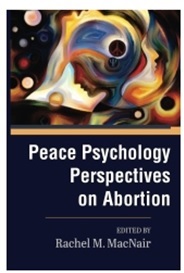
Editors Note: This is adapted from Chapter 13 of Peace Psychology Perspectives on Abortion. Please see that chapter for more references and a more thorough academic discussion.
====================================
For more of our blog posts on the dynamics of violence, see:
The Redemptive Personalism of Saint Oscar Romero
by Julia Smucker
On the day before he was killed, Oscar Romero, who on Sunday October 14 will be officially declared a saint in the Catholic Church, delivered an impassioned plea to members of the Salvadoran army:
Brothers, you are a part of our own people. You are killing your own brother and sister campesinos, and against any order a man may give to kill, God’s law must prevail: “You shall not kill!” (Exod. 20:13). No soldier is obliged to obey an order against the law of God. No one has to observe an immoral law. It is time now for you to reclaim your conscience…. In the name of God, then, and in the name of this suffering people whose laments rise up each day more tumultuously toward heaven, I beg you, I beseech you, I order you in the name of God: stop the repression![1]

Mural at the Universidad de San Salvador
The significance of this famous entreaty goes beyond the appeal to nonviolence: the audience his plea was addressing was as significant as its content. In this and multiple other homilies throughout his tenure as Archbishop of San Salvador, Romero not only preached against the violent atrocities being committed in El Salvador during that time, but did so by appealing to its very perpetrators as human beings. These heartfelt appeals reflected a commitment to the principle of redemptive personalism – rooted in the recognition of the indelible humanity of all human persons, even those who commit the worst offenses against their fellow humans – which has broad implications for opposition to all forms of violence.
Central to redemptive personalism is the recognition that behind every act of human violence, there is a human person with a human conscience and human moral agency. Romero’s fundamental belief that no human being is irredeemable allowed him to hold out hope for a change of heart (in Christian terms, a conversion) on the part of those with blood on their hands, and not merely as a matter of personal devotion but one of public persuasion. Aware of the broad reach of his homilies, regularly broadcast by radio, he sometimes used them to address directly those responsible for carrying out the military-led government’s brutal crackdowns, calling them to choose a different path. In one homily a few years before his death, he invoked the murders of two fellow priests who had advocated for human rights, saying,
Who knows if my words are reaching the person whose hands are bloody with Father Grande’s murder or the one who shot Father Navarro? Who knows if I’m being heard by those who have killed and tortured and done so much evil? Listen, there in your criminal hideouts! Perhaps you are already repentant. You too are called to forgiveness! [2]

Memorial Plaza at MacArthur Park in Los Angeles
These appeals to conscience were deeply intertwined with the personalist conviction that nobody is beyond hope. Furthermore, coming from a context in which following one’s conscience against an unjust order often required great courage, they carry a weighty reminder that conscientious objection is always an option for those who are asked to participate in violence of any kind. Even in situations where conscience rights are not recognized, nobody can be forced to act against their conscience if they are willing to suffer the consequences of refusing.
Urging defection is tactical as well as principled, providing a nonviolent means of fighting against violent repression by appealing to the humanity of those perpetrating it, and thus siphoning it away, person by person, at the very source of the violent acts. The effectiveness of this tactic, at least as a tangible possibility, is demonstrated by the fact that Romero’s appeals to obey conscience rather than unjust orders were seen as enough of a threat to cost him his life.
A sense of humanity as something broadly universal and deeply personal was the basis of much of Romero’s thought and action, and remains an essential part of his ongoing example. His appeals to conscience over violence made him a threat. His willingness to sacrifice his life for his convictions made him a martyr, and for Christians, a model of the faith in action. And his consistency in seeing the humanity of all – from the earliest stages of human life to its natural end, and still encompassing even those who have brought human lives to violent and unnatural ends – make him a model for living and proclaiming a consistent ethic of life.

2015, announcement the beautification in the Plaza Salvador del Mundo
References:
[1] Homily, March 23, 1980. Quoted in The Scandal of Redemption: When God Liberates the Poor, Saves Sinners, and Heals Nations, ed. Carolyn Kurtz (Walden, NY: Plough Publishing House, 2018), p. 13-14.
[2] Homily, December 18, 1977. Quoted in ibid, p. 44.
====================================
For more of our blog posts on notable people in history, see:
Courageous Woman: Elizabeth Anscombe (1919-2001) / Julianne Wiley
Celebrating the Life of Daniel Berrigan
Is it Too Late? 1971 Speech of Fannie Lou Hamer
Valentine Friends: Susan B. Anthony and Frederick Douglass / Carol Crossed
Where Does Martin Luther King Jr. Fit Into the Consistent Life Ethic? / Rob Arner
The Referendum on Abortion in Ireland: The Violation of Rights
by Maria Horan
“The [Irish] State acknowledges the right to life of the unborn and, with due regard to the equal right to life of the mother, guarantees in its laws to respect, and, as far as practicable, by its laws to defend and vindicate that right.”
Inserted into the Irish Constitution on the 7th of October 1983.
Voted to be removed on the 25th of May 2018.
Since the establishment of the independent Irish state in 1922, Ireland has always prided herself on her neutral stance. Ireland’s war-time neutrality, together with its former colonial past, has helped Irish soldiers work as peacekeepers around the world. Though Irish history has been steeped in blood, in recent years, Irish policymakers and activists have promoted peaceful negotiation. However, the rush to legalise abortion in Ireland negates the years of this hard work and indeed subverts the push for peace in Ireland, both within the whole island and internationally.
Violation of Irish Sovereignty
With the collapse of the Anglo-Irish Bank in 2008 (thanks to the mismanagement of the Irish government), Ireland was forced to take a bailout of 7 billion euros from the European Bank. The funds awarded to Ireland by Germany served to make the Republic even more vulnerable to the “groupthink” ideals of more powerful European nations. So it’s hardly surprising that Ireland is now beholden to the European Union and other pro-abortion global forces.
Ireland has excellent standards in maternity care, which means the country has served for years as an uncomfortable exception to the global claim that women are safer where abortion is legal. But this has been ignored by the international powers that be, as Ireland’s good maternal health challenges this erroneous but widespread belief. Now that Ireland’s pro-life example is about to be removed, global abortion advocates will be able to continue to attempt to spread the deception that women are safer where abortion is legal. In Europe, the only abortion-free countries that will be left are Northern Ireland, where protections for the unborn are under severe threat, as well as Poland and tiny Malta, both also threatened.
Violation of Irish Independence
 In autumn 2016, my former university Women’s Studies lecturer, Ailbhe Smyth, marked the 100th-anniversary celebration of the Irish Rising against British rule by inviting the staunchly pro-abortion Ann Furedi of BPAS (British Pregnancy Advisory Service) to Ireland. Smyth, who later became spokesperson of the pro-abortion Repeal the 8th group, wanted to discuss how Furedi could help Ireland promote the abortion legalisation. Furedi’s views are radically pro-abortion: she supports abortion up to birth for any reason, including because of the child’s gender.

Ann Furedi
Furedi and BPAS hail from Britain, Ireland’s former colonizer. British colonial rule in Ireland included episodes of extreme violence and repression against the Irish. These include scorched-earth policies ordered by Elizabeth I, Cromwell’s massacres in Ireland, the Penal Laws, The Great Hunger (Irish famine of 1845-1851), and killings during the Irish uprising of 1916.
Clearly, the irony of inviting in a citizen of Ireland’s former coloniser to discuss how best to kill pre-born Irish citizens was completely wasted on Repeal the 8th. Thus, in 2016, a British abortion advocate was invited to Ireland, to instruct the Irish on how to kill their own. With the removal of the 8th Amendment, now there will be nothing to stop British abortion mill Marie Stopes (who have already expressed interest in Ireland) or Furedi’s BPAS in setting up clinics all around Ireland.

Violation of Democracy
Through the outcome of the Repeal vote, the Irish have foolishly handed over all autonomy to their government, allowing this small group of people to create any abortion laws they like, with citizens having no rights to object. And now, with a small but vocal number of abortion extremists in the Dáil (Irish Lower House of Parliament), this is becoming more likely to occur.
Abortion in Ireland will likely be available on demand, up to 12 weeks for any reason, and at taxpayers’ expense. The Irish healthcare system is already stretched to the limit, but Minister for Health Simon Harris chose to ignore the real health issues and plumped for abortion, clearly as a means to gain instant popular approval and future votes.
Meanwhile, predictably enough, now that abortion is to be legalised in Ireland, euthanasia is being discussed in the Dáil. Now that the pre-born Irish are disposable, it is becoming increasingly obvious that the elderly in Ireland are seen to be a burden as well.
Violation of Conscientious Objection

Ellinor Grimark and child
Since the voting outcome, conscientious objection of doctors has been systematically ignored. The abortion service to be rolled out in Ireland is the bizarre practice of GPs being expected to hand out the abortion pill to women 12 weeks pregnant and under. GPs were never consulted by the government about this and a journalist in the staunchly pro-abortion Irish Times paper has called on the government to force doctors to perform these procedures, thus echoing the inhumane treatment that midwife Ellinor Grimark had to endure in her native “progressive” Sweden, because of her refusal to participate in abortions. This is deeply disturbing and goes against international standards of conscientious objection, despite its continuous erosion, such as that of Scottish midwives Mary Doogan and Connie Wood in the UK.

Mary Doogan and Concepta Wood
It is completely unreasonable to expect family practice GPs to start handing out abortion pills and deal with the consequences if anything goes wrong. This is a malpractice suit waiting to happen. Both Harris and Taoiseach (Irish Prime Minister) Leo Varadkar have refused to listen to doctors’ objections to this, which is especially bizarre considering that Varadkar practised medicine before his political career. As one Irish doctor pointed out, GPs don’t have ultrasounds in their clinics, so they have no way to verify whether a woman is twelve weeks pregnant, which the planned cut-off line for the abortion pill clinic distribution.
The Truth Will Out
What now remains? There is still a strong pro-life movement in Ireland, many of whom became acquainted during the networking months before the referendum. Many Irish had become complacent about being pro-life, presuming that Ireland was safe from such violence, which is now sadly untrue. However, it is a chance for the Irish to stand strong, revive the movement and take back what has been lost by this generation. Those who voted ‘no’ behaved with integrity and can hold their heads high.
This will be challenging, as those opposed to the violence of abortion are already being treated with disdain and contempt, as reflected in the Irish media. However, it is really important that the work that needs to be done is carried out with dignity. Our day will come again. Truth will out. In the meantime, we need to be patient and continue to work with honour. We need to keep repeating the facts, again and again, until they are eventually heard.
==================================
F0r another post on our blog from Maria Horan about Ireland, see Sinn Féin and the New Legacy of Violence.
How Abortion is Useful for Rape Culture
by Rachel MacNair
During this time of uproar over an allegation against Brett Kavanaugh of committing attempted rape when he was 17, I’d like to remark on the connection of the violence of rape with the violence of abortion. I see it much differently from many of the pundits.
 It’s a mark of social progress to have the idea that a man attempting a rape in his teens should be career-destroying. This is of course only fair if the man did in fact do it. Yet in bygone days (and even today in some commentaries) attempted rape was regarded by many as merely “youthful folly.” If we can communicate to privileged young men (and everyone else) that this behavior is incredibly harmful and therefore intolerable, that would be some good that can come out of current events.
Much of the commentary on the accusations against Brett Kavanaugh focuses on the culture of prep schools in the 1980s. That culture involved heavy drinking and a sense of male entitlement to female bodies, oblivious to the harm this did to women and girls. Then some commentators assume that being against legalized abortion is also anti-woman, and propose that the two attitudes go together.
But we’re talking about the 1980s in the U.S. – with teenagers who were young children at the time Roe v. Wade legalized abortion nation-wide in 1973. And of course ever since 1973, all young people who got to be born were born with freely-available abortion.
What does having abortion handy do to men who have a sense of male entitlement to female bodies?
If asking the question isn’t sufficient to have the answer come, let me give an illustration:
Affidavit of a Student Nurse
The State of South Carolina vs. J. F., Case No. 30159:
It was my job to assist the doctors. I scrubbed with Dr. F. While scrubbing at the sink, Dr. F. kidded me about my size. He said that birth control pills would put some weight on me. He asked me if I was on them. I didn’t need to be. He then said he would give me a prescription. I assisted him with the delivery and after cleaning the instruments, I went out to the nurses’ station.
[Later that day] Just as I was leaving the lounge, Dr. F. was, as it appeared, on his way to the doctors’ lounge. He said, “come here,” and started walking down the hall. I said, “I’m not going in there.” He then said, “that’s not where we’re going.” I then asked, “where are we going?” Then he said, “you never ask a doctor where he’s going.” Then he grabbed my arm and pulled me down the stairs. . . . Still holding on to me, he took me down the hall on the left as you leave the stairs. He pulled me into a dark room on the left. Once in the room, I saw it was still under construction. The halls were completely empty. I didn’t see anyone when I came onto the floor or when I left.
Thinking I could reason with him, I begged him to let me go. But he wouldn’t listen. He didn’t say anything and kept trying to kiss me. I kept pulling away and he kept tightening his grip on my arms. Then he said, “we’ve got to work out something.” I said, “no!” He seemed to really be mad and I pulled away to head for the door and he jerked my arm. I knew now he had no intentions of letting me go. I was afraid to scream. I feared for my life. He then began pulling down my scrub suit pants and I fought him, but he kept one of my arms behind my back and he was able to get them down. I struggled with him, but he kept both my arms in his grip. I wasn’t strong enough to get away and he knew it. He raped me. He then backed away from me and as I stood there crying, he said, “I knew there wouldn’t be another time or place.”
 This came to my attention because in addition to this hospital, Dr. F worked in an abortion clinic. His wanting to prescribe her birth control, and knowing full well of abortion’s availability, went along with the clear sense of entitlement he showed.
Getting rid of rape culture is crucial to stopping abortion – obviously, abortion for those impregnated by rape goes out the window if there is no rape. That’s by far the ideal way of handling the “rape exception.”
But getting rid of abortion is crucial to stopping rape culture, too. A major feature of that culture is a sense of male entitlement. There are men who feel all the more entitled if in case of pregnancy they understand they’re only making the woman go and exercise a “constitutional right.” The callousness toward the baby, and the callousness about having done something that leads to the woman having surgery, these go along with the astonishing callousness of the original assault.

======================================
For more of our blog posts on similar topics, see:
A Pro-Life Feminist Critique of the “Rape and Incest Exception” by Rachel MacNair
Answering Objections to the Consistent Life Ethic from Mainstream Pro-Lifers
by John Whitehead
Advocacy for the consistent life ethic (CLE) requires making the CLE more comprehensible and appealing to those with very different philosophies. Consistent Life Network Vice President Rachel MacNair offered valuable guidelines for discussions about the CLE in her blog post, “Tips on Dialogue.” Taking a cue from her post, I offer thoughts on how to talk about the CLE with one particular audience: people who are strongly pro-life—that is, opposed to abortion and usually also euthanasia and assisted suicide—but are resistant to the other causes that fall under the ethic: opposition to the death penalty, poverty, war, and so on.
Effective dialogue with what we might call “mainstream pro-lifers” requires understanding why the CLE is unpersuasive or even off putting to them. My own reading of pro-life literature and conversations with pro-lifers suggests they have three broad objections to the ethic. (One useful resource is a Human Life Review symposium on the CLE that includes critiques from mainstream pro-lifers.) These objections overlap and the same pro-lifer might make more than one of them. We can still distinguish among them, though, and they require different responses. No response is guaranteed to be persuasive, but I can at least offer some tentative ideas about how to address the three objections.

Objection 1: Voting Implications
The American political party most closely identified with opposition to abortion is the Republican Party. For this reason (among others), mainstream pro-lifers and pro-life organizations tend to support Republican politicians. Linking opposition to abortion with positions—such as greater government action and spending to help the poor—that aren’t generally associated with the Republican Party (and may be associated with parties such as the Democrats or the Greens that support abortion) is probably going to alienate mainstream pro-lifers. They will be put off because linking these issues implicitly calls into question their partisan loyalties and voting strategy—without offering a reliably anti-abortion alternative.
The response to this objection is a simple one: we should tell mainstream pro-lifers that the CLE is a non-partisan philosophy that doesn’t demand a change in their party membership or voting strategy. As CLE advocates know, the American political system rarely, if ever, offers satisfactory candidates: different CLE advocates accordingly try different approaches to political engagement. No political approach is so obviously superior to the others that we should risk alienating potential sympathizers by insisting on a particular approach. Our goal should be to spread an idea and build a movement across party lines, not to boost one specific party.
When speaking to mainstream pro-lifers, we should make it clear that embracing the CLE is compatible with voting Republican—or at least is no more incompatible with it than voting for any other party. (Meanwhile, when speaking to social justice activists concerned with ending poverty, racism, or the death penalty, we should make the same point about embracing the CLE and voting Democratic, Green, Socialist, etc.)
Objection 2: Substantive Disagreement on Issues
Some mainstream pro-lifers object to the CLE simply because the ethic includes specific issue positions they disagree with. Some abortion opponents believe the ongoing use of the death penalty or military force is wholly justified and should be continued indefinitely. For these pro-lifers, the problem with the CLE is that the ethic combines correct moral-political views (abortion and euthanasia are wrong) with incorrect ones (the death penalty and war are wrong).
This objection is far harder to overcome than Objection 1 because it is about substantive disagreement on issues as opposed to differing political strategies. To win over pro-lifers with this objection requires convincing them to change their mind on the death penalty, war, or other issues, which is a large, complex challenge that I won’t attempt to address here. Nevertheless, productive dialogue becomes easier if we can at least identify what the real source of disagreement is.
 Objection 3: Defending Pro-Life Legitimacy
This final objection is the most subtle and hard to describe, but it is real and significant. Moreover, as a CLE advocate, this objection is the one I personally sympathize with most.
Pro-lifers—even those who might feel ambivalent about the Republican Party and issues such as the death penalty—might nevertheless avoid the CLE because they perceive it as de-legitimizing the cause of defending the unborn. Those who support abortion, and in some cases even CLE activists, have been known to criticize mainstream pro-lifers using arguments and language based on the CLE or which resemble the CLE. This criticism essentially amounts to treating pro-lifers as at fault or unworthy of respect if they don’t address issues other than abortion. As a result, mainstream pro-lifers have a very negative reaction to linking opposition to abortion to other issues.
I think pro-lifers can see such linkage as calling into question their activism on behalf of the unborn. To insist a pro-lifer must also work against poverty, the death penalty, and so on comes across as saying those concerned with protecting the unborn have to pass a moral/ideological test before their work against abortion can be granted legitimacy.
Such an underlying attitude toward pro-lifers is really nothing more than a curious double standard. The generally accepted principle that activists are “allowed” to specialize or focus on a single issue is somehow not applied to pro-lifers.
This double standard was on display this summer, when pro-lifers were criticized for not condemning the Trump administration’s policy of separating the children of undocumented immigrants from their parents. As odious as the child separation policy was, criticizing an activist group for not taking a stance on an issue outside its area of focus is strange—how strange becomes clear if we apply this criticism to a non-pro-life group.
If someone were to criticize an immigrants’ rights organization for not speaking out against, say, the nuclear arms race, such a criticism would be rightly regarded as eccentric and unfair. Certainly someone would be foolish to dismiss the cause of immigrant rights simply because immigrant rights activists aren’t at the forefront of nuclear abolition efforts.
Or consider a more pointed scenario: if a mainstream pro-lifer criticizes a racial justice activist who’s working against police brutality for not also working against abortion, a great many people would be justifiably outraged. Such a criticism would be equivalent to the infamous “All Lives Matter” slogan that so many black Americans and other racial justice activists justly found objectionable.
Criticizing activists for not addressing issues outside their declared focus makes sense only 1) if you’re simply trying to find a reason to make the activists look bad or 2) if you regard them as being on a kind of ideological probation. Under the terms of this probation, if the activists demonstrate their commitment to approved issues the critic regards as important, only then may they legitimately be allowed a commitment to the issue they care about most. If you’re trying to change someone’s mind, however, this probation approach is a dismal method.
Many mainstream pro-lifers can regard CLE advocacy as just such an attempt to attack or de-legitimize pro-life activism. Linking opposition to abortion to opposition to other kinds of violence and injustice is taken not as an attempt to defend life more broadly but rather to make the legitimacy of anti-abortion activism dependent on other types of activism. The rhetoric of certain CLE advocates can add to this impression: “If you were really pro-life you would…”; “you are just pro-birth, not pro-life”; and the like.
Addressing this objection requires CLE advocates to provide clear affirmations of mainstream pro-lifers’ work against abortion. If pro-lifers know you appreciate and share their commitment to defending the unborn and aren’t challenging that commitment, that’s a valuable step toward constructive dialogue. With your shared commitment to defending the unborn established, you can then discuss what other threats to life you should work against as pro-lifers.
Final Points
Mainstream pro-lifers can simultaneously have two or all three of these objections to the CLE. Disentangling the objections and dealing with them separately is then important. Also, sometimes mainstream pro-lifers can express their objections in unclear language: criticisms of the CLE for “diluting the pro-life message” or “lumping together very different issues” may express Objections 1, 2, 3, or all of them. The highest priority during dialogue is to determine if the pro-lifer substantively disagrees with you on other issues such as the death penalty or war or if the objection to the CLE springs from other concerns.
I have identified a few approaches to discussing the CLE with mainstream pro-lifers. Discussing the CLE with different audiences—activists for racial justice or peace, for example—would require addressing different objections and making different arguments. CLE advocacy thrives on diverse people and approaches, and we always welcome further recommendations for productive dialogue.

Media Stories on Abortion Access
 The PBS NewsHour ran a 10-minute story called Even with Roe v. Wade intact, many states have aggressively restricted abortion access (September 7, 2018).
We offer below a letter in response from one of our board members, and then some comments on this kind of story from another board member.
Since the episode and a transcript are on the web, responses are still worthwhile well after airdate; you can write them at viewermail@newshour.org
Letter from Julia Smucker
Dear NewsHour staff,
As a loyal fan and daily watcher of the PBS NewsHour, I strongly appreciate your commitment to serious, in-depth journalism that favors substance over hype, and to providing a range of perspectives that is generally well-balanced without shying away from controversy.
If there has been any exception to this in my observation, it has been in your coverage of abortion-related topics. My impressions here were exemplified in Amna Nawaz’s recent segment that aired this Friday, Sept. 7 (though I should also note that I do not intend to single out Ms. Nawaz for individual critique, as my concerns are not unique to this one segment, and I have found her reporting on other subjects, especially immigration, to be an excellent representation of the NewsHour’s high journalistic standard). While I recognize that this is a difficult and controversial subject, I have two basic concerns about how it is handled in the NewsHour’s coverage.
Firstly, the issue tends to be framed almost entirely as a question of access to a service, without addressing in much depth the underlying bioethical controversy based on the science of human development and embryology (i.e., what – or who – is being “terminated” in an abortion procedure?), or the connection to underlying injustices such as poverty and gender discrimination except as illustrations of why women feel the need to turn to abortion, rather than as root-cause problems that need to be targeted in themselves.
Secondly, there is a disappointing lack of representation of pro-life women. I was dismayed to notice that the only pro-life activists interviewed in Friday’s segment were men, and middle-aged white men at that. This has the effect, whether intended or not, of feeding a false narrative that the controversy on abortion is neatly split along gender lines . . . There are many women, myself included, who believe that abortion does not solve, but instead masks, other problems such as those I mentioned above by implicitly accepting their existence. In order to include a broader range of perspectives in future coverage of this issue, including ones that don’t fit the usual political narratives, I strongly recommend contacting organizations such as Feminists for Life, New Wave Feminists, Feminists Choosing Life of New York, Secular Pro-Life, Rehumanize International, and the Pro-Life Alliance of Gays and Lesbians – all of which are nonpartisan, nonsectarian, pro-life organizations headed by women.
Thank you very much for your consideration and, again, for your dedication to quality journalism.
Sincerely,
Julia Smucker
Sustaining member of Maine Public in Portland, Maine

Julia Smucker
Comments from Rachel MacNair
As abortion numbers halted their upward trajectory in the 1990s, and since around the year 2000 have had a dramatic decline, stories like the PBS one have been seen now and then. These stories ring alarm bells that abortion access is getting lower, and fewer doctors are willing to do them.
They generally have a bias in favor of abortion access. Their purpose is to uncover this as a “problem,” hoping coverage will help solve the problem. After all, that’s commonly done in journalism, with all kinds of things that really are problems.
I don’t know of any studies that show the impact of these stories, and of course they have different impacts on different groups. The pro-abortion slant is likely to have a similar impact to other stories with a similar bias. Yet I propose that this particular approach is, in one way, possibly helping the pro-life cause.
Consider:
- If you are a medical student or doctor contemplating adding abortion to your practice: Would you be more or less likely to do so after seeing that story? The story communicates that abortion practice is harmful to a medical career. The field is dying and stigmatized. If you enter the field on principle, be prepared to be brave. It’s a requirement. There may be individual doctors who respond to the story as the reporters intend, but the overall impact is to show the field’s undesirability.
- If you are a woman contemplating abortion or the activity that might make you pregnant: Would you be more or less likely to do so after seeing that story? The whole point of the piece is that abortion is hard to come by. The reason is that so many elected legislatures have tried to make it so and succeeded. The stories, while often trying to talk about how abortion should be normalized, exhibit how attempts to normalize abortion have, in fact, failed. Miserably.
- If you are a member of the general public who doesn’t already feel strongly on the issue: Might you be a little more inclined to listen to reasoning about what’s wrong with abortion when you know they’re declining? When they’re rising, it’s painful to hear what’s wrong. There are many people uncomfortable with abortion but also uncomfortable with abortion bans, and they really wish abortion practice would just go away and relieve them of the dilemma. What happens when such people are informed that there’s a trend showing such relief may be on the way? To see the psychological theory behind this idea, see my article in First Things, “Our Pro-Life Future: A Plan for Building on Anti-abortion Successes.”
We’ve seen many stories like the PBS one, and as abortion declines further we’ll see many more. The current sense of certainty on the pro-Roe v. Wade side that the case is in danger of being overturned outright (whether true or not) may well bring on more of them.
Of course, the bias is still excruciating. Whenever these stories come up, we should protest them vociferously. Those of us who are pro-life feminists and consistent-life advocates may be especially effective in doing so.

Rachel MacNair
Tips on Dialogue
by Rachel MacNair
Many times you’ll find yourself with opportunities to dialogue with individuals or small groups who aren’t familiar with the consistent life ethic. When these people are open-minded, these dialogues can feel very productive. When they’re not quite open-minded, the dialogues are still important in the long run.
We can run ads and be quoted in news stories and publish excellent blogs and Facebook posts and even whole books. But the person-to-person contact is where movement-building is at its strongest. Mere logic only gets us so far. People are social animals.
Here are some thoughts based on my experience of how to make dialogue effective, grouped according to type of audience. We’re talking about informal every-day kinds of discussions, where you weren’t necessarily planning to bring a topic up.
Everyone
Listen.
Follow what the other person is interested in, not necessarily what’s most important to you.
Use your own experience rather than mere logic. People relate to personal experience more, and it’s less of something to argue about.
Be mindful that they have experience, too. Combat veterans, and people who’ve had abortions or who’ve been closely involved with people who did, need a sensitive approach.
Gripe about media coverage. You can just about never go wrong with any activist on any issue doing that, and it might help build rapport.
Pro-lifers who aren’t Peace Advocates (yet)
 First: assure them you’re pro-life
It’s a simple matter of showing you have sense enough to know it’s wrong to kill babies. Once that’s established, you’re sensible enough to speak of other things as well.
Also: address misunderstandings
A lot of people think the consistent life ethic waters down the abortion issue by saying pro-lifers must devote a great deal of time and energy to various other issues such as the death penalty, war, and poverty; it’s therefore a criticism of their work directed against abortion.
But we say that putting abortion in with other issues of violence strengthens the case against it. Also, there are peace-and-justice activists and sympathizers who find the consistent-life approach of linking issues far more persuasive.
If they cite cases of people using the “seamless garment” to water down the abortion issue, tell them that was a blatant mis-use. Mis-use isn’t confined to the consistent life ethic; after all, people also twist ideas like freedom and equality to support the violence of feticide.
Many have proposed that the consistent life ethic was invented to give politicians, especially Catholics, a pass when they support abortion availability, by declaring themselves for the nonviolent side on other issues. You can assure them that “giving a pass” is the opposite of what consistency does. Instead, the consistent life ethic is a challenge: if they’re good on opposing violence in other ways, why don’t they oppose feticide also?
Peace Advocates who aren’t Pro-lifers (yet):
 De-Martian-izing
Make sure to bring up your pro-peace bona fides, preferably before the topic of abortion even comes up. They need to know you’re a genuine peace-and-justice oriented person so that the stereotypes they may have of pro-lifers are broken at the start. They may think of pro-lifers as Martians, but you’ve shown you’re not a Martian before you reveal you’re a pro-lifer.
Back to the Comfort Zone
I have experience with a technique I call “Back to the Comfort Zone.” When you’re with an individual or group and there’s reason to bring up some criticism of abortion, something that fits the flow of conversation, then bring it up.
But suppose you’re in a situation where people weren’t expecting it – for example, you’re countering a misconception someone brought up without a clue that it’s a misconception. Or you bring up your own personal experience in a group unaware that people have such experiences.
Just as you see that they’re starting to get uncomfortable, just as they appear to be wondering how to deal with this unexpected information, just as they’re starting to process it as being perhaps a confrontation – then switch to another topic. One that makes them more comfortable and fits the flow of the conversation.
What you’ve done by bringing the topic up at all is that you’ve taken them out of their comfort zone. You’re not embarrassed, of course, because you’re confident in your understanding, but they’re embarrassed. Then, before they have time to react, put them back in the comfort zone. Confrontation doesn’t develop.
My experience is that by the end, they have positive things to say about you – after all, you rescued them from being out of their comfort zone. Therefore, you’ve succeeded at getting some pro-life education in, even though the setting is one where that’s not welcome.
With groups I have interacted with long-term, I’ve found people who started with hostility to any pro-lifers become, through the course of time, accepting of me as being one.
When there’s an Audience
Then you have the person who you think is open to dialogue, because upon finding you have a particular position, she starts challenging you with questions. In this situation, you’d be rude not to answer – but as soon as you do, she’s offended and then squelches you, saying things such as that the conversation is over; basically, you have no right to express an opinion different from hers.
This is always a serious bummer. It never feels at all right.
There’s not much you can do with such people. If you’re alone with them, let it go.
But if other people are around, pay attention to what they overhear (or, in the case of group e-mail exchanges, what they read). Some of them may benefit.
And some of them may be a little sympathetic to you, because it was the other person who was rude. Your original person may be closed down, but the others may not be at all. They may even be interested in more dialogue when out of earshot of that original person.
These techniques, drawn from my own experiences, are some ways of talking to people about the consistent life ethic. Consider your own experiences with these kinds of dialogues and find techniques that have worked for you. If you find a particular technique is especially effective, let others know about it!