“The Affairs of a Handful of Natives”: Nuclear Testing and Racism
by John Whitehead
While nuclear weapons haven’t been used in war for over 75 years, they’ve still killed and hurt people. Testing of nuclear weapons exposed many to radiation, with terrible health consequences. The people harmed have frequently been from different, far less powerful, ethnic groups. Nuclear weapons’ deadly effects have combined with racial injustice. Two threats to life reinforce each other.
Global Nuclear Testing: An Overview
Since the original “Trinity” test in New Mexico on July 16, 1945, nuclear weapons have been tested 2,056 times, generally to develop “effectiveness” in war.
Most tests were underground. Above-ground tests were more common in the early decades; more than 500 weapons were tested in the atmosphere. The 1963 Limited Test-Ban Treaty, which many nuclear-armed nations agreed to, banned above-ground tests. Such tests therefore fell dramatically. Above-ground testing is more likely to spread radioactive fallout, but underground testing can also.
How many people died or otherwise suffered is unknown. Arjun Makhijani, president of the Institute for Energy and Environmental Research, estimates hundreds of thousands of cancer deaths because of testing. While we lack exact figures, a few historical cases illustrate the harm done—and which groups were most directly harmed.
Historical Examples of Nuclear Testing
American Testing, the Marshall Islands.
The first nation to obtain nuclear weapons, the United States, is also the most frequent tester of such weapons. The U.S. conducted 1,030 nuclear tests.
Many American nuclear tests were held within the U.S., but the land of non-American, non-white people has also been used; for example, the Marshall Islands.
The Marshalls are two chains of islands in the Pacific, covering an area roughly the size of Mexico. In 1947, the United Nations made the U.S. responsible for administering the Marshalls, home to about 52,000 people. Even before this, though, the U.S. used the Marshalls as a nuclear test site.
The U.S. conducted its first test there on July 1, 1946, at Bikini Atoll. Bikini’s 167 residents were removed from their homes and were relocated repeatedly over the following years. The Bikini test was the first of 67 American nuclear tests in the Marshalls from 1946 to 1958.
The most infamous test was “Castle Bravo” on March 1, 1954. The bomb had 1,000 times the explosive force of the bomb dropped on Hiroshima. The fallout spread over 100 miles.

Castle Bravo test, 1954
Nerje Joseph, then 7, remembered witnessing the test from her home. Shortly after dawn, Joseph saw a sudden “sunrise” in the west, followed hours later by a snow-like substance falling from the sky: the bomb’s fallout.
Days after Castle Bravo, U.S. personnel began evacuating people. By that time, residents suffered from burns, vomiting, and hair falling out: symptoms of radiation poisoning.
The Castle Bravo test’s effects weren’t limited to the Marshallese. Fallout covered a Japanese fishing boat, the Lucky Dragon No. 5, almost 100 miles away. Many crew members became sick and one died.
Later in 1954, the Marshallese filed a protest with the United Nations, calling for an end to testing. They explained they were “not only fearful of the danger to their persons from these deadly weapons” but “also concerned for the increasing number of people removed from their land.” They filed a follow-up petition in 1956.
The American reply was “as long as there is a threat of . . . aggression, elementary prudence requires the United States to continue its tests” and assured the Marshallese “further tests are absolutely necessary for the eventual well-being of all the people of this world.” The U.N. ultimately denied the Marshallese’s petitions. Tests continued.
The Marshalls became independent in 1990, although the U.S. retains access for military purposes. The U.S. also agreed to pay compensation for the nuclear testing.
The tests’ legacy for the Marshallese include health problems such as radiation poisoning and cancer. The U.S. National Cancer Institute estimated 170 “excess” cancers, above what one would expect, could be attributed to the tests. Women reported miscarriages, stillbirths, and infertility. Almost all the children under 10 in one community exposed to Castle Bravo, including Nerje Joseph, developed thyroid problems. One child died of leukemia.
Beyond health problems, the Marshallese must cope with environmental pollution, displacement, and disruptions of their traditional way of life. Joseph comments, “We had a oneness . . . We worked together, we ate together, we played together. That has been lost.”
Soviet Testing in Kazakhstan.
The other leading nuclear power, the Soviet Union, conducted the second-most tests: 715 from 1949 to 1990. Over 400 Soviet tests were conducted in eastern Kazakhstan. While Kazakhs are ethnically distinct from the Russians who dominated Soviet politics, Kazakhstan had been under Russian control since pre-Soviet times.
Soviet testing included an August 1956 test that caused 600 people in the city of Ust-Kamenogorsk, about 250 miles away, to be hospitalized for radiation sickness. Soviet authorities set up a clinic to treat test-affected people. Those treated weren’t told what ailed them. After the U.S.S.R collapsed and Kazakhstan became independent, some clinic records were destroyed or taken back to Russia.
Kazakhs struggled with a multitude of health problems in the decades since nuclear testing ended. In the 1990s, one in three children in the testing region had physical or mental problems. The Children’s Hospital in Almaty, a major Kazakh city, treated 50 to 100 children a month with ailments that could have been caused by radiation.
Valentina Nikonchik remembers playing outside when the military tested a thermonuclear device on August 12, 1953. She heard a deafening sound and fainted. Years later, she developed thyroid and heart problems.
Eliugazy Nurgaliev was among 43 men in his village exposed. “Suddenly the sky turned red and a big red storm gathered above our village. We lost our minds,” he recalls. Some men died not long after. Others developed radiation-related illnesses. Nurgaliev survived but his parents died of cancer and three of his children were stillborn or died in infancy.
Yevmagbetova Sandigul comments, “I remember as a child being out alone in the street once when the sky turned purple-gray and there was a strange wind. Later, people complained of headaches. Everyone said it was a bomb.” Sandigul later suffered from weak heart walls, which doctors attributed to genetic damage. “Everyone had someone in the family with problems,” she says. “Babies were born in our village with tails.”
Identifying precisely which illnesses resulted from testing is complicated. Diseases such as cancer are common; not every case is caused by radiation. Also, the sheer number of environmental problems in Kazakhstan make causes of health problems hard to pinpoint.
Yet scientific studies suggest testing’s health effects. A 2002 study analyzed DNA from multiple generations in Beskaragai, a town with significant radiation doses. Those directly exposed to tests had double the rate of mutation in their germ lines—DNA in sperm and eggs—compared to controls. In 2018, researchers reported the risk of hypertension among people whose parents had lived in areas exposed to radiation increased according to how much radiation their parents received.
French Tests in Polynesia and Algeria.
France conducted 210 tests from 1960 to 1996.
Most were in French Polynesia, archipelagoes in the south-central Pacific. A former French colony, the Polynesian islands gained domestic political autonomy by the mid-20th century but remained affiliated with France. In the 1960s, France began a nuclear testing program there , centered on the uninhabited, relatively isolated islands of Moruroa and Fangataufa.

French nuclear test in Algeria
The test sites’ isolation didn’t contain the nuclear blasts’ effects. Declassified French government documents later revealed a July 17, 1974 test spread fallout across the whole of French Polynesia. It exposed Tahiti to 500 times the maximum accepted radiation level.
Jean-Claude Hervieux, an electrician who worked on the French nuclear tests, saw the tests’ impact on Polynesians. Hervieux remembers, “A local teacher said children were sick and vomiting. . . Mothers were asking why their children’s hair was falling out.”
Later research pointed to health damage. A study of people diagnosed with thyroid cancer between 1984 and 2002 found a “significant statistical relationship” between cancer and exposure to the nuclear tests. In 2006, a French medical research group found an increase in cancer among those close to the tests. Bruno Barillot, who investigated the tests for the French Polynesian government, identified them as causing high levels of thyroid cancers and leukemia.
Another set of nuclear tests took place before the Polynesian tests. The first French nuclear weapon detonated, four times the power of the Hiroshima bomb, was tested on February 1, 1960, in the Algerian desert. Algeria was then a French colony, but tests continued after Algerian independence. From 1960 to 1962, France conducted 17 nuclear tests in Algeria.
One notable incident was the underground “Beryl” test in May 1962, which went wrong and spread radiation above ground. Hussein Dakhal, from a nearby village, remembers “I heard the explosion. Since then, life has changed for us . . . unknown diseases and health problems started to emerge.”
Algerians suffered from radioactive debris left at the test sites. Remains of equipment such as remote-controlled towers for detonating the bombs or trucks left in the blast area to test the bombs’ power became sources of scrap metal for locals. They used this for building materials, jewelry, or even kitchen utensils, unaware of the danger.
The French Ministry of Defense estimates 27,000 Algerians were affected. Abdul Kadhim al-Aboudi, an Algerian professor of nuclear physics, estimates test-affected people at 60,000.
In 2010, France passed a law to provide compensation to people harmed by French nuclear testing. Compensation has been paid out slowly and sparingly.
British Tests in Australia.
Britain conducted 45 tests from 1952 to 1991.
In 1950, the British government reached an agreement with Australian Prime Minister Robert Menzies to conduct nuclear tests there; Australia’s parliament wasn’t consulted. The British conducted 12 nuclear tests from 1952 to 1957. Most were held at two South Australia sites called Maralinga and Emu Field.

Yami Lester, an Australian indigenous activist blinded by a nuclear test
Tests were conducted with little regard for the indigenous communities. A single “native patrol officer” was to inform locals, across an almost 39,000 square mile area, about the tests’ dangers. Another officer wrote his superiors to complain this officer was “placing the affairs of a handful of natives above those of the British Commonwealth of Nations.”
A test of a 9.1 kiloton bomb, on October 15, 1953, sent radioactive debris 15,000 feet into the air, spreading fallout over a wide area. This reached Walatina camp, an indigenous community. Lalli Lennon recalls, “It rumbled, the ground shook, it was frightening.” Her husband Stan remember the fallout as “sort of hazy, like a fog or something.” Lalli and her children later developed fevers, headaches, vomiting, and diarrhea.
When the British finished their Australian testing, they assured the Australian government all plutonium had been buried. Australian authorities later discovered huge numbers of plutonium-contaminated materials were still there.
An Australian Institute of Criminology report concluded: “In addition to British scientific and military personnel, thousands of Australians were exposed to radiation produced by the tests . . . These included not only those involved in supporting the British testing program, but also Aboriginal people living downwind of the test sites, and other Australians more distant who came into contact with airborne radioactivity.”
Britain eventually paid compensation to the Australian government and indigenous people. The Australian authorities also paid compensation to indigenous communities.
Chinese Testing in Xinjiang.
China conducted 45 tests from 1964 to 1996. All were held at Lop Nur, in Xinjiang, China’s westernmost province. Xinjiang is home to ethnic groups other than China’s Han majority, such as Uighurs and Kazakhs.
Publicly available information about Chinese nuclear testing is limited. In 2008, the Chinese Minister of Civil Affairs made the cryptic announcement that government payments to veterans and families of dead military personnel would include money for “some military personnel and civilians” involved in nuclear tests. Japanese physicist Jun Takada, who wrote a book on Chinese nuclear testing, calculated the peak radiation dose generated by testing exceeded that measured on the roof of the Chernobyl nuclear reactor after its 1986 meltdown.
We can’t draw conclusions on Chinese nuclear testing’s effects. However, the pattern of testing elsewhere has been to harm people close to the testing sites. The tests’ location in a region with a large ethnic minority population (whom Chinese authorities have often treated brutally) suggests how testing may have unfolded.
Harming the Vulnerable
Various nuclear-armed nations tested their weapons in places far removed from their homelands or centers of political power. Nuclear weapons’ deadly effects fell on the some of the least powerful people within those nations’ spheres of influence. Nuclear testing reinforced and worsened existing racial and ethnic inequalities.
Nuclear-armed nations can take specific steps to make amends for their past actions. The Comprehensive Test Ban Treaty (CTBT), which prohibits any nuclear weapons testing, has already been signed and ratified by 168 nations, including Russia, France, and Britain. The U.S. and China have signed but not ratified it. Ratifying the CTBT and encouraging others to is a good goal for the new Biden administration.
Nuclear-armed nations can take steps to repair the damage, including providing full information on the tests’ effects. An independent agency or tribunal, perhaps with the United Nations, should evaluate this information and decide what full and adequate compensation might be. Certainly part of appropriate compensation is cleaning up any remaining environmental contamination.
Nuclear weapons ultimately threaten all humanity. However, over the past 75 years, they’ve disproportionately harmed those already vulnerable because of larger inequalities. Threats to human life connect in insidious ways.
============================
For more of our posts on nuclear weapons, see:
Nuclear Disarmament as a Social Justice Issue
Nukes and the Pro-Life Christian: A Conservative Takes a Second Look at the Morality of Nuclear Weapons
“An Inferno That Even the Mind of Dante Could Not Envision”: Martin Luther King on Nuclear Weapons
The Danger That Faces Us All: Hiroshima and Nagasaki after 75 Years
Catastrophe by Mistake: The Button and the Danger of Accidental Nuclear War
A Global Effort to Protect Life: The UN Treaty Banning Nuclear Weapons
The Civil War Conundrum, 150 Years Later
by Rachel MacNair
My great-grandfather was born a Quaker, but when he married my great-grandmother, he converted to being Methodist for her sake. His parents were Quakers, and once I took an interest in genealogy, I found that, through them I had Quaker ancestors (that is, members of the Religious Society of Friends) going all the way back to the 1600s. The line got broken, and I picked it up again when I was 14.

Hiram Bennett Matthews
My great-grandfather’s father, Hiram Bennet Matthews, was one of those Quakers who thought during the U.S. Civil War that he had to choose between conflicting values: being against war or against slavery. He was one of many Friends who felt this as a quandary at the time. A more famous one was William Jackson Palmer, who became a general and later founded Colorado Springs.
I say to my great-great grandfather: we’ve now traveled in the time machine to see what ended up happening. It’s over 150 years later.
The first few decades after the Civil War, we had sharecropping, plus loitering laws – being imprisoned for being unemployed, and then put to involuntary labor. We had terrorizing and Jim Crow laws. Lynchings were done as public spectacles.
The Civil Rights Movement was an outburst of nonviolence after many decades of nonviolent resistance. It had many great achievements. But it didn’t solve the problem entirely.
Now it’s over 150 years later, and we had an event that brought these points to mind for me: the flag of the Confederacy unfurled through the halls of the U.S. Congress during a riot there – January 6, 2021.
Hiram, your great-great granddaughter still needs to go to protests of police officers killing Black Americans and otherwise targeting them with intense brutality. Along with many other struggles against racism. Over 150 years later.

Rachel MacNair at protest of murder of George Floyd (with Covid protection) June, 2020
The violence of the Civil War, including the intense destructiveness of Sherman’s March to the Sea, and all the hatred this generated has been transmitted through many, many generations. Nonviolent action has blunted much of it, but the amount of violence was so overwhelming that the task of genuine freedom for those whose ancestors were enslaved is still not entirely achieved.
Though the war brought about an official government-ordered end to slavery, in the form of the 13th Amendment to the U.S. Constitution, more quickly than the slow action of nonviolence would have, the historical evidence is more consistent with the idea that genuine freedom for African Americans might actually have been delayed by that war.
Indeed, the 13th Amendment didn’t even abolish slavery, since it made an exception for those convicted of a crime. Just in 2020, voters in Nebraska and Utah finally got rid of that exception in their state constitutions, but it’s still in several other state constitutions.
We can’t run history over again to see how things might have turned out had those Quakers stuck to pacifism and put their lives on the line in nonviolent actions instead of military ones. History is complicated.
But what we do know is that the sense of a quandary was badly over-simplified. The idea that a war would end slavery didn’t pan out.
==================================
For more of our posts on nonviolence against war, see:
Would Nonviolence Work on the Nazis?
Nuclear Disarmament as a Social Justice Issue
For more of our posts on police brutality, see:
Voices on Police Brutality in the Aftermath of the Murder of George Floyd
Police Brutality to the Preborn
Police Brutality against Protesters
For more of our posts on consequences of war, see:
Making the Case for Peace to Conservatives
The Wages of War, Part 1: How Abortion Came to Japan
Wages of War, Part 2: How Forced Sterilization Came to Japan
Angela Kennedy (1963 – 2020)
by Katharine Gilchrist

Angela Kennedy
Consistent ethic advocate Angela Kennedy has died at the age of 57 (November 26, 2020). She was the editor of the anthology Swimming against the Tide: Feminist Dissent on the Issue of Abortion (1997), which covered the topic of the consistent life ethic. Angela leaves behind her daughter Stevie and son Sean.
Her passion for many of the issues closest to her heart was informed by a succession of difficult life experiences. She faced many challenges and fought them with a fierceness that was an inspiration.

Her background in nursing informed her opposition to abortion. She also experienced two unplanned pregnancies – her two children could not have had a better mother. From nursing she went on to a career in health and safety, ending up as a sociologist before having to give up paid work because of her failing health and family responsibilities.
Angela was very aware of unfashionable issues. She made connections that other people sometimes missed. Back in the 1990s, people who raised the issue of discrimination against fat people were not always taken seriously. Too often, it was seen as a joke. Angela, however, knew that such discrimination had real effects on the lives of people who deserved better.
A long-term vegetarian, she campaigned vociferously against breed specific legislation. Some dogs who never attacked anyone are sentenced to death because of vague legislation about their supposed ancestry. This is cruel and absurd.
The long-term illness of Angela’s beloved daughter Stevie was the inspiration behind her work on ME/CFS (Myalgic Encephalomyelitis/Chronic Fatigue Syndrome). To put it simply, the supposed experts were suggesting that ME/CFS patients would respond to treatments that would work for depressed people, such as therapy and exercise. Those experts did not take kindly to criticism from the likes of Angela. They would often brand all their critics as shrill and abusive, which was both untrue and unfair. This led Angela to write the book, Authors of Our Own Misfortune? The Problems with Psychogenic Explanations for Physical Illnesses (2012).

Recent developments in clinical guidelines very much suggest that Angela and her fellow campaigners will be fully vindicated.
For many years, Angela was an active member of the Labour Party. Unfortunately, her commitment to fairness was not matched by that of the party as a whole. Angela’s health deteriorated and her landlord evicted her and her adult children.
This led to a dreadful couple of years, in which Angela, Stevie, and Sean were placed in temporary accommodation whilst their local council (led by Labour politicians) refused to help them. The council repeatedly refused to provide even basic accommodation that was suitable for Angela and Stevie’s disabilities, whilst trying to trap them in a bureaucratic nightmare of endless form-filling and bombarding them with hostile comments. Their council was supposed to provide vulnerable people with suitable accommodation.
Their local Member of Parliament, also representing the Labour Party, refused to help. Even their local branch of the Labour Party ignored their plight. This suggests to me that not everyone who claims to want a better world is sincere. Angela, however, really did want to make things better.
Despite her dire situation, Angela tried to keep her spirits up and completed many lovely cross-stitch patterns. She simply never gave up.
Unfortunately, the medical profession gave up on her. Angela ended up in hospital, seriously ill, where she contracted Covid-19. Against her wishes and those of Stevie and Sean, her life support was switched off.
This is, of course, a scenario that many disabled people fear. The UK government will not guarantee a “right to live” for those who those who fear being written off by biased able-bodied people.
This is not the ending to Angela’s story that any of her friends could have anticipated a few years ago. We would prefer to remember her as lively and healthy and full of plans.
Killing the Disabled
by Tara Zoe Roshe (pen name), republished with permission from her Medium blog
I am a disabled woman with rheumatoid arthritis, a disease that attacks the joints. I use a walker or a wheelchair in my daily life but was able-bodied a short 10 years ago. Over the past few years, my physical condition has gotten progressively worse.
Assisted suicide has become legal in many parts of the United States. This makes me worry about where the medical field is heading.
Legalized assisted suicide and killing the disabled
My home state of New Jersey has legalized assisted suicide. The law is limited, but as we know, over time, the government tends to expand the rules about who qualifies for assisted suicide.
Canada has a law providing the option of euthanasia to those with terminal illnesses. Over 78% of euthanasia victims gave “loss of ability” as their reason for wanting to die. The 2019 report on Canadian euthanasia supports my statement that the loss of physical ability to do things, not pain or other symptoms, was the most common reason cited.
 Under the law, a disabled person wanting to die only has to go through an approval process and request that a doctor kill them.
Now, a bill has been put forward in Canada, which will, if passed, make it even easier. Doctors would be allowed to perform euthanasia on disabled or chronically ill people upon request.
The only requirement is that the illness or disability be progressive. Under the bill, if I lived in Canada, I would be eligible to be killed by a doctor upon my request.
In the Netherlands, assisted suicide was first legalized for only the terminally ill, but it is now legal for those with disabilities and mental illnesses who are physically healthy. For example, this 29-year old who suffered from depression just died by assisted suicide.
Is the United States going to travel down the same road as Canada and the Netherlands? Will assisted suicide be legalized for those with disabilities in the future?
Disabled people sometimes seek mental health care for depression or other mental illnesses. How will the legalization of assisted suicide affect this mental health care? How will doctors’ willingness to help end lives that they assume are “not worth living” affect the way they care for disabled people?
Doctors and the value of disabled peoples’ lives
We already know that many doctors don’t see the value of disabled people’s lives. This is evident in how disabled people with COVID were denied care in Oregon, with some dying as a result.
In hospitals in Oregon, disabled people were denied respirators. They were refused admission to intensive care units. They were pressured into signing DNR (do not resuscitate) orders, even when they were cognitively disabled and didn’t understand what the forms meant.
One disabled woman died of COVID after the hospital refused to treat her, even though she had a legal directive saying that she wanted to receive intensive care. Her caregiver tried to intervene, but the hospital still refused to treat the woman. And she died.
Caregivers brought a paralyzed man to the hospital, only to have hospital workers say (in front of him) that they didn’t want to waste a COVID test on him. They wanted the caregivers to take him home to die. The doctors told the caregivers that the man had no “quality of life.”
The caregivers successfully got the hospital to admit the man, but the hospital discharged him with orders to his nursing home to stop feeding him and to let him starve to death. Fortunately, the workers at the nursing home ignored this order.
Why do doctors see such little value in disabled peoples’ lives? Author, researcher, and doctor John Wyatt wrote in his book Matters of Life & Death: Human Dilemmas in the Light of the Christian Faith that most doctors:
have little first-hand experience of the lives of children and adults with disability. Hence, their understanding of the lives of disabled people is mainly drawn from the medical literature, especially standard medical textbooks.
There is a strong tendency for health professionals to list and emphasize the precise medical and functional impairments associated with a particular diagnosis, without counterbalancing emphasis on the abilities and positive features of the lives of people with the condition…
There is accumulating evidence that health professionals consistently undervalue the quality of life of the disabled . . ..compared with parents and with the individuals themselves.
Wyatt cites a study that backs up his claims.
Legalized assisted suicide only reinforces doctors’ beliefs that disabled people have lives that aren’t worth living.
What type of medical care will I get?
RA is a progressive disease, and I wonder what type of health care I will receive as I get older and become more severely disabled.
RA can, in fact, become terminal if it attacks the heart or other organs. I wonder if I will ever be pressured to accept assisted suicide. Even more so, I wonder whether I will get the same suicide prevention services as an able-bodied person if I need them.

from the home page of Not Dead Yet
A disabled person is given suicide advice, not suicide prevention
Recently in New Zealand, there was a case where a young woman named Claire Freeman, who was wheelchair-bound and in chronic pain, in a similar situation as mine, attempted suicide. She went into a mental hospital. She told the psychologist who was assigned to her that she wanted to die.
Instead of treating Freeman’s depression and counseling her against suicide, the doctor suggested she travel to Switzerland to a suicide clinic and kill herself there.
Every able-bodied patient in that hospital was being told not to kill themselves and receiving therapy and medication to treat their suicidal feelings. But a person in a wheelchair was encouraged, by her own doctor, to kill herself.
Freeman says:
I realized that a lot of the advice I had been given, like from the psychologist and from a psychiatrist who saw me after an earlier suicide attempt, was because they were looking at me and just seeing the disability.
“They were not saying, ‘Hey, what’s going on in your life? Are you working too much? Are you in too much pain?’
None of those questions were asked, it was just, ‘Of course she wants to die, she’s in a wheelchair, she’s in pain.’
Freeman changed her mind about suicide and is now glad to be alive.
My own struggles with suicide
Due to my bipolar disorder, I have sometimes struggled with suicidal feelings. In my 20s, I spent time in a mental hospital. I was young and physically able-bodied then. I didn’t develop RA until I was in my 30s.
The doctors were determined to prevent my suicide and worked with me to overcome those thoughts and feelings. I can’t help but wonder if I ever need to go into the hospital again, will I be treated the same way now that I am in a wheelchair?
Maybe I would today, but what about 10 years from now, when my disability is even more severe? What about 20 years from now?
Now, if someone is actively suicidal, they can be placed in a mental hospital, even against their will, and given treatment. A person can also voluntarily seek treatment for suicidal feelings.
 If I seek treatment in the future, will doctors encourage me to live or help me die?
The existence of euthanasia and assisted suicide makes my struggles harder.
Every time I read a story about a disabled person who was euthanized in another country, it hurts me on a personal level. It makes me angry that people didn’t see the value in their life.
It makes me afraid that others won’t see the value of mine.
Sometimes it makes me wonder if my life really does have value. If so many people believe that a person like me isn’t worth keeping alive, maybe I’m not.
The sanction given to disabled people’s suicides confirms my deepest fears- that I’m not valuable or important, that I’m not worthy of life. Resisting these dark feelings can be hard when I’m in the depths of depression.
Depression lies to you.
It distorts your thinking. It tells you you aren’t deserving of help or love. It tells you, you are worthless. It tells you no one cares.
The existence of assisted suicide reinforces these lies.
When I’m already struggling with suicidal feelings and consider killing myself through assisted suicide, it feels like society has given me permission to do so. It sends the message that suicide is a reasonable answer to my depression, physical condition, and pain.
This makes my suicidal feelings stronger.
Assisted suicide affects disabled people just by being available to other disabled people.
Finding allies
I am now a disability rights activist in the fight against euthanasia and assisted suicide. Not Dead Yet is an organization of disabled people that sees the threat inherent in legalizing assisted suicide.
I found supportive people when I became involved in the pro-life movement. Specifically, the wing that holds to the consistent life ethic.
The consistent life ethic is a philosophy that all human life is valuable, and that killing, unless (some woul add) in extreme cases of self-defense, is always wrong. Those who adhere to this ethic oppose war, the death penalty, euthanasia, and abortion.
Any threat to human life is something to oppose.
The people I’ve met through my activism value the lives of disabled people. They value my life. I’ve made the best friends I’ve ever had among my fellow activists. They are (peaceful) warriors who fight alongside me against the ethic that devalues lives like mine.
I am grateful to have found a community of friends who value all lives, even disabled ones, and grateful that so many people are with me when I speak up for the value of my life and other disabled people’s.
We deserve suicide prevention, not suicide assistance.
We deserve to be treated the same way as able-bodied people by the medical community.
We need to continue advocating for ourselves and others.
========================
For more of our posts on this topic, see:
Figuring out Euthanasia: What Does it Really Mean?
When “Choice” Itself Hurts the Quality of Life
#SayHisName: The Medical Murder of Michael Hickson
How Euthanasia and Poverty Threaten the Disabled
What’s Cruel for the Incarcerated is Cruel for the Terminally Ill
Will I be Treated the Same Way Now?
A Lawyer’s Turnaround on Baby Doe with Her Own Down Syndrome Baby
The Biden Administration and Russia: Steps to Build a More Stable Relationship
by John Whitehead
Among the many challenges Joseph Biden will face as the new president of the United States is how to handle the American relationship with Russia. US-Russian relations have now deteriorated to a level of mutual hostility comparable to that during the Cold War. Hostility between nations is always a serious concern for peace activists, and hostility between the nations with the largest nuclear weapons arsenals on the planet is cause for special concern. Failure to manage US-Russian relations properly could lead, at best, to a waste of resources on a costly rivalry, and, at worst, to global catastrophe.

In the past, I have argued for pursuing various diplomatic solutions to some of the issues underlying the US-Russian conflict. These underlying issues include provocative American military policies and the Ukrainian civil war. However, after more than 20 years of worsening relations brought about variously by NATO expansion and other hawkish American policies, as well as Russian policies such as military intervention in Ukraine and cyber espionage in the United States, I am afraid that such major diplomatic achievements are improbable today. I think peace activists must set more modest, realistic goals for US-Russian relations.
While the two nations’ relationship is unlikely to improve significantly soon, the Biden administration can at least take some steps to prevent the relationship from deteriorating further. Such steps could lay the foundation for future diplomatic resolutions. Peace activists should lobby the Biden administration to pursue these measures while also pursuing at least one of them independently of government action.
Constructive Measures
I would identify at least four broad, important but achievable, goals that the Biden administration and peace activists should work toward in the weeks and months ahead.
Arms control. The New START Treaty, which places limits on American and Russian nuclear weapons, will expire on February 5, 2021. Following the United States’ withdrawal from the Anti-Ballistic Missile Treaty (during George W. Bush’s administration) and the Intermediate Nuclear Forces Treaty (during Donald Trump’s administration), START remains the last nuclear arms control agreement between the United States and Russia still in effect. The Trump administration has consistently delayed renewing START.

START I signed 1991; Start II signed 2010
START I signed 1991; Start II signed 2010
If the START Treaty collapses, Russia and the United States will each have new opportunities to build up their nuclear weapons stockpiles, a situation that could lead to a costly and dangerous new nuclear arms race.
START can be renewed for up to five years. Biden may well plan to renew the START Treaty for at least part of that period, and the Russians would likely also agree to an extension. These signs are encouraging, and the new administration should make renewing the treaty for the full five years a top priority during their first weeks in office. Peace activists should raise their voices in favor of full renewal.
Also, as Joseph Cirincione of the Quincy Institute and Yuval Weber of the Marine Corps University have each pointed out, renewing START not only can head off an arms race but might also serve as part of a larger process of the United States re-committing to other international agreements in which Russia also has an interest. The Open Skies Treaty, which allowed the United States and Russia (among other nations) to fly over each other’s territory for intelligence-gathering purposes, is one such agreement. Others are the Joint Comprehensive Plan of Action with Iran and the Paris Climate Accords, both of which Biden is likely to seek to re-join.
Rules for cyberspace. Nations have spied on each other from time immemorial. This has been the case with the United States and Russia and will presumably continue to be so for the foreseeable future. What is crucial is that each side expects the other side’s espionage and that at least unofficial procedures exist for responding to such espionage without dangerously escalating hostilities.
All these principles for dealing with espionage similarly apply to the comparatively new practice of one nation hacking another’s information technology systems, whether to gain information or to commit sabotage. Hacking has been a particularly charged issue in US-Russian relations, given the 2016 hacking of the Democratic National Committee by Russian intelligence officers and the more recent hacking of US government agencies and private businesses that was also attributed to Russia.
That Russia and the United States would mutually agree never to hack into each other’s institutions is too much to hope for. We can, however, hope that each side will continue to invest in its own cybersecurity to guard against future hacking and will develop appropriate practices for responding to successful hacking by the other side. The response should ideally be some measured penalty—condemnation, symbolic sanctions against offending individuals, even limited expulsion of the offending side’s officials—that signals the injured nation’s discontent with the hacking but doesn’t unduly ratchet up tensions.
The Biden administration should seek to improve US government cybersecurity and to establish procedures to govern the inevitable back-and-forth of international espionage and sabotage in cyberspace. One measure recommended by George Beebe, of the Center for the National Interest, is to invest in non-digital backups for crucial systems, such as those for power generation, vote tabulation, or weapons command and control. Such backups will not only reduce the risk of cyber-sabotage but also reduce the risk of the United States responding to such sabotage in a dangerously disproportionate way. Biden and his team should reject proposals to retaliate to Russian hacking with measures that could cause serious harm to Russia or Russian interests and are likely to invite further retaliation in turn.
Routine governmental communication. While some major US-Russian diplomatic breakthrough might be far off, that is no reason for the two nations not to have regular communication. Matthew Rojansky of the Kennan Institute and Michael Kimmage of the Catholic University of America recommend promoting mid-level communication between the Russian and American governments. Officials within the US State Department and Russian Foreign Ministry should stay in touch with each other, as should those within the US Defense Department and Russian Defense Ministry. Routine communication ensures that each nation is better informed on what the other is doing.
This is especially important when it comes to the behavior of each nation’s military. Regular communication avoids surprises and accidents and makes military exercises or other activities less likely to be interpreted as hostile actions. Such communication also builds working relationships among government officials on both sides.

Kremlin and White House
Building relationships. In addition to communication between American and Russian officials, communication among private citizens in both nations can contribute to a more stable relationship. This is another approach recommended by Rojansky and Kimmage. Building relationships among a variety of civil society organizations—artistic, professional, religious, scientific—in each nation can help foster understanding and remove negative attitudes between Americans and Russians. Some of this international cooperation at the civil society-level might have a positive influence on policy at the governmental level.
Once the Covid-19 pandemic has been brought under control, this kind of relationship building can involve visits by Americans and Russians to each other’s nations. Until then, the necessary communication can take place virtually. The Biden administration should encourage cultural exchanges of this kind, but such exchanges need not wait on government initiative. Private American and Russian organizations should pursue relationship building on their own—and peace groups should be at the forefront of such efforts.
The Future Peace Agenda
To these relatively specific goals, I would add a broader one for peace activists to bear in mind: avoiding US-Russian conflict and promoting stable relations between these two nations must be a top priority. Peace and social justice activists should regard this cause as being as important and worthy of attention, time, and energy as preventing war between the United States and Iran, ending the war in Yemen, reducing military spending, or countering climate change. We should always be on the lookout for new ways to promote peaceful coexistence between the two nations.
Future US-Russia relations will have a crucial impact on the peace and even survival of the world. Preventing escalating hostilities between the United States and Russia is imperative. The steps I have outlined above offer a way to begin this vital work.

==========================
For more of our posts relating to nuclear weapons, see:
Nukes and the Pro-Life Christian: A Conservative Takes a Second Look at the Morality of Nuclear Weapons
The Reynolds Family, the Nuclear Age and a Brave Wooden Boat
Nuclear Disarmament as a Social Justice Issue
“An Inferno That Even the Mind of Dante Could Not Envision”: Martin Luther King on Nuclear Weapons
Catastrophe by Mistake: The Button and the Danger of Accidental Nuclear War
A Global Effort to Protect Life: The UN Treaty Banning Nuclear Weapons
Hospital’s Attitude Adds to Couple’s Heartbreak
by Sarah Terzo
Lindsey and April Woods lost their daughter Remy to a miscarriage in the second trimester. Remy was diagnosed in utero with 45x/46xy, a rare disorder that can cause severe disabilities. April and Lindsey refused abortion.
April recalls a conversation with the doctors:
At one point I asked “What’s worst-case scenario here” because prior to speaking to them we did not know the actual condition, so we did not realize how serious it could be. The genetic counselor said, “It depends on what you consider worst-case” which is something that sticks with me because I thought the answer was obvious – not having our child survive – but still had to say it as they waited for an answer.
April and Lindsey were devastated to learn in a subsequent appointment that Remy’s heart had stopped beating. Lindsey had to be induced. The couple decided they wanted to bury Remy and hold a funeral.
Doctors dehumanized their daughter by calling her “tissue” repeatedly. April writes:
I heard the word tissue many times that day. When we said we wanted to bury Remy we were told that they had to send the tissue to the lab to confirm they took out what they said they did. Every time I asked about the policy, they kept referring to her as tissue despite me continuously saying “baby.” Every time I said baby in a sentence, they responded with the word tissue in its place.
The couple’s grief was made worse by the hospital’s attitude:
It made us disgusted that they could refer to our baby, who we just learned we lost a couple of hours prior, as tissue. Their care lacked basic human decency as they refused to acknowledge our loss of our child. We were crying and trying to wrap our minds around how we were going to tell our sons there was no longer a baby sibling in mommy’s belly, and to hear the hospital employees say tissue over and over again like we had not lost our hopes and dreams made us feel like they were almost judging us for wanting to bury our daughter. It made the worst day of our lives ever worse because in that moment, every time they said tissue, it felt like we were completely alone in our grief.
But the worst was yet to come.
While Lindsey was still asleep from anesthesia, April prepared to take Remy’s body to the funeral home. The hospital forced her to carry the remains of her child away in a bright orange biohazard bucket. April says:
A nurse approached me while I was in the waiting room. She looked like a deer in headlights and was doing her best to look me in the eye while she asked: Did anyone explain to you what exactly you’ll be taking home with you today? She told me that our baby was in a bucket. A bio-hazard bucket. I could not picture what they were about to hand me, but I didn’t want to walk down the hall with my dead child in a bucket that said BIOHAZARD and asked if there was anything else to put our baby in so I wasn’t carrying my dead baby in a bucket down their hall . . . It seemed so off – so horrid it seemed unreal that they would hand someone a bucket with their dead child and expect them to carry the bucket the entire distance of their long hallway that I really could not fully grasp the situation. She said she talked to a supervisor who said it had to be this way.
I asked to at least put the bucket in a bag, or something, because I couldn’t bear the thought of carrying a marked bucket down the hall.

Remy inside the bucket and bag
The hospital gave April a Home Goods plastic bag, and April carried Remy to her car, in the bucket, with the plastic bag wrapped around it.
April, a newly bereaved parent, was forced to cope with the hospital’s refusal to acknowledge the humanity of her child. The hospital viewed Remy not as the precious, unique, and valuable human being she was, but as medical waste.
Because preborn children are so dehumanized in our society, where thousands of them die daily in abortion, we should not be surprised that hospital staff members consider them only medical waste and not people. This grieving couple had their pain greatly magnified by hospital staff.
The story illustrates how abortion can hurt even those who don’t choose it. The dehumanization of April and Lindsey’s baby may well be a result of the way our society views preborn babies, which is a result of legalized abortion. Staff members at the hospital dehumanized Remy because to them, she was just tissue, like the 3,000 preborn babies who are aborted daily.
They didn’t acknowledge Remy’s humanity, or the fact that she was a unique, precious human being – a human being who was greatly loved.
When April arrived at the funeral home, the staff there treated Remy’s body with respect and dignity. Remy was buried in Reidy Cemetery in Wallaceton, PA, and the Woods are now doing a GoFundMe to raise funds for a headstone.

April says:
We love you Remy, and I’m so, so sorry that I couldn’t stop this from happening to you. I can only hope that by sharing how you were treated we can change how others are treated.
We can hope that those who read this story will try to influence medical providers to be more sensitive, and that any medical workers who read this article will realize how hurtful their attitudes toward preborn babies can be to bereaved parents. By going public, April and Lindsey hope to raise awareness of the despicable way miscarried babies are treated. But in a culture that dehumanizes preborn babies on a massive scale, changing the way these babies are viewed by doctors and hospital workers will be difficult.
===============================
For our posts on similar topics, see:
When “Choice” Itself Hurts the Quality of Life
Will I be Treated the Same Way Now?
My Ideas for 2021 Legislation
The 117th U.S. Congress started on January 3, 2021.
Reminder: Opinions are those of the author and aren’t official for the Consistent Life Network as an organization.
by Rachel MacNair
My mind isn’t of the lobbying sort; my mind is of the conflict-resolution sort. This mainly means looking at the interests people have, rather than merely butting up against their hardened positions. The ideal is to then come up with creative solutions that address everyone’s interests. Failing that, we can at least have a good horse-trade in which each side gets what it most cherishes and isn’t quite as concerned about what it was that they gave up.
Some of these ideas don’t really have a chance, and I offer them to speak in a moral prophet’s voice. Others might be quite workable or could be developed into something workable.
U.S. Congressional Legislation
Title X Funding
Title X provides funding for family planning. A rule that recipients couldn’t do or refer for abortions finally went into effect a couple of years ago, and Planned Parenthood has accordingly turned down Title X money for its own program.
Democrats have never liked this rule. Since it was put in place by executive order, it can be taken out the same way. Rescinding the rule will probably be among the earlier acts of a Biden administration.
But since the family planning funding is what’s most dear to most Democrats, and the rule that it not go to abortion is most important to many Republicans, how about this: triple the amount of funding for Title X, in exchange for having the rule about no abortions in the legislation.
This solidifies the rule, rather than having it go back and forth depending on which party is in power. Will Democrats give up a chance to triple the family planning funds for the sake of abortion?
Community Health Centers
Both Republicans and Democrats support Community Health Centers, and it’s already in the CHC’s legal definition that they don’t do abortions. Funding more of them is therefore a workable way to increase healthcare access, one that a gridlocked Congress may be able to do.
Republicans can be further incentivized if some CHC locations can be near to the 69 Planned Parenthood locations that currently have no CHCs within five miles. This provides competition for PP. It also takes away from them the argument that they need tax dollars because they serve in under-served areas, since the areas wouldn’t be under-served any more.
Making Hyde Permanent
The Hyde Amendment bars federal Medicaid dollars from paying for most abortions. It’s a rider every year. It’s a life-saving measure, as shown in studies. It’s helpful to low-income women as well, since it removes some of the pressures to abort.
While Joseph Biden used to support it, he changed his mind last year when running for president. The 2020 Democratic platform calls for repealing it. Election results show this unlikely in the Senate. Still, it’s quite close, and far more precarious than it’s ever been since it first passed.
We really need a permanent Hyde provision, in legislation that doesn’t require annual renewal. Dealing with Medicaid, Hyde is in the health care realm, and Democrats may be keener on passing something toward health care reform than they are on dispensing with the Hyde principle. They could try to pass something Republicans could tolerate – say, lowering the age for Medicare eligibility from 65 to 60.
I put that in terms of what Democrats and Republicans could tolerate for a bargain, but of course there are plenty of us that would see both sides of the bargain as progress and a delight.
The International Community
Members of the U.S. Congress and the new president are unlikely to consider these, but we should be aware these are out there, with many nations having ratified:
United Nations Treaty on the Prohibition of Nuclear Weapons (TPNW). The treaty has already been ratified by more than 50 nations, and is therefore going into effect this coming January 22. Nations that actually have nuclear weapons are, unfortunately, ignoring it.

OHCHR | Second Optional Protocol to the International Covenant on Civil and Political Rights. This aims for the abolition of the death penalty. It was adopted by the United Nations General Assembly December 15, 1989. The Republic of Kazakhstan was the 88th nation to sign, and did so September 23, 2020.
A New Anti-Coercion Constitutional Amendment
We need to abolish slavery entirely by removing the exception for those convicted of a crime. Last November, Nebraskans voted to remove it from their state constitution by 63%, and Utahans did so by 80%. Back in 2018, Coloradoans did so by 66%. Ten states still have this exception to outright slavery in their constitutions.
But the exception is also in the 13th Amendment to the U.S. Constitution.
Meanwhile, there are two horrendous court decisions that, unlike Roe v. Wade, everyone pretty much agrees now were horrendous: Buck v. Bell, and Korematsu.
The ruling in Buck v. Bell essentially said it was fine to coerce eugenic sterilizations. Laws allowing for this are all gone now, and the ruling is currently widely held in disdain. But this and other forms of reproductive violence against those with disabilities, and targeted to certain ethnic groups, are still not countered by constitutional protection.
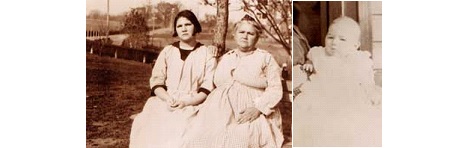
Carrie Buck with her mother Emma Buck; her baby Vivian
Korematsu allowed the U.S. government to intern Japanese-Americans in concentration camps during World War II. In a remark in another case, Chief Justice John Roberts said it was “gravely wrong on the day it was decided” and that it has been “overruled in the court of history.” Many people interpreted this as overruling the case, but this is ambiguous. Roberts’ point was to say that neither Korematsu nor the revulsion against it applied to the case at hand.

Fred Korematsu
Neither of these two cases is as firmly overturned as needed. There are only indications they’re no longer regarded as precedent. The court can’t just overturn a ruling because it takes a notion to, but has to do so based on a case in front of it.
The cases aren’t coming because no one takes those rulings seriously any more. Overturning them isn’t controversial. It just can’t be done without a pertinent case – or a constitutional amendment.
What all three problems have in common is that they’re forms of coercion – slavery for those committed of a crime, involuntary sterilization, incarceration because the government decides an entire ethnic group is a war-time threat. They all have racism in their very foundations. Buck v. Bell also includes bigotry against people with disabilities (or, in this particular case, working-class people sloppily understood to have disabilities).
Therefore, all three could fit in one theme. There was already a a joint resolution which was introduced last December, calling on the U.S. Senate and House to craft an amendment saying “neither slavery nor involuntary servitude may be imposed as a punishment for a crime.” This is likely to be introduced again this coming session. Therefore, it’s realistic to think that at least there may be legislation on the first problem alone that we can advocate on, and that in itself would be good. Whether adding on ways of overturning the two court decisions, when there’s pretty much a consensus that they should be overturned, is something to think about.
Other Ideas?
As you can see above, these are generated under brainstorming rules. The ideas may be followed up on. They may generate other ideas to be followed up on. Or they may serve as nothing more than social commentary on what our legislators could do but won’t. Anyone who has any other ideas, please put them below in the comments, and/or send them to: weekly@consistent-life.org.
=========================
For related posts, see:
Why the Hyde Amendment Helps Low-Income Women
Our Experience with Overturning Terrible Court Decisions
Pandemics Related to Christmas
by Rachel MacNair
Widespread plagues have been a part of the human condition throughout history. Therefore, it stands to reason traces of them can be found in a holiday season often used to help people cope and be resilient.
It’s a Wonderful Life
When George Bailey was still a boy, one of the ways he made a difference was in helping his employer, the pharmacist Mr. Gower, by keeping him from sending poison rather than medicine.
Why was Mr. Gower so frazzled? He’d just received a telegram that his son had died of influenza. Since that was in 1919, that would be the pandemic that killed over 50 million people; his son was one of them.

St. Nicholas
 Nicholas of Myra (traditionally 270-343) was a bishop whose legendary secret gift-giving to people stuck in poverty developed into the model of Santa Claus. His was one of the legends promoting the idea of children as real people, an idea crucial to stopping feticide and infanticide.
Among other legends about him: Nicholas forced Governor Eustathius to admit he was bribed to condemn three innocent men to death. He appeared in Emperor Constantine’s dream to say three imperial officers, condemned to death at Constantinople, were innocent. Constantine freed them the next morning. So Nicholas became, among many other things, a patron saint of prisoners.
His parents were wealthy, which is why he had the wherewithal to be so generous. But legend has it he inherited the money quite young, because his parents died of the plague; the timing was not long after the height of the Plague of Cyprian (perhaps similar to Ebola or maybe smallpox).
Ancient Epidemics
From “Christianity Has Been Handling Epidemics for 2000 Years: Practical theology says care, sacrifice, and community are as vital as ever”:
During plague periods in the Roman Empire, Christians made a name for themselves. Historians have suggested that the terrible Antonine Plague of the 2nd century [165-180 C.E.], which might have killed off a quarter of the Roman Empire, led to the spread of Christianity, as Christians cared for the sick and offered a spiritual model whereby plagues were not the work of angry and capricious deities but the product of a broken Creation in revolt against a loving God.
===========================
This is a list of holiday editions of our weekly e-newsletter, Peace & Life Connections.
In 2010, we showed “It’s a Wonderful Movement” by using the theme of what would happen if the peace movement and the pro-life movement hadn’t arisen. We also had quotes from Scrooge (against respect for life) and a Martin Luther King Christmas sermon.
In 2011, we covered the materialism-reducing “Advent Conspiracy” and offered two pieces of children’s literature: a 1938 anti-war cartoon called “Peace on Earth,” and the anti-war origins of “Horton Hears a Who,” whose tagline – “a person’s a person, no matter how small” – is irresistible to pro-lifers.
In 2012, we had a couple of quotes showing the pro-life aspects of two prominent Christmas tales: A Christmas Carol with Ebenezer Scrooge, and the movie It’s a Wonderful Life. We also quote from John Dear about Jesus as peacemaker and Rand Paul about the 1914 spontaneous Christmas Truce; he then related it to the culture of life.
In 2013, we shared several quotations reflecting on Christmas.
In 2014, we offered a quotation from a lesser-known Christmas novella of Charles Dickens and cited the treatment of abortion in the Zoroastrian scriptures.
In 2015, we had a list of good holiday movies with consistent-life themes – check it out for what you might want to see this season. We also had information on Muslim nonviolent perspectives.
In 2016, we discussed how “The Magi were Zoroastrians” and detailed how good the Zoroastrians were on consistent-life issues. The ancient roots of the consistent life ethic run deep!
In 2017, we covered Interfaith Peace in the Womb.
In 2018, we detailed Strong Women against Violence – Connected to the Holidays.
In 2019, we showed Christmas as a Nonviolent Alternative to Imperialism.

Shiprah and Puah (Exodus 1:15-19) / Mary and Elizabeth (Luke 1:41-44)
The Random Death Sentence: COVID in Prisons and Jails
by Sarah Terzo
“COVID and Corrections: A Profile of COVID Deaths in Custody in Texas” is a report released by the Lyndon B. Johnson School of Public Affairs at the University of Texas This report documents cases of deaths by COVID in state-run prisons and jails in Texas. It breaks down the demographics of the victims and compares the rate of deaths in custody to those of the general population.
The report gives insights into the crisis of COVID deaths among prisoners. Some of the findings of the report are deeply troubling.

Summary of the Report
The report doesn’t cover federal prisons in Texas, only state and county run facilities. Nevertheless, it documented 204 deaths among jail and prison inmates between early March 2020 and October 4, 2020. The report mentions that this is not a complete number, saying:
These numbers will likely rise as TDCJ [Texas Department of Criminal Justice] and county jails update custodial death reports. Agencies are required to report all deaths in custody within 30 days, but often amend reports much later, after an autopsy is conducted and the official cause of death is determined.
Further:
It is also extremely important to emphasize that these numbers are conservative and there is a great risk of undercounting, especially for county jail deaths. People spend much shorter periods in custody in jails compared to prisons. Because of high levels of “churn” in the jail population, it is possible that individuals contracted the virus in jail, were released, and then died on the outside. Also, some jails may have intentionally released people at risk of dying so that the death would not be recorded as a jail death. Moreover, in both prisons and jails, some people died without ever having been tested for COVID, and some died from a pre-existing medical condition worsened by COVID. Those deaths are not counted as COVID deaths.
Together, these factors contribute to the difficulty in providing a complete picture of the loss of life associated with COVID behind bars in Texas. . . these numbers are conservative; the true toll of the pandemic is likely much higher.
So, the report doesn’t give a complete accounting of COVID deaths in custody, even in the facilities that it covered.
The following are some facts pulled from the report:
- Men make up all jail deaths and 97% of prison deaths.
- In one prison, 6% of inmates died. This is one out of every 17 inmates.
- The average age of death is 64 for people in prison and 56 for people in jail. The youngest incarcerated person who died from COVID was 28, and the oldest 85. Both were incarcerated in state prisons. Four people who died were under the age of 44.
The report explains one possible reason why 64 was the average age of death in prisons:
Because of the poorer health of people who are incarcerated, most health experts believe that their physical health more closely resembles that of a person 10 years older in the general population. In other words, people age 55 in prison have similar medical vulnerabilities to their 65-year-old peers who are not incarcerated.
- 80% of the people who died from COVID in jail had not been convicted of a crime – 11 out of the 14 people who died in jail were awaiting trial. They were in pretrial detention.
- 58% of people who died in prison from COVID (excepting those with life sentences) were eligible for parole at the time they died. Most of these people had been parole– eligible for over a year. The average amount of time those who died had been eligible for parole was 6.5 years.
- 21 people had served 90% or more of their sentence at the time of their death; 8% of those who died had less than a year left of their sentence; 7.5% more had between one and two years left to serve. Nearly half had served over 50% of their sentence.
- Only 17% of people who died had a life sentence.
Nine people who died in prison had already been paroled and were awaiting release. The report says:
There is often a lag time between the decision to approve someone for parole release and the actual release date, as there may be a requirement for the person to participate in a program prior to actual release. However, as our forthcoming report will discuss, many of these required programs have been put on hold during the pandemic.
So, some of those who were eligible for parole may have still been in prison because these programs weren’t running.
Prisoners tested positive for COVID at a rate 490% greater than those in the general population of Texas, and 620% greater than the national average. Prisoners died at a rate 140% higher than those in the general population of Texas, and 115% higher than the national average.
Black prisoners died at a rate proportionate to their percentage of the population in Texas prisons. Latinos were slightly overrepresented among deaths. White people were underrepresented. Blacks made up 33% of the prison population and 33% of the deaths. Whites made up 34% of the prison population and 30% of the deaths. Latinos made up 33% of the population and 36% of the deaths.
There were also 27 staff members who died of COVID, including chaplains, a nurse practitioner, and a cannery worker.
Of those who died of COVID in prison, 73% had been convicted of “person” offenses such as assault, rape, or homicide. One in 10 had been convicted of a nonviolent drug offense; 6% had been convicted of offenses against property, such as burglary; 11% fell into the “other” category which includes, according to the report, “technical violations, DWIs, and other miscellaneous offense.”
Thoughts and Suggestions

Sarah Terzo
Every death from COVID in jail or prison is a tragedy. But it is especially heinous that 80% of jail deaths were among people who hadn’t been convicted of a crime.
The answer is not necessarily to release every single person who is awaiting trial. In August, Ibrahim E. Bouaichi, who was accused of rape, abduction, and other offenses but hadn’t been tried, was released due to fears of COVID. He hunted down and murdered Karla Elizabeth Dominguez, the woman who’d accused him of rape. Had he not been released from jail, Dominguez would still be alive.
Persons who are a threat to others shouldn’t be released. But those who are awaiting trial for nonviolent offenses absolutely should be.
In prisons, the 27% of prisoners who died of COVID after being convicted of nonviolent offenses were essentially given the death penalty for nonviolent crimes. I cannot see any value in keeping nonviolent offenders locked up and at risk during a deadly epidemic.
Parole should be also be expedited for those who are eligible, especially for the elderly, disabled, and those at high risk. The elderly and disabled are at the greatest risk for COVID and are also among the least likely to commit violence upon release. They should be released for their own protection. Releasing elderly people with life sentences, who are no longer any kind of threat to the public, should also be considered, as should making eligible for parole those with life sentences who chaplains and prison officials believe won’t reoffend.
The decision to cancel the program that prisoners were required to undergo before being released, thereby forcing paroled prisoners to stay in custody, was a deeply unfortunate decision that led to people dying. Unless a program is vital for helping prisoners adjust to release, it should be eliminated. All barriers to releasing prisoners who are paroled need to be removed, not added to, during a pandemic.
The fact that incarcerated people are more likely to die of COVID than those who get sick in the general population indicates that medical care in prison is inadequate. One formerly incarcerated person, Paul Singh, has written about the shocking lack of healthcare in prisons. His book should be read by everyone. It’s easy to imagine how poor medical care could add to the death toll among prisoners. An improvement in medical care would help those who have comorbidities be less at risk of dying from COVID. Prompt transfer to hospitals might also lower the death rate.
With less crowded prisons, which would be the result of releasing nonviolent and elderly inmates, it would be easier to prevent infections.
I hope this report will show those with the power to change prison conditions that change is needed. Serious consideration needs to take place to determine what can be done to prevent deaths from COVID among those who are incarcerated and those who work in prisons and jails.
==========================
For more of our posts on the impact of Covid-19, see:
Post-pandemic: What Worries Me / Lois Kerschenr
“Millions Who Are Already Hanging by a Thread”: The Global Repercussions of Covid-19 / John Whitehead
A Healing Metaphor: Pandemic as War / Julia Smucker
Mask Up: It’s Pro-Life / Sophie Trist & Alex Christian Lucas
Consistent Life History: Being Across the Board
by Father Jim Hewes
In 1978, Frank Staropoli and I founded the Diocesan Human Life Commission, in the Catholic Diocese of Rochester, with our charter clearly being what was later called a “consistent life ethic” (CLE) or a “seamless garment.” This was five years before Cardinal Bernardin’s famous speech at Fordham. We called it at that time “being across the board.”
The Commission developed many exciting efforts. Notable was the development of having a CLE parish contact in pretty much every parish in the Diocese; this was an impressive undertaking because these parish contacts would effectively help to publicize and implement various endeavors of the Human Life Commission.
There was a reorganization within the diocese, which caused friction with the efforts of the Human Life Commission. Frank Staropoli left the Commission in 1984 and I left in 1985, after serving for seven years as the chairperson. Sadly, not long after this, the diocese disbanded the Human Life Commission.

Fr. Jim Hewes
Why Didn’t They Stay?
I wondered why these various members didn’t stay. As I began to investigate and reflect, specifically with the pro-life people, I discovered an important factor in what I believe had transpired.
At one point, the pro-life groups and the social justice/peace groups had a common area of concern for human life. But people in the social justice/peace groups had evolved more into a progressive/liberal philosophy and political stance in their approach to the life issues. Over time, this position had hardened.
Then these progressive groups would not welcome or even consider dialoguing with pro-life people, but the Fundamentalists, Evangelicals and the political conservatives were more than ready to welcome them with open arms.
Then the Right to Life people, over time, without almost any connection or relationship with people with other points of view (such as those involved in social justice/peace) became more conservative and hardened in their political position.
Thus, we have the “breach” in today’s reality. I truly believe that there was a time when there was a window of opportunity for dialogue and even change (for both sides, but especially for pro-life people). But they were turned away because of a lack of openness by the progressive/liberal/ peace/social justice groups.
Unfortunately, both sides developed a certain blindness and deafness, and each hardened their position. This is the true source of the breech.
This divide hasn’t changed much over the years, outside of the people and organizations connected to the Consistent Life Network. That is my take of being involved in this area for the last 50 years.

Progress
Several years later, in 1992, an amazing thing happened with the Diocese of Rochester Synod. Each parish and faith community (like the Newman Centers on College Campuses, etc.) submitted their top five priorities for the Diocese for the next five years, and sent them into the Diocesan Pastoral Center. They were then tabulated into 54 issues (the consistent ethic of life was not one of them). Then there was a gathering at the Convention Center where these priorities were discussed by over 1,000 representatives from parishes, and the top 18 were voted on and listed. Next, there was an open session in which any person could make the case for one more issue to be added for discussion for the final general session; another 18 were listed (consistent ethic of life was one of them). Then all present voted on their top issue.
Surprisingly, Consistent Ethic of Life was voted in. and become part of the final 19 possible priorities. Five would be acted on as the priorities by the whole diocese. When all the final votes were counted, amazingly Consistent Ethic of Life received the second highest number of votes overall.
Because of this, eventually a full-time Life Issues Coordinator was hired by the Diocese for the first time.
She instituted a banquet where a “Vita Award” was given out each year to those people in the diocese who embodied and witnessed to an aspect of the consistent life ethic. Also, the Consistent Life Ethic Grant fund was made possible by the Consistent Life Ethic Dinner. In my view, this outcome must have happened by the workings of the Holy Spirit. There were some members of the Human Life Commission that felt this also came about because of the foundation the commission had laid years before.
When I was speaking back in the early 1970’s for the Right to Life Committee, I had to spend the first 15 minutes of every presentation explaining why the pro-life position wasn’t just the Catholic Church imposing its morality on the country. The strong Evangelicals involvement came later. I’ll never forget the first Leo Holmsten Award, for which Leo was the first recipient (he died not too long after this). He was a doctor who had worked at Planned Parenthood and then changed dramatically, becoming an outspoken pro-life advocate. He was also an Evangelical Christian. In his acceptance speech that night, he thanked the Catholics for being in the forefront of this issue and movement for so many years.
One of the remarkable accomplishments of the Human Life Commission was bringing the pro-life Christian groups together, to work in a more coordinated and focused way on the Life issues.

===============================
For more of our posts from Jim Hewes, see:
Death Penalty and other Killing: The Destructive Effect on Us
For more of our posts on the recent history of the consistent life ethic, see:
Defenders of the Unborn: The Pro-life Movement Before Roe v. Wade (review of book by Daniel K. Williams)
First Stirrings in Connecting the Life Issues
The Adventures of Prolifers for Survival: Scorned by Mobilization for Survival
Reminiscing on the Founding Meeting of the Consistent Life Network
Activists Reminisce: An Oral History of Prolifers for Survival