Asking Questions about Miscarriage and Abortion
by Ms. Boomer-ang
While on a vacation in New York’s Adirondacks in September 2018, I ran into a family that included two gospel singers, a mother and a daughter. One day we ended up hiking together.
During the hike, the daughter said, “I have a little sister in heaven. That’s neat!”
The mother told her story: She had had an early miscarriage, and the doctor had sped it up surgically. I wondered if there was a chance that the fetus was still alive when the operation started.
Within the medical profession, the technical term for a miscarriage is a “spontaneous abortion.” Such an event is obviously very different from what doctors call an “induced abortion”—in other words, what we conventionally call “an abortion.” However, the similar language used raised questions for me about how doctors might be responding to women with medically complicated pregnancies.
When women are told they are going to miscarry and then rushed into a procedure to complete the miscarriage efficiently, how likely is it in these cases that the fetus was still alive when the procedure began? How likely was the woman herself to have survived without the procedure? What chance did the pregnancy have of continuing until the live birth of a viable baby, with the mother surviving too?

Sometime between 1995 and 2010, a woman wrote in the Washington Post that she had signs of trouble in the first trimester of her pregnancy. The doctor told her she was miscarrying. She could wait and see if her body expelled the fetus naturally or have it taken out immediately by surgery. So the woman agreed to surgery. This meant going to an abortion facility and having the same procedure as an abortion.
Since apparently she did not oppose abortion, she did not mind doing that. She said one or two other women there at the same time were also there to complete miscarriages. But she noted that she was the only woman in the recovery room not crying.
The New York Times reported this September that when pregnant women come to doctors with “miscarriages or hemorrhaging,” abortion is the established standard care. It quotes Dr. Alison Haddock attacking the prospect of restrictions on abortions with, “Do we wait until the fetus is definitely dead?…[H]ow much bleeding is too much?”
That made me wonder if in many, if not most, cases where women are rushed into “miscarriage completing” procedures, the fetus is still or probably still alive. In some cases, could the pregnancy have been continued, without endangering the mother?
Surgery may be necessary in ectopic pregnancy, but what about other types of situations?
If a woman is suffering life-threatening hemorrhaging, then the bleeding must be stopped in any way possible, but does removing the fetus—which may require cutting—really ease the bleeding?
I am not a doctor, so I am not certain. However, with a medical culture that both wants natural processes sped up and values abortion, how much bleeding are doctors—even pro-life ones—now trained to regard as too much?
Furthermore, when the fetus is dying or becoming detached and cannot be saved, making the mother “complete” the miscarriage immediately through a surgical abortion has similarities to killing patients because they are terminally ill and to regarding the dying as already dead.
Are there cases where the doctor does not want to know if the fetus is alive? In many cases, is it an instance of not wanting to “reduce efficiency” by taking a step considered extraneous? In others, is distinguishing between the dying, the possibly dying, and the dead considered too nitpicky?

Doctors should be better trained in handling a pregnancy with complications to ensure the survival of both mother and baby. Have doctors forgotten how, when encountering possible miscarriage symptoms, to save both mother and baby? Are younger doctors taught that is impossible? In order to learn how to save the life of both the mother and the baby, will doctors have to get training in countries where abortion is still illegal?
And women should definitely be told if there is a chance that the fetus is still alive before being rushed into “miscarriage completion.”
===========================
For more of our posts on similar topics, see:
Is an Embryo More Important than a Woman?
For more of our posts by “Ms. Boomer-ang” (pen name), see:
“Shut Up and Enjoy it!”: Abortion Promoters who Sexually Pressure Women
Political Homelessness is Better than a Wrong Political Home
The Need for Peacemakers: Two Urgent Dangers That Require a Response
by John Whitehead
Peacemaking is urgently needed today. Peacemaking is needed in response to a variety of ongoing violent conflicts in the world. I will highlight just two conflicts that my own country, the United States, is currently involved in and that demand particular attention from peacemakers.

The first is the ongoing conflict with Russia over Ukraine. The United States has responded to Russia’s brutal aggression against Ukraine with various types of support for the Ukrainians in their struggle, including substantial military support. As a result, the United States is now engaged in a kind of indirect or proxy war with Russia.
The second conflict of note is the United States’ intensifying rivalry with China. This conflict is luckily not yet overtly violent but it clearly a major focus of US policymakers today. The Biden administration’s recently released National Security Strategy identifies China as the United States’ primary rival. Competition with China is given the highest priority, even higher than that given to the conflict with Russia. The National Security Strategy identifies China by name as “America’s most consequential geopolitical challenge” ( p. 11).
The conflicts between the United States and two powerful nations that also possess nuclear weapons pose very serious dangers to the lives and well-being of untold numbers of people. These conflicts are dangerous for an obvious reason and a less obvious but still important one.
The Danger of Hot War
The obvious reason is that the United States’ conflicts either with Russia or China could escalate into direct war between the United States and these countries. Open war with Russia or China could and probably would lead to the use of nuclear weapons, which would be a catastrophe for all humanity.
The danger of open war is more severe in the US-Russia conflict over Ukraine. In Ukraine, war is already being waged, with both the United States and Russia as participants. Because the war has gone badly for Russia and Vladimir Putin now faces the prospect of total defeat for his ambitions in Ukraine, Putin has resorted to at least the implicit threat of using nuclear weapons. He has he will use such weapons in response to “a threat to the territorial integrity of our country and to defend Russia and our people.”
Since Russia is now claiming parts of occupied eastern Ukraine as Russian territory, Putin’s promise implies that he will use nuclear weapons rather than accept defeat in Ukraine. (A more recent official statement by the Russian Foreign Ministry suggests the Russians might be slightly backing away from the threatened use of nuclear weapons, but the threat is still very much present.)

Kings Bay 7
Statements made over here in the United States are not much more encouraging. Some notable current and former public officials have proposed open war with Russia as a real possibility. A sitting US senator and former presidential nominee, Mitt Romney (R-UT), suggested this spring that if Russia used a nuclear weapon in Ukraine, the United States and NATO should consider direct military intervention in Ukraine with the possible goal of “obliterating Russia’s struggling military.” This fall, the former director of the CIA, General David Petraeus, also suggested that NATO might get directly involved in the Ukraine war if Russia resorts to nuclear weapons.
Such comments are not official statements of US policy, but they give a sense of what is being contemplated within the larger policymaking community. My own prediction would be that if Russia used nuclear weapons in Ukraine, de-escalating the conflict after the nuclear threshold had been crossed would be extraordinarily difficult. The more probable outcome after a nuclear weapon is used would be further escalation of the violence. President Biden as much as this fact publicly a few weeks ago when he said that it would be very difficult to “[use] a tactical nuclear weapon and not end up with Armageddon.”
The current situation with Russia is very dangerous. The US-China rivalry is not yet as dangerous, because it does not involve open violent conflict. If hostility between the United States and China continues to grow, however, a military confrontation comparable to the one we are currently seeing with Russia could flare up.
An American confrontation with China might flare up over competition for influence in the Pacific region or over territorial disputes between China and its neighbors in the East and South China Seas. Above all, military confrontation might flare up over the very contentious issue of Taiwan.
The Danger of Cold War
The risk of open war with Russia or China is the obvious danger we are facing today. The less obvious danger these conflicts pose to human life is still a dire one. Long-term conflicts between the United States and other great powers threaten to divert vast amounts of resources away from urgent human needs.
This danger of wasted resources is most apparent in the bipartisan policy of “modernizing” the United States nuclear arsenal: building a new generation of nuclear weapons and the infrastructure necessary to support them. The recent National Security Strategy affirms continued pursuit of this goal.
Nuclear modernization is not cheap, however. The Congressional Budget Office estimated last year that nuclear-related activities by the Defense and Energy Departments will cost the United States $634 billion over the coming decade. That’s $634 billion spent on new weapons of mass killing. Further, even this massive amount of planned nuclear spending is dwarfed by overall US military spending, which is currently projected to top roughly $800 billion for the coming fiscal year alone.
Spending these obscene amounts of money on preparations for war harms human beings even if, as we must all hope and pray is the case, actual war never occurs.
The need in our world today is very great. We need to address the urgent problems of poverty and of climate change, which can combine to harm vulnerable people. We see the lethal effects of poverty and extreme weather events unfolding today, for example, in the disastrous flooding in Pakistan this year. We see these lethal effects in the Horn of Africa, where a severe drought, along with other factors, currently threatens access to adequate food supplies for tens of millions of people in Somalia, Ethiopia, and Kenya.
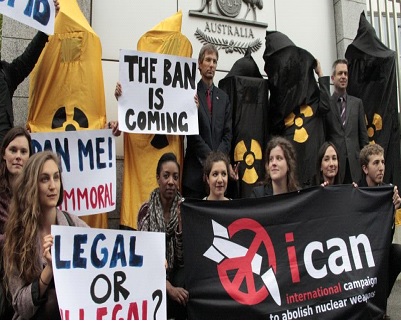
Beyond poverty and climate change, the last few years have indelibly shown us the terrible consequences of global pandemics. Our experience of Covid-19 should impress upon us the necessity of investing in international public health and global cooperation to prevent and respond to future pandemics.
Meeting these urgent human needs is not served by wasting hundreds of billions of dollars on the military and investing political will in international rivalries with other nations. The world clearly cannot afford a global hot war. Beyond that, though, the world cannot afford a global Cold War, either. We need to find a way of working together, across national boundaries, to address our common problems.
This is why we need peace activists. We need people to advocate in the short-term for a cease-fire in Ukraine. A genuine, just resolution to the current conflict is probably too much to hope for at this stage, but we can at least seek to stop the immediate fighting and freeze the conflict so it does not escalate to the nuclear level.
We also need people to advocate in the long-term for a more conciliatory US policy toward China and Russia, one that emphasizes diplomacy, avoids direct confrontation, and manages potential points of conflict so they don’t spiral into more disastrous wars such as in Ukraine. We need people to advocate for radically reducing our grotesque military spending, above all our spending on nuclear weapons. We need people to advocate for international cooperation to address poverty, disease, and climate change in our world.
I urge people to get involved in peacemaking. Get involved in groups such as the Consistent Life Network, Pax Christi, and Rehumanize International, which are working to defend life from war, poverty, and other threats. Let’s contribute to making our world a more peaceful one.
===================================
For more of John’s posts on nuclear weapons, see:
A Global Effort to Protect Life: The UN Treaty Banning Nuclear Weapons
Wasting Money on Instruments of Death: Nuclear Weapons in the 2022 Budget
A Hidden Cost of the Ukraine War: How Russia’s Invasion Encourages the Spread of Nuclear Weapons
The Persisting Threat of Nuclear Weapons: A Brief Primer
Fallout at Home Base: Nuclear Testing within the United States
A Personal Reflection on a Just War
by Fr. Jim Hewes
Presidents and others over the years have tried to make the case to the American people (including those of us who are Christian) of what constitutes a necessary war or “just war.” As we form our consciences about war, let us keep in mind several points when someone is talking about a “Just War.”
The Just War Theory was never taught by Jesus (nor does the theory even mention Jesus) who in fact taught a non-violent love of one’s enemies. There is no appearance of the Just War Theory in all of the New Testament. For the first three centuries, those followers who were closest to Christ did not participate in war because they saw it as incompatible with Christ’s life and teaching. Christians in the early Church did not become involved in war because they knew that this life wasn’t all that there is – they knew the reality of eternal life.
Many Christians today would justify defending their family from a violent intruder. This then spills over to defending a wider “family” of their country being attacked, and the justification for war follows. But among the early Christians, men, women and children were being dragged off and tortured and killed. But the early Christians didn’t pick up arms or even form a group (like the Zealots) to defend themselves. They refrained from doing this because of their strong conviction that this life wasn’t all there was, but that there was awaiting them an eternal life (“No one has ever seen this. No one has ever heard about it. No one has ever imagined what God has prepared for those who love him.” I Corinthians 2:9). It wasn’t about merely ethically opposing war in theory; it was the real-life situation that these early Christians faced where they did not defend their loved ones or themselves or engage in a war because of their following what Jesus taught and lived and His promise of eternal life.
If this life is all there is, then justified violence and war make sense, but if there is more than just this life, then one can lay down one’s life rather than pick up a sword. In fact, this Just War Theory does not appear in Christianity until over 300 years after Christ. Christians in that era of the church, if they were ever to participate in a war, knew that these standards would have to be strictly and completely followed. The Just War Theory is not a dogma of the Catholic Church. St. Augustine (after St. Ambrose) in developing the Just War tradition never said there could be a just war, but rather he stated that if Christians were even to consider participation, the moral presumption was always against war and in favor peace.

If there ever were to be a just war, all the conditions for the just war (Just Cause, Proportionality, Serious Prospects of Success, Being the Last Resort after all other means had been exhausted, etc.) had to each be rigorously and completely upheld. The evil that one causes has to be morally certain to be less than the evil that one is supposedly preventing. For example, one of the conditions of a just war is that the lives of innocent civilians must never be taken directly, regardless of the reason for doing so. If non-combatants were targeted in a war for any reason, the war is unjust. It is a sad fact that in the last 50 years, a large percentage of those killed in wars and conflict have been non-combatants.
No Catholic, Protestant, or Orthodox hierarchy has ever declared one of the wars of its own nation unjust while the war was going on. If the Just War Theory has ever been applied at all, it has been selectively applied to justify one’s own position. This is why no nation has ever prepared its military strategy on the basis of these rigorous standards (which would be seen as an unnecessary burden rather than a moral guide). They simply have ignored them. St. Augustine developed the theory to limit Christian participation in war, yet it is continually used to justify and expand the violence of war. For if one was to follow these standards exactly and fully, one would conclude that in reality a just war is impossible.
The notion of a just war is an illusion that has seduced and lured Christians to try to appropriate a divine approval (God is on our side rather than God is God for all nations and people) that is clearly contrary to the life and teachings of Jesus. The idea of a just war has allowed Christians to be major destroyers of life in wars in the last 1700 years. In fact, it was just this type of teaching, pervasive in the Christian Churches of Germany in the 1930s and 1940s, that justified the horrible violence that took place during that time. The increasing use of justified violence creates insensitivity to the dignity of life and impairs the efforts of those who might try to apply the Just War Theory the way St. Augustine intended it. In our modern times Martin Luther King, a follower of Christ, put this well: “The choice today is no longer between violence and non-violence. It is either non-violence or non-existence.”
I have great respect for individuals who are veterans. I am in awe of the courage and dedication that they have displayed, as well as their willingness to sacrifice so much, even their lives. Our president and congress send soldiers to war in our name. But Christians must form our own consciences as followers of Christ in order that our loved ones will not be sent to war or commit violence that will not only destroy an enemy, but destroy themselves as well. A “necessary” or justified war is merely a way to perpetuate the cycle of violence that moves us farther and farther from the nonviolent way Jesus lived and taught.

====================================
For more of our posts from Fr. Jim Hewes, see:
Death Penalty and other Killing: The Destructive Effect on Us
Abortion and Other Issues of Life: Connecting the Dots
The Case for Abortion as the “Preeminent Priority”
The Consistent Life Ethic: My Christian Perspective
Reflections from My Decades of Consistent Life Experience
Consistent Life History: Being Across the Board
For more of our posts reflecting on war not being justified, see:
The Civil War Conundrum, 150 Years Later
The Darkest Hour: “Glorifying” War?
Would Nonviolence Work on the Nazis?
What Just Happened!?! Becoming Consistent Life Despite Myself. Part 1
by Thad Crouch
There I am. Army infantry veteran and a Louisiana State Trooper scholarship recipient because I’m the criminal justice major with the highest GPA at McNeese State. It’s halfway through the spring semester. I’m staring at my raised hand, thinking, “What Just Happened!?!” The professor asked who was against the death penalty, and my hand shot up on its own! Somehow, I just know, in my bones, that I’m absolutely against the death penalty. But when did this change!?! A few classmates stare at me.

Thad Crouch
During the previous semester, I had told the class it was a shame to waste tax-payer money to execute scumbags. I suggested our state raise money by allowing the highest bidder to execute a murderer by any method of choice: hanging, shooting, burning. I had actually proclaimed, “Clip their toenails up to their chins, I don’t care.” Some students were flabbergasted and looked at each other as if to say, “What a sick bastard!”
But now, I lower my hand. I can’t hear the professor over my internal dialog. What could have changed my mind?
The professor’s voice penetrates my thoughts, “Is there anyone who would still be against the death penalty even if I proved it was a deterrent to murder?”
My hand goes up again. One of only two in the whole class.
“Thad!?! Really? Why?” the professor puzzles.
“Damn it!” I think. I just discovered my new position three seconds ago, and now I’m being asked to improvise my thoughts in front of everyone. “Because – ” I bellow. “Because – because,” I weakly say as I scramble to articulate. “Because human life is precious!” I exclaim with power. “Why would we do that!?!”
Now I’m flabbergasted, yet confident and resolved, while inarticulate. My classmates see my surprised expression. They pore over me with confused wonder. The professor’s jaw gapes.
“I mean – I get it if we catch someone in the act of murder or multiple murders and we have to kill him to prevent another murder, but – c’mon! We’ve already apprehended the murderer! He’s – he’s in custody. He’s in prison! He can’t kill anyone else. He’s not a threat. People are safe! Why would we do that!?! It’s just – it’s not necessary.” Why would we want to put another family through such pain!?! I don’t understand. I do not understand! I do not understand why anyone would do that!

Many intrigued fellow criminal justice majors gawk, then look to one another, seemingly asking, “Isn’t he that sick bastard from last semester?”
I don’t know what happened the rest of that day. I only recall scrutinizing my memory for anything I might have read, discussed, or pondered that influenced me. Then it hit me. I wasn’t the one who changed my mind.
A couple months earlier, at about 1:00 AM, January 26th, I was driving home on a dark empty section of Interstate 10, after seeing a film version of Hamlet. Alone on the road, I reviewed the scenes that prompted emotion, especially Hamlet flipping the script on his so-called friends, Rosencrantz and Guildenstern. Hamlet found their secret letter from the corrupt Danish king, asking the English king to execute Hamlet. Hamlet wrote a new letter asking for their execution and sealed it with his royal seal. Yeah, I thought. Those @$S%@<#s deserved that! They betrayed Hamlet’s friendship. That’s what they get!
Then my mind shifted to some of the things I had done and what I deserved. I had abandoned James to go to a party and see that girl. I had physically hurt and humiliated Jimmy when he tried to fit in just because I wanted to show off. I had punched my brother Brett when I was angry at my cousin Edward.
I had taken advantage of my fellow soldiers, Nunez, “Catfish,” and Moore, when I knew something was about to change and kept them ignorant. I thought of them as dumb and uneducated. I chuckled when I manipulated them into thinking I was doing them favors. All three were men of color.
Even though I hadn’t arranged for anyone’s death, I had just delighted in the concept of retribution toward Rosencrantz and Guildenstern. I now saw that could easily apply to me. I didn’t deserve the forgiveness of those I hurt, nor God’s forgiveness. I certainly didn’t deserve all the endurance of suffering the sinful dehumanizing system inflicted upon Christ. They killed him for simply and competently demonstrating a new way of life that attracted others. His way prioritized the love of God and fellow humans above selfishness, retribution, race, sex, age, nationality, disease, ability, or even enmity itself.
I wept. I prayed for forgiveness. I confessed I had been going down the wrong path and asked God to put me back on the right road.
I realized I had inadvertently taken the wrong highway exit. At 1:00 AM there was no traffic. I literally backed up the van and returned to the right road home. I became overwhelmed with gratitude for forgiveness. Then, I asked a profoundly dangerous question, “God, what could I possibly do to repay you for all the love you have shown me?”
I actually heard an answer! An audible voice said, “Give your life for the Church.”
What!! I was afraid for a split second. I thought someone else was hiding in the van. I turned my head quickly to scan for an attacker. The Army had psychologically conditioned my fight, flight or freeze, reaction to default to fight. This tendency nearly caused me to veer off the literal right road while on an overpass about thirty feet high.
“What Just Happened!?! Did God speak to me? Give my life for the Church!?! What does that even mean? Am I supposed to be a celibate priest now? I can’t be a priest. I’m dating Jenny, and Jenny is so hot!”
Before that moment, I would have scoffed at anyone who suggested I spend more than five minutes a day praying my self-serving Santa Claus wish list to God. After that moment, I spent years pondering what giving my life to the Church might mean. For the next 2-3 years, I spent 1-3 hours a day in verbal, meditative, and mostly contemplative prayer. I didn’t even know what contemplative prayer was! I just wanted it. I craved it. I dreamed about prayer and prayed in my dreams. Sometimes my prayer would be hours of neither talking nor listening to God. Often not even thinking much, just sunbathing in the light and warmth of love from the very Source of Love itself. It was a spiritual honeymoon.
Indeed, nothing I read, heard, discussed, or even thought about the death penalty had changed my mind. That change was just one fruit, one significant outcome of contemplative prayer. That warm, bright love penetrated my heart and my conditioning. It revealed who I could become. It pointed to who we can all become beyond the sinful dehumanizing system’s conditioning.
I didn’t change my mind about the death penalty. Prayer transformed my heart. God told my heart something beyond rational thought; it’s called love. The professor’s question required rational thought. My heart raised my hand before my mind could articulate a fraction of love’s surprisingly new information into rational thought.

Within months of that 1:00 AM moment, I became a Catholic youth minister and volunteered on many retreats. Jen dumped me to explore becoming a nun mere seconds before I could dump her to explore diocesan priesthood. We hugged and laughed. Within a year, I declined a scholarship the financial aid office described as “getting paid a lot of money to stay at McNeese.” I became a religious studies major at Loyola University New Orleans and explored priesthood for a couple of years.
At Loyola I began understanding what I now call the dehumanizing system of discrimination, denigration, destruction, and death. I learned it in classrooms. I learned it from women, African Americans, children, refugees, torture victims, and one reformed murderer in New Orleans. I also learned from former “enemies” I briefly lived with in Haiti and Nicaragua.
I see that system as the cumulative, organized sum result of humanity’s sinful tendency to prioritize ourselves to the detriment of other people and creation as we desecrate our connection and relationships with each other and with the God of love and relatedness itself. I also know religion is not required to notice that Jesus was killed for spreading love and truth by institutions of this pervasive dehumanizing system.
Here in the U.S., I see the system’s expert propaganda has most of us fighting over which side of our bi-polarizing duopolist political paradigm should dominate the U.S. branch of a dominating system. The two sides argue over which categories of humans can be partially or fully dehumanized, to the point that some humans aren’t legally persons, while non-human corporations are fictionally granted legal personhood. We argue over subsets of dehumanizing propaganda while perpetuating overarching ideas which maintain dehumanization. This is why I see a consistent life ethic as vital not just for life and human rights, but also for freedom.
My value for human life has become tempered with humility due to realizing I’ve participated in dehumanizing ideology, destruction, and violence. I once proudly wore one of its uniforms and promoted its lies.
I’ve seen the system’s existence is contingent on a considerable portion of people either supporting, acquiescing in, or being too fearful to dismantle it. A new way cannot fully replace the system as long as those who want to end the system think it can be dismantled by insulting, “cancelling,” or using violence against those who hold the system in place. Such well-intentioned incompetence also holds the system in place. In other words, defeating dehumanization requires a humble commitment to rehumanize ourselves and others who dehumanize. That’s secular talk for “Love your enemies.”
======================================
For more of our posts on personal journeys, see:
On Being a Consistent Chimera / Rob Arner
Peas of the Same Pod / Elena Muller Garcia
Why Conservatives Should Oppose the Death Penalty / Destiny Herndon-de la Rosa
Coming to Peace and Living a Consistent Life After Military Service / Eve Dawn Kuha
My Personal Journey on Veganism, War, and Abortion / Frank Lane
Off the Fence and Taking My Stand on Abortion / Mary Liepold
Sharon Long: My Personal Pro-life Journey / Sharon Long
Nukes and the Pro-Life Christian: A Conservative Takes a Second Look at the Morality of Nuclear Weapons / Karen Swallow Prior
Abortion on the Ballot
by Lisa Stiller
In the state I live in – Oregon – over 50% of the people are underinsured according to a 2017 report by the state. A 2020 report puts our estimated homeless population at 14,655 on any given day. The state poverty rate is currently about 9 percent.
We have three very contentious Congressional races right now. And a very tight governor’s race.
What are most of our candidates campaigning on? At least the Democrat and Independent candidates? Abortion. No, not about those reasons – such as poverty – why people might seek abortion. Just about abortion.
And the Guttmacher Institute reports that 73% of women seeking abortion do so at least partly because they’re afraid they can’t afford a baby.
Just recently, President Biden also put abortion on the ballot by promising to “codify Roe” first thing if Congress remains in Democrats’ hands.
Candidate X will make sure that all people who want an abortion in this state will have one, or will ensure that Congress protects the right to abortion. That is the lead in most of the ads. Some go on to mention other issues, such as homelessness and housing, and gun safety.
The Republican candidates’ ads mostly address crime and homelessness and the fear that people will lose their guns. They don’t mention abortion.
I’m sure other states are experiencing the same types of ads.

When the license to kill becomes the number one issue candidates put forth in their ads, it’s time to examine how our culture of death has permeated the mainstream – and how we can fix it.
Most of all, it puts pro-life progressives in a very troubling position. Our Republican candidates want to cut funding to those programs that reduce poverty and homelessness, statewide and nationally. They want to make cuts that would affect access to health care and reduce spending on education. They don’t want to fund programs that could actually reduce abortion rates.
A Republican governor won’t be able to do much about abortion here, as we’ll continue to have a Democratic majority in our legislature. The “right” to abortion was codified in the state constitution in 2017. A Republican governor isn’t going to get that reversed. And too many Republicans are against a national law opposing abortion for that possibility to become a reality any time soon.
So why are our candidates so focused on this? They know it will get out the vote.
Abortion is on the ballot, claim the ads of all our Democratic and Independent governor candidates, and all our Democratic Congressional candidates. Life-giving, life-affirming issues take a back seat.
Why don’t our candidates feel that the fact that we have close to 15,000 homeless individuals in the state, almost one out of ten people living in poverty, inspire people to vote?
Maybe, sadly, the question should be why don’t these facts inspire people to vote as much as “protecting access to abortion” – which isn’t even at risk here?
Abortion is so much “on the ballot” that it has now become a part of other issues we should be supporting. Phrases like “protect our democracy” and “protect our freedoms” are code for protecting the “right to choose.”
We should be supporting voter protection and fighting voter suppression. We should be supporting legislation that will help prevent another January 6, 2021. But when abortion becomes part of that campaign, how can we support the campaign?

Lisa Stiller
The same thing has been happening with the single payer health care movement, which is now demanding that the right to “abortion care” be protected. Universal health care should not be a partisan issue. Inserting abortion “rights” into other issues adds to the toxic, divisive environment we are living in post Roe. How can I support those issues so important to me when they have taken on advocacy for the right to kill?
An emphasis on individual freedom (“my body, my choice”) and the fear of losing this freedom seems to be a huge motivating factor, despite the fact that the fear is largely unfounded. When did Democrats lose their emphasis on helping the most vulnerable, on addressing poverty? On helping people lead a more productive life, on raising the minimum wage?
And how do we vote? Voting for candidates who make abortion access their central issue poses some moral questions. But so does voting for candidates who want to cut funding to the programs that help reduce poverty, access to health care and affordable housing, and who oppose reasonable gun safety legislation. And not voting doesn’t feel like a good option, as we fear our democracy depends on our voting to help it thrive.
I hope I find an answer before Election Day. But meanwhile the right to kill is still on the ballot.
We need to speak up about this. I have emailed our Democratic and Independent candidates, asking them to put those issues that affect so many of us up front: inflation, housing, more people slipping into poverty, higher medical costs preventing people from accessing care. I hope they listen.
We need to find a way to make a culture of life, not a culture of death, take priority in our elections.
============================
Since referendums give a much cleaner way to vote directly on issues, we have several that we’re tracking:
For more of our posts on voting, see:
Pro-life Voting Strategy: A Problem without an Answer
Elections 2020: Three Consistent-Life Approaches
My Difficulty in Voting: Identifying the Problem
What History Shows: The Consistent Life Ethic Works for Pro-life Referendums
How Consistent-life Advocacy Would Benefit from Ranked-Choice Voting
A reminder: The Consistent Life Network doesn’t necessarily endorse everything said in its blog, since we encourage individual writers to express a variety of views. This is especially so when analyzing elections.
Stepping Back from the Brink: The Cuban Missile Crisis and Lessons for Today
by John Whitehead
We are now 60 years away from the Cuban Missile Crisis. The October 1962 confrontation between the United States and the Soviet Union over Soviet nuclear missiles stationed in Cuba was a moment when the world came perilously close to nuclear war.
This crisis’ anniversary has new significance in 2022, as the world faces a new confrontation between the United States and Russia that poses a similar danger. US President Joseph Biden recently said that for the “first time since the Cuban Missile Crisis, we have a direct threat of the use of the nuclear weapon[s].”
The current situation gives special importance to remembering the 1962 crisis and learning whatever lessons from it that can be useful in avoiding war today. (I rely here primarily on Aleksandr Fursenko and Timothy Naftali’s “One Hell of a Gamble”: Khrushchev, Castro, and Kennedy, 1958-1964 [New York: Norton, 1997].)
Two Cold War Problems
The Cuban Missile Crisis can be interpreted as arising from two overlapping Cold War problems:
Nuclear Arms Race. The United States, being the first nation to build nuclear weapons, by the early 1960s possessed a larger number of nuclear weapons and more technologically sophisticated weapons than the Soviet Union. The United States also had nuclear weapons stationed outside its borders, in various US-allied countries from which they could reach the Soviet Union relatively quickly.
Given that even a very small number of relatively low-tech nuclear weapons can be devastating in war, such numerical and technological imbalances supposedly shouldn’t matter. However, according to the paranoid logic that nuclear deterrence can encourage, these imbalances can be interpreted as giving one side an advantage. Imbalances raise the question: Could the other side use its superiority to strike first in an effort to destroy our nuclear arsenal before we can retaliate? By this logic, the Soviet Union had a problem.
Cuba. A 1958 revolution overthrew the US-backed dictator of Cuba and brought to power a new, left-wing regime led by Fidel Castro. Cuba’s relationship with the United States deteriorated, and the new regime sought closer ties with the Soviet Union, which provided Castro with military aid.
As the United States pursued covert efforts to undermine Castro’s power, Nikita Khrushchev, the preeminent Soviet leader, made repeated public pledges to defend the island against the United States. In 1960, Khrushchev even implied the Soviets would defend Cuba with nuclear weapons.
US efforts to destroy Castro’s regime culminated early in President John F. Kennedy’s administration. In April 1961, Kennedy supported an attempted invasion of Cuba by anti-Castro forces with the intention of overthrowing Castro. The invasion at the island’s Bay of Pigs ended in disaster, but it underlined for the Soviets the danger their Cuban ally faced. Soviet-Cuban military ties increased after the invasion, while the Kennedy administration continued working against Castro, even plotting his assassination.
US-Soviet relations worsened during 1961-62. Kennedy and Khrushchev had a hostile summit meeting in June 1961. The Soviet Union resumed nuclear testing in 1961, after a years-long moratorium. The United States soon resumed its own nuclear tests.

Amid this tense international situation, Khrushchev decided in early 1962 to station Soviet nuclear missiles in Cuba. This step could address both problems: being able to quickly strike the United States seemingly evened out the US-Soviet nuclear imbalance, and Castro’s regime would be protected from invasion. To his inner circle, Khrushchev commented, “the only way to save Cuba is to put missiles there” and that just as US weapons stationed close to the Soviet Union “are aimed at us and scare us,” Soviet missiles in Cuba would “give them back some of their own medicine” (Fursenko and Naftali, 182). The Soviet leadership agreed on May 21, 1962 to put missiles in Cuba.
The Crisis
The Soviets carried out their plan over the summer and early fall. By early October, Soviet forces in Cuba had over 30 missiles. Each could be armed with a 1-megaton warhead and each could hit a wide swath of the southeastern United States. The Soviets in Cuba also had 12 tactical nuclear weapons they could use if the United States attacked the island.
The crisis erupted when an American surveillance plane spotted the missiles. Kennedy learned about the missiles on October 16 and for almost a week secretly consulted his advisors on what to do. They considered trying to get rid of the missiles by bombing or invading Cuba. However, some argued the Cuban missiles had no military significance, given US nuclear superiority. Others pointed to the comparable presence of US missiles close to the Soviet Union, in allied countries such as Turkey.
Two crucial restraints helped prevent a US attack on Cuba. One was uncertainty about the missiles’ status: were any ready to launch? Could one be launched before the United States destroyed them? Another restraint was the fear the Soviets would retaliate with military action against West Berlin, a US-aligned outpost deep in Communist East Germany.
Kennedy instead chose an option that he announced in a televised speech on October 22. Calling the missiles “a definite threat to peace,” he urged Khrushchev to remove them. The United States would impose a naval blockade of Cuba to prevent further “offensive military equipment” being sent there. Although his tone was confrontational, Kennedy was effectively playing for time, warning the Soviets without yet taking action against the Cuban missiles.
The Soviets responded in kind. Khrushchev sent messages to Kennedy defying the blockade, while the Soviet military raised its level of preparedness. Alongside these threatening signals, though, the Soviet leadership decided first to curtail and then stop any further military shipments to Cuba, so as not to violate the US blockade.

Behind the scenes, Americans and Soviets looked for a diplomatic resolution that would allow both sides to back down without losing. As early as October 17, Kennedy had been considering withdrawing US nuclear missiles in Turkey in exchange for the Cuban missiles’ withdrawal. Following Kennedy’s October 22 speech, US policymakers sent various messages, via a private channel, to the Soviets proposing this swap.
Khrushchev and his inner circle agreed to propose their own deal: they would withdraw the missiles if the US guaranteed not to invade Cuba. Khrushchev sent this proposal to Kennedy October 26. Khrushchev later added the Cuba-Turkey missile swap to his proposed deal.
Despite the mutual search for a peaceful resolution, the situation remained quite dangerous. Some US policymakers still advocated attacking Cuba. Had the United States done so, Soviet forces might have used their tactical nuclear weapons in response.
People lower down the chain of the command also could shape events. The Soviets had submarines armed with nuclear weapons near Cuba; on October 27, one such submarine got into a confrontation with US blockade ships. The submarine commander apparently reacted to American depth charges (intended as warnings) by considering use of a nuclear missile. He was overruled by another officer.
Probably the crisis’ most dangerous moment occurred because of unauthorized action far removed from the top policymakers. The morning of October 27, two Soviet officers in Cuba learned of an American surveillance plane overhead. They feared the plane was gathering information for an imminent US invasion, and they could not reach their commander to get instructions. They opted to shoot the plane down, killing its pilot, Rudolf Anderson. When he learned of the incident, though, Kennedy crucially decided not to retaliate.
A meeting between the president’s brother, Attorney General Robert F. Kennedy, and Soviet ambassador Anatoly Dobrynin finalized the terms of a diplomatic deal. The Soviets would withdraw their missiles from Cuba, while the United States promised not to invade Cuba and would withdraw its missiles from Turkey (the Turkish missiles part of the deal would be a secret, though). The Soviets accepted the deal on October 28.
By year’s end, all Soviet nuclear weapons were removed from Cuba. By early 1963, the US missiles left Turkey. That same year, the two nations reached an agreement to limit nuclear testing.
Lessons
Despite their justifiable mutual suspicions, fears, and hostility, policymakers on both sides were ultimately able to defuse a confrontation that could have spiraled into nuclear war. I will suggest a few lessons from the episode that are applicable today, including to current US-Russian relations.
Show caution. War could have broken out had either side acted recklessly or tried to force a showdown. The US decision not to attack Cuba and the Soviet decision to avoid violation of the blockade helped prevent such consequences.
Communicate. US-Soviet communications, both official and private, were essential to a resolution. Private communication was especially important in reaching agreements that couldn’t be discussed publicly. Recognition of communication’s importance led to the US and Soviet Union, in 1963, establishing a special “hotline” for 24-hour communication.
Leave an exit. Resolving the crisis required that each nation get something that allowed its leaders to claim a victory. As Kennedy later said, “nuclear powers must avert those confrontations which bring an adversary to a choice of either a humiliating retreat or a nuclear war. To adopt that kind of course in the nuclear age would be evidence only of the bankruptcy of our policy — or of a collective death-wish for the world.”
Beware uncontrollable situations. As the killing of Major Anderson showed, events can overtake policymakers. Large-scale, high-tension military confrontations raise the probability of violence breaking out because of minor incidents that escalate. This probability is a reason such confrontations should be avoided and quickly cooled down if they do occur. As Kennedy wrote to Khrushchev after the crisis, “I think that you and I, with our heavy responsibilities for the maintenance of peace, were aware that developments were approaching a point where events could have become unmanageable” (quoted in Richard Reeves, President Kennedy: Profile of Power [New York: Touchstone, 1993], 425).

All these principles are worth bearing in mind in future international relations. And I will add one more, the most important:
As long as nuclear weapons exist, humanity is in grave danger. The destructive power of nuclear weapons means international conflicts, even ones that start relatively small, could kill billions and devastate our world. A confrontation over Cuba had the potential to end civilization, just as the present confrontation over Ukraine does.
This last lesson should give us fresh motivation to try to end the nuclear danger, or at least try to reduce it to the lowest level possible. We won’t always have the good luck we had in 1962.
===============================
For more of John Whitehead’s posts on nuclear dangers, see:
A Global Effort to Protect Life: The UN Treaty Banning Nuclear Weapons
The Persisting Threat of Nuclear Weapons: A Brief Primer
Nuclear Disarmament as a Social Justice Issue
The Danger That Faces Us All: Hiroshima and Nagasaki after 75 Years
Catastrophe by Mistake: The Button and the Danger of Accidental Nuclear War
“The Affairs of a Handful of Natives”: Nuclear Testing and Racism
Lethal from the Start: Uranium Mining’s Danger to the Most Vulnerable
Wasting Money on Instruments of Death: Nuclear Weapons in the 2022 Budget
A Hidden Cost of the Ukraine War: How Russia’s Invasion Encourages the Spread of Nuclear Weapons
Unholy Trinity: The Terrible Consequences of the First Nuclear Test
Fallout at Home Base: Nuclear Testing within the United States
Seeing Is Believing: Films to Inspire a Consistent Life Viewpoint
by Mary Liepold
I want war, and preparations for war, to be unthinkable. I want abortion to be unthinkable, as well as racism, capital punishment, and all other offenses against human dignity. The Consistent Life Network’s statement of purpose says, “We seek a revolution in thinking and feeling.” In a time of deepening division, we want to transform the way people think and feel while we also reclaim common ground.
I believe the arts are the best way to do that.
Books are my first love, but for our grandchildren – 22% of the population and 100% of the future – newer media matter more. So at least a few times a week, I pry myself away from the printed page. I’ve been working on the resource list for Consistent Life’s youth education program, CL Kids!, collecting resources for young people in various formats, I’ve especially kept an eye open for movies that can change the culture by moving hearts and minds. Here are a handful that have moved me lately, arranged from oldest to newest. They’re all available on Netflix and other streaming services.
I hope you’ll watch one that appeals to you, let me know what you think, and recommend others good enough for our children and the people who shape their lives.
Steve Martin and the luminous Mary Steenburgen headlined the big, four-generation cast of the 1989 comedy Parenthood. The phrase that came to my mind as the credits rolled, 33 years ago, was life-affirming. After a recent re-watch, I stand by that. The humor is raunchy, goofy, and often over the top, but the values ring true. At 15, 12, and 10, our local grandchildren are still a bit young to watch it. I may well add it to the Thanksgiving menu for older members of the family, though.
The Great Debaters, released in 2007, stars Denzel Washington and Forest Whitaker. It’s loosely based on a little-known true story. In 1935, a debate team from a small Black college in Texas went up against a team from America’s bastion of white privilege, and won. If you’ve seen this, Hidden Figures, Just Mercy, and perhaps the poetic 1991 indie Daughters of the Dust, and encouraged someone else to see them, you’ve opened at least a few hearts and minds to the evils of racism, which some have called America’s original sin.

A thoughtful 2011 Canadian film, Monsieur Lazhar, opened my eyes to the cost of what my long-ago teachers called moral relativism. I wrote about it in a CLN blog six years ago, and I would love to discuss it with other viewers.
The Armor of Light is an Emmy-award-winning documentary made in 2015, about an Evangelical pastor who befriends the mother of a gunshot victim. Pastor Rob Schenck founded the Dietrich Bonhoeffer Institute in Washington, DC to influence members of Congress and, according to his online bio, “reform the Evangelical church.” The film shows Schenck’s opposition to abortion widen to include other epidemic forms of violence.
Hacksaw Ridge is a 2016 movie based on the true story of Desmond Doss, a pacifist who saved 75 lives in the World War II Battle of Okinawa. Though Doss joined up willingly, because he loved his country, he was determined not to kill or even carry a weapon. The army and his fellow recruits were equally determined to change his mind. In the end, he changed theirs – at least for a while. War still eats first, in this hungry world. That’s why I became an activist.
Living in the DC area since 1968, I carried my babies to demonstrations in a backpack with a Question Authority bumper sticker. (And, oh, how they did!) I thought I’d been tuned in to all the major protest movements of the last five decades. Then I saw Crip Camp (2020), recounting the early years of the continuing struggle for the human rights of people with disabilities. I hope you will too.
My newest favorite, Look Both Ways, is a rom com, and fairly fresh on Netflix. I know from the reviews in Decider and The Guardian that it irks the mainstream culture. It will undoubtedly irk many readers of this blog for the same reason: because it looks both ways. Whichever side people see it from, though, they tend to agree that it is well made and fun to watch.
The plot hinges on a pregnancy test, during a college graduation party. At that point the plot splits into two streams, two alternate possibilities. It could get confusing for the viewer but it doesn’t, partly because the film-makers use a subtly different color scheme for each version of the young protagonist’s future. I liked it because it counters the mainstream assumption that an unplanned pregnancy is always an unmitigated disaster, and because it left me smiling. I’m eager to hear what you think.

And please, check out the CL Kids Resource List on the CLN website. Do you have additions? Corrections? Quibbles? Send them to me: 4annliston@gmail.com. It’s work in progress. The team welcomes your recommendations for films, books, music, and other art forms, as well as curricula and kindred organizations. Let’s keep this revolution rolling!
=======================================
For more of our posts on movies, see:
Hollywood Movie Insights (The Giver, The Whistleblower, and The Ides of March)
Hollywood Movie Insights II (Never Look Away, The Report, and Dark Waters)
Movies with Racism Themes: “Gosnell” and “The Hate U Give”
The Darkest Hour: “Glorifying” War?
The Message of “Never Rarely Sometimes Always”: Abortion Gets Sexual Predators Off the Hook
Justice Littered with Injustice: Viewing Just Mercy in a Charged Moment
Slavery: Removing the Exception
See our Peace & Life Referendums website.
by Rachel MacNair
State constitutions from the late 1800s often followed the example of the times by prohibiting slavery except for those convicted of a crime.
Measures to remove this exception were placed on the ballot by the legislature in Nebraska and Utah for the November 3, 2020 ballot. Both passed resoundingly. Colorado had already passed such a measure in 2018, which also passed resoundingly.
For 2022:

The Alabama legislature has put a recompiled state constitution on their ballot, in which the section on slavery and involuntary servitude makes the prohibition complete.

The Louisiana legislature has put removing the exception on their ballot.

The Oregon legislature has put removing the exception on their ballot.

The Tennessee legislature has put removing the exception on their ballot.

The Vermont legislature has put removing the exception for indentured servitude on their ballot. In Vermont, the exception isn’t for crime but for debt.
Current Status
As of early 2022, the states that still have the exception for slavery in their state constitutions are:
Arkansas, Article II, Section 27
Indiana, Article I, Section 37
Kentucky, Article I, Section 25
Minnesota, Article I, Section 2
Mississippi, Article III, Section 15
Nevada, Article I, Section 17
North Dakota, Article I, Section 6
Oregon, Article I, Section 34 – on the ballot 11/8/2022
Tennessee, Article I, Section 33 – on the ballot 11/8/2022
Wisconsin, Article I, Section 2
In addition, these states prohibit “involuntary servitude” with an exception for those convicted of a crime:
Alabama, Article I, Section 32 – on the ballot 11/8/2022
California, Article I, Section 6
Georgia, Article I, Paragraph XX
Iowa, Article I, Section 23
Kansas, Bill of Rights, Section 6
Louisiana, Article I, Section 3 – on the ballot 11/8/2022
Michigan, Article I, Section 9
North Carolina, Article I, Section 17
Ohio, Article I, Section 6
This all follows what’s said in the 13th amendment to the U.S. constitution: “Neither slavery nor involuntary servitude, except as a punishment for crime whereof the party shall have been duly convicted, shall exist within the United States, or any place subject to their jurisdiction.”
On June 18, 2021, in anticipation of Juneteenth being declared a federal holiday, an Abolition Amendment was introduced.
There’s been a long-standing tradition of pro-lifers comparing abortion to the way slavery was practiced in the United States, on the grounds that both require dehumanizing. The dehumanization is so extreme that killing human beings – unborn children and enslaved people — is legally allowed. The U.S. Supreme Court decided in both the Roe v. Wade and the Dred Scott decisions that certain classes of human beings were outside legal protection.
While abortion defenders object to the analogy, they do so by defending abortion, not by defending slavery. Naturally – they share the understanding that holding people in slavery is appalling. Nowadays, that’s the common attitude in the United States.
People generally understand that the 13th amendment to the U.S. Constitution, ratified in 1865, abolished slavery. Several state constitutions, drafted in the years soon thereafter, did the same. These were well after the principle was established nationally. They simply added such a provision to the state constitution.
But neither the nation nor many of these states abolished slavery entirely. They had an exception: people duly convicted of a crime.
The immediate impact in the U.S. was that slavery was able to continue. African Americans would be arrested for “vagrancy,” which means essentially being arrested for being unemployed. If that’s the “crime” that got a person into prison, and someone in prison could be enslaved, then slavery hadn’t really ended.
More recently, the use of cheap prison labor for manufactured goods used by government and nonprofits has meant that prisoners are slaves. In some states, they’re paid nothing; in most states, they get a few cents per hour, and the highest is $2 an hour.
There was a prisoners’ strike against these conditions in 2018.
While their lives are legally protected, they’re still being exploited. The working conditions can include physical harm and even avoidable deaths. Such is the nature of treating people as slaves. People in prison should be treated as people in prison.
Kinds of harm are all connected when dehumanizing is done. If prisoners must do involuntary servitude, they have little pay for themselves, and no pay to send their families. They haven’t always developed the kind of working skills that will help them get employment once out of prison.
Anything that harms families this way will harm a spirit of welcoming new members to the family. That is, these conditions increase the danger of abortions being done in an atmosphere where they’re so readily available.
=============================
For more of our comment on the Dred Scott decision, see
Our Experience with Overturning Terrible Court Decisions
For more of our posts on referendums, see:
Referendums to Reduce Poverty and Their Impact on Abortion & Euthanasia
What History Shows: The Consistent Life Ethic Works for the Pro-life Side in Referendums
For more extensive information and updates on referendums involving consistent-life issues for upcoming elections, see our website:
Referendums to Reduce Poverty and Their Impact on Abortion & Euthanasia
See our Peace & Life Referendums website.

Raising the Minimum Wage
On ballot in 2022: Nebraska, Nevada
Raising the minimum wage will help Pregnancy Resource Centers (PRCs) to have an easier time working with pregnant women for prenatal care and new mothers for women’s and children’s health care. The more women are earning, the more PRCs can help. Also, the more the father and other family members are earning, the more PRCs can help.
Even for those who never cross paths with the PRCs, a minimum wage increase means they feel more supported in choosing life. They have more practical resources available.
Medicaid Expansion
On ballot in 2022: South Dakota
In 2020, Medicaid Expansion was on the ballot in Oklahoma and Missouri. In both cases, it passed by narrow margins. Previously, Idaho, Maine, Nebraska, and Utah had also passed the expansion at the ballot box when state legislatures refused to do so.

What is Medicaid Expansion?
It simply means allowing more people to the receive Medicaid. People qualify for Medicaid based on their income, and this would raise the amount of income needed to qualify. So more low-income people could enroll, because they can make a little more income and still qualify.
- Helping Pregnant Women Choose Life
Pregnancy Resource Centers need to be able to refer pregnant women for prenatal care and new mothers for women’s and children’s health care. The more people who have access to the Medicaid program, the more PRCs can help.
Even for those who never cross paths with the PRCs, the fact that healthcare is more available to them, both prenatally and postnatally, means they feel more supported in choosing life. They have more practical resources available.
- Discouraging Euthanasia
Paying for medical care and hospice are nonviolent alternatives to “hastened death,” and people should feel comfortable using those options without a sense of being a financial burden on their families.
But here’s another crucial point: some people won’t call the ambulance or visit the doctor when they really need to, because they don’t feel they can afford it. When their own scarce money is at stake, they may have too high a standard for when they need to have something looked at or when they must rush to the hospital.
When the disease or injury festers, it gets worse. It’ s not merely that people suffer needlessly, but that they can then get into a medical condition so bad that “pulling the plug” starts to be discussed. Catching problems early is more likely to happen when those on Medicaid feel they can afford to catch them early.
- People with Disabilities
Since specific disabilities often require specific medical care, having more people with those disabilities be able to afford the care will of course be crucial for them.
One of the common reasons offered for abortion of unborn children with disabilities, or “assisted suicide” for those later in life, is that it saves money over providing the care needed to let them live. This is an astonishingly callous attitude toward money; when used the right way, money’s intended to be a way of facilitating help, not an excuse for avoiding help. Having more people eligible to get that needed help is a life-affirming alternative to such cold-heartedness.
- Giving Children Needed Medical Care
In addition to helping pregnant women choose life directly by not having deliberate abortions, being sure they get good prenatal care can also prevent “spontaneous” abortions – the medical term for what’s more commonly called miscarriages.
Paid Family and Medical Leave
Not on ballot in 2022 (Colorado passed it in 2020). Current legislation in the U.S. Congress (such as this by Marco Rubio and Mitt Romney) is considering methods of doing this.
What is paid Family and Medical Leave?
Family Leave means a period of time off work, usually a set number of weeks, to care for family. It includes parental leave – for one or both parents – to take time off to attend to a newborn or newly adopted child. It includes taking time off to care for family members with sudden medical needs; this especially helps people with elderly parents or any ill relatives.
The United States passed a requirement for employers of over 50 people to at least offer unpaid leave to employees (see the speech below in support of the bill). However, while this guaranteed people the right to return to their jobs when the leave period was over, they still had to go without income in the meantime.
States may offer referendums about Family and Medical Leave insurance, which would allow people who desperately need it to be paid during the period when they’re working hard, but for their families rather than their employers.
- Reducing Poverty
For those of low enough income that having a good amount of savings isn’t workable, not having pay can be a severe hardship. If anyone simply can’t afford to go without the pay, then the newborn or adopted baby or ill relative will need to go without family help. Since such a low-income person obviously can’t afford to pay for professional help either, then the family member suffers one form of poverty by having less care from a family member, or the worker suffers another form of poverty by prioritizing their family but having insufficient money.
- Helping Pregnant Women Choose Life
Having the ability to take a few weeks off for a newborn child eases the burden some. It also communicates clearly that society is supportive of the choice for life. Having the father be able to help with the newborn is both good for the mother and a great benefit to the father. Having a set-up to encourage both parents to bond with a child is a sure way of valuing that child’s life, from conception on.
- Discouraging Euthanasia
When elderly parents or other relatives feel lonely, or suffer more because a family member that could be there to help isn’t, or have worse medical outcomes because that family member can’t afford to be there, or feel guilty about a family member having to lose income to care for them, then the message given about the value of their lives is not one we want to be conveying.

From a speech by Rep. Henry Hyde
in the U.S. House of Representatives
November 13, 1991
Madam Chairman, as one who shares a conservative vision for our society, I don’t think my support for family leave is aberrational, but rather that it’s consistent with traditional family values. The family supplies the moral glue that holds society together; it is the central institution that stands between us and social disintegration. . .
And so, what to do? Well, here is legislation that in a small way helps reinforce the family by humanizing the relationship between the employer and employee. Capitalism with a human face is an imperative, not an imposition. Oh, yes, it is an intrusion –and that government truly does govern best that governs least – but the law is also a teacher, and the lesson that family leave teaches is that children and parents aren’t always the last consideration as we try to fashion a caring and humane society in which to live and work. Capital formation and entrepreneurship are important to our economy, but so are the people who do the work.
We conservatives know that the struggle for freedom is the struggle against big government, but I don’t trust human nature enough to be a libertarian, and I believe that, at minimum, government exists to protect the weak from the strong, and that’s why, whether it’s a defenseless preborn baby whose mother is using crack cocaine or a pregnant woman who needs her job, there are human values at stake that government ought to protect.
Blind adherence to an abstract principle of nonintervention has spawned isolationism in the world and isolation in the workplace. The people who need this law are the least likely to abuse it, because they need their paycheck.
This legislation ameliorates the “Sophie’s Choice” a working pregnant woman must face – her job or her child . . .”
What History Shows: The Consistent Life Ethic Works for the Pro-life Side in Referendums
This post is also a page on our Peace & Life Referendums site.
by Rachel MacNair
Before the Roe v. Wade decision of the U.S. Supreme Court, there were three referendums to legalize abortion in individual U.S. states:

1970- 56% voted yes

1972 – 61% voted no

1972 – 78% voted no
So legalization won in a state where the consistent-life perspective wasn’t prominent – yet lost, and lost by a good margin, in those two campaigns where the opposition did use consistent-life arguments. See the book Defenders of the Unborn: The Pro-life Movement before Roe v. Wade, by Daniel K Williams, pp. 190-194
Michigan
Proposal B would have legalized abortion for any reason up to 20 weeks, but was soundly defeated. It was put on the ballot with the needed 300,000 signatures. A September poll in Michigan had abortion legalization winning by 57-37%. That suggests the campaigns against the measures may have been quite effective.
The Michigan group “Voices for the Unborn” produced a campaign brochure saying:

In Defenders of the Unborn, Daniel K Williams comments:
Voices of the Unborn’s willingness to link the pro-life cause with opposition to capital punishment may have stemmed in part from . . . its director, state representative Rosetta Ferguson, an African American Democrat from Detroit . . . She was chair of the House Civil Rights Committee [of the Michigan House of Representatives] and had authored a bill to require Michigan’s social studies textbooks to include coverage of black history, which she considered one of her proudest legislative accomplishments. Having grown up in the Deep South during the Depression, Ferguson was acutely aware of poverty and racial discrimination, and she feared the consequences of legalized abortion for women who were black and poor (page 192).

Rosetta Ferguson
Once Proposal B was so resoundingly defeated, the Detroit Free Press said opponents had pulled off “one of the most startling and successful campaigns in Michigan political history” (November 9, 1972).
North Dakota
Williams says in the case of North Dakota:
[Al Fortman] enjoyed an excellent relationship with several of the state’s Catholic bishops and forged ties with some of the state’s Protestant ministers by linking the pro-life issue to other social justice causes, such as opposition to the Vietnam War, that interested mainline Protestant clergy (page 193).
Therefore . . .
While there were obviously many factors leading to success in these campaigns, the consistent-life approach seems to have real-world effectiveness in election results; the two out of the three campaigns that took this approach were the ones that pro-lifers won, and won soundly. That is, connecting abortion to other forms of violence that people oppose seems to be at least one good avenue of persuasion.

==================================
For more in our blog on a positive approach to voting, see:
How Consistent-life Advocacy Would Benefit from Ranked-Choice Voting
For current referendums, see our website: