Reaching Out Needs Compassion
by Sarah Terzo
We consistent life ethic supporters can become frustrated with those who commit acts of violence. But we must reach out to them with compassion. Harsh words only further entrench them. Here are two examples.
The Trauma of a Soldier

One example is that of a veteran named Don, who was interviewed in Plough Publishing’s book Bloody Hell.
At the time of the interview, Don was on death row in Pennsylvania. Interviewer Dan Hallock doesn’t give details about Don’s crime, but it might have been instigated by the PTSD symptoms Don suffered from his time in Vietnam.
Don describes seeing a soldier die for the first time:
I saw my first dead person, my first dead human being. I watched him die…He was running past my hole. A mortar round went off and he dropped right there, right in front of me, no more than two feet away. He looked at me and asked if I would help him… I said sure, I’d help him – he’d be fine. And then he just died…And I guess I felt something inside me die with him.
His name was Billy Boy. He was 19 years old. From the waist down he had no body left. Barely enough for his family to bury. 1
Don describes laughing with other soldiers while watching jets drop napalm on a grazing cow – and on innocent civilians.
He describes the aftermath of the attack:
An hour later we landed for a pickup and got to see the survivors. They were carrying their belongings and they had no place to go. It was like a parade across the rice paddy – a string of 75 or 100 peasants carrying burned and screaming babies, women, old men, some badly cut up with shrapnel wounds. 2
That night, Don got drunk for the first time in his life. Throughout his time in Vietnam, he used drugs and alcohol to cope.
The napalm attack was not the only atrocity Don witnessed or participated in. He describes how soldiers invaded villages and executed villagers:
[T]he villagers were all shot, their hands tied behind their backs, and the bodies were thrown into the Mekong.
We followed this pattern of destroying villages for the next three days… [T]he Mekong River was clogged with swollen bodies floating downstream. The water was the color of rust. 3
As traumatizing as these experiences were, Don began to feel that “only heavy combat and killing could make me feel so alive.”
He became reckless, and explains why:
[S]lowly I came to understand that I didn’t enjoy [combat], I’d only convinced myself that I did – to justify killing other humans. It was a way of denying the guilt I felt – that I hated myself for what I was doing. I eagerly went into those deathtrap situations because I was trying to kill myself – to end the anguish. 4
Eventually, Don was sent to an award ceremony where he was slated to receive the Vietnam Cross of Gallantry. He describes being angered by the brigade commander’s “words of glory and praise and how war is hell but necessary” and says, “I hated him because he sent young boys into steamy jungles to die while he relaxed in the comfort of his plush, air-conditioned office.”5
Don expressed his contempt by urinating on stage, aiming for the commander’s leg. He left without his medal.
Sent home from Vietnam
When he got back to his platoon, he started to cry and couldn’t stop. He says:
For two days I wept continuously… All I could think about were the people I had killed, about the good men I saw die, about my buddy – and I kept crying until our company doctor sedated me. 5
He was sent to see a psychiatrist and told the doctor about everything he’d seen and done during his time in Vietnam. According to Don, “All he did was put me on 60 mg of Valium a day and lock me in a room for two weeks.” 6
Finally, Don “fell apart – complete emotional collapse” and they sent him home. He believes they dismissed him “Not because I fell apart, but because I had nothing left. I was of no use to them anymore.” 6
Don says:
They had sucked everything out of me – all I had – my strength, my humanity, my youth – I had nothing left, so they sent me home. Okay, we’re done with you – you can go now.
So, they sedated me and took me to 3rd Field Surg in Saigon. A doctor wrote in the record: suffering physical and emotional exhaustion, malaria, and drug addiction; subject weighs a mere 118 pounds; recommend release from combat status.7
The military gave him no help with his emotional trauma. He says, “They didn’t fix me or help me or anything – they just pumped me full of Valium and dumped me in the middle of Main Street, USA.” 8
Reenlisting after verbal abuse
At first, he was happy to be back home. But then, he was treated cruelly by antiwar activists. Their anger and rejection caused him to turn around and go right back into the military:
I thought, “Wow. Unbelievable. I’m home, really back home.” But then people started yelling at us. Someone spit at me. They were calling us murderers, trying to pin the whole thing on us as if we were personally responsible for the war.
I just couldn’t take that kind of a reception, so I hopped right back onto the next plane for Nam. I knew there were guys who understood me back there. We understood one another . . . 9
The antiwar activists were on the right side. They were opposing violence and atrocities overseas. But the cruel treatment they gave Don caused him to go back to the war, despite how much it had traumatized him.
An Abortion Worker Acknowledges She is Killing

Judith Fetrow
Judith Fetrow worked in an abortion facility. Like Don, she was also emotionally traumatized by her job.
She was in charge of disposing of aborted babies and says, “I did not particularly want this job. However, I did not want to see the babies treated disrespectfully. I did not want to hear Janice callously say she was taking the kids and putting them into daycare.”
Fetrow knew abortion killed children. When pro-lifers outside the facility mistook her for a patient, she taunted them: “When someone begged me not to kill my baby, I’d look at them and say, “oh, I’m not here to kill my baby. I’m here to kill other people’s babies.”
When they asked her when she thought life begins, she would answer, “Life begins at conception and what I do is murder.”
While many abortion providers deny that abortion is the taking of a life, a surprising number have admitted publicly that abortion kills babies.
Harm to workers and women
Fetrow describes the emotional trauma workers experienced:
[I] saw two types of women working at the clinic. One group were women who had found some way to deal with the emotional and spiritual toll of working with abortion. The second group were women who had closed themselves off emotionally… You could look in their eyes and see that they were emotionally dead. Unavailable for themselves, or for anyone else.10
She also witnessed harm to women:
I watched Dr. William P— perforate [puncture] a woman’s uterus and then lie about the severity of the perforation.
The most horrifying complication that I witnessed was a woman who stopped breathing during the abortion. Dr. Michael S— just walked out of the room when he was finished.
Despite my telling him that our client was not breathing, he left me alone with her. When Dr. S— was forced to return we didn’t even follow emergency protocol for that situation. It was a miracle that this woman didn’t die.
She began having doubts about what she was doing, saying, “I began to wonder if we were really caring for these women, or if we were just working for another corporation whose only interest was the bottom line.”
Leaving the clinic – only to return
One day, Fetrow was so upset she decided to quit. But on the way out of the abortion facility for what she intended to be the last time, pro-lifers started shouting at her, “Murderer! The blood is on your hands!” She felt as though “someone had kicked me in the stomach,” and returned to the abortion facility.
Fetrow did eventually leave her job and went on to oppose abortion. Pivotal in her conversion was the patience and compassion of a pro-lifer who befriended her.
Conclusion
Judith and Don’s stories illustrate the need to reach out to people on “the other side” with compassion. While Fetrow eventually found her way out, Don never did. Could his story have ended differently if activists had reached out to him with compassion?
Footnotes
- Dan Hallock Bloody Hell (Farmington, PA: The Plough Publishing House, 1999) 46
- Ibid., 50 – 51
- Ibid., 52
- Ibid., 53
- Ibid., 47
- Ibid.
- Ibid.
- Ibid., 53-54
- Ibid.
- Ibid., 54
- Ibid.
- “Is Abortion Good for Women?” Rachel MacNair, Angela Kennedy. Swimming Against the Tide: Feminist Dissent on the Issue of Abortion(Dublin, Ireland: Four Courts Press, 1997) 82
================================
For similar posts from Sarah Terzo, see:
A Lawyer’s Turnaround on Baby Doe with Her Own Down Syndrome Baby
Hospital’s Attitude Adds to Couple’s Heartbreak
“I Became Like a Soldier Going to Battle”: Post-Abortion Trauma
Abortion Doctor Says: We are the Executioners
“But I was Empty”: The Story of a Doctor Who Left Planned Parenthood
Post-Roe Life-Affirming Help
by Rachel MacNair
Now that we can refer to the Roe era in the past tense, we have some different considerations for building a Culture of Life (and a Culture of Peace, which I see as the same thing).
Abortions Going Down
A commonly expressed fear in the media is that abortions can only be entirely prevented by draconian surveillance methods. I point out an analogy – murder of adults is a major felony with drastic penalties, and most citizens are satisfied that the penalties should be severe. The crime is that serious. But to really stop our huge homicide rate might take some draconian police state measures that we also don’t find tolerable. There are better ways to prevent homicides.
We can expect abortions to go down in the states that ban or severely restrict abortions for several reasons:
- The assembly lines will shut down within those states.
- The institutions promoting abortion will be somewhat weakened.
- Women who were being pressured, or who felt ambivalent, or who only needed one obstacle to decide they didn’t want it after all, will be out of the abortion loop. That’s a major portion.
- People may regard abortion has having more stigma and therefore no longer consider it.
- Couples will take greater care to avoid getting pregnant since undoing the pregnancy takes so much more effort.
Nevertheless, there will still be plenty of women who retain the Roe-era attitudes on abortion and will access abortion elsewhere.
Women Going to Other States
In those states that ban or severely restrict abortion, there will obviously be women who go to the states that have no such restrictions to get them. Several companies are offering to make include travel expenses as an employee benefit. Abortion providers in states where abortion remains legal are thinking of putting mobile clinics across the border from states where it’s banned. Sneaking abortion pills in will be hard to stop – the U.S. already has a bad track record with trying to stop illegal drugs, despite excessive surveillance.
This is going to be a reality for a long time. Just as the legal end of slavery in the U.S. brought responses of imposed sharecropping and arresting people for loitering (that is, being unemployed) and mass incarceration including chain gangs, the hearts and minds that haven’t been changed will find ways to keep abortion going in the places where it’s illegal.
Therefore, I see three categories of needed steps beyond legal bans:
- Education, including these topics: fetal development (no sexuality education is comprehensive without this); the many harms of abortion; life skills education that teaches both about preventing unwanted pregnancy and dealing with pregnancy if it comes; and education about the value of nonviolence across the board.
- Get women out of Planned Parenthood’s orbit for any kind of health care. PP has plenty of centers in most of the states that will restrict abortion, and they’ll be focal points for giving women advice on how to access abortion elsewhere, and pushing it on them.
- Provide needed services for pregnant women, new mothers, and their families.
Of course, all three points are ones we’ve been acting on and advocating all along. They apply every bit as much to those states where abortion will remain government-promoted, along with those states that are iffy. (The New York Times gives a run-down of which states are which.)
But the point about providing those life-affirming services comes up in the minds of many as being all the more a governmental responsibility when abortions are banned, and is commonly recognized by pro-lifers as well (for example, see this article in National Review or this in The Atlantic – and there are many more).

Lynn Fitch is the attorney general for Mississippi.
Federal Legislation
Here I’ll focus on proposals by Senator Marco Rubio, Republican of Florida, and Mitt Romney, Republican of Utah. I’ve discussed my own ideas for post-Roe legislation, but here I look at things that have been planned by some people in legislative power.
Paid Parental Leave
The New Parents Act would give parents options on paid parental leave by allowing them to tap their social security accounts, giving them flexibility and allowing a federal program without new taxes or entitlements – something especially appealing to Republicans. We have a page on our Peace and Life Referendums site devoted to why paid parental leave is important, including a speech by Henry Hyde when Congress was passing unpaid family and medical leave.
As for the payment mechanism, my initial reaction is that it’s clever and workable – but neither I nor CLN take a position on how things are funded as long as the method isn’t poverty-inducing.
Of course, we advocate for stopping the program of modernizing nuclear weapons and using that money to fund life-affirming services. We’d also be satisfied with switching money from other harmful military programs. But Republican senators don’t think that way just yet, and Democratic senators don’t either.
Expand the Child Tax Credit
This credit is refundable, meaning you can get money out of it even if you don’t owe taxes. It can be given monthly. This proved to be an excellent poverty-reducing technique when done recently, but it expired, and therefore needs to be re-instituted.
The problem: Republicans want to fund this by reducing or eliminating the federal income tax deduction for State and Local Taxes (SALT). In blue states like New York and California, state taxes are quite high. Republicans have it in for this deduction because they think it encourages those states to have overly high taxes. They think Democrats are protecting the rich people of their own constituency. Democrats want to protect the SALT deduction because it is, after all, a benefit to the rich of their own constituency. There’s also a logic to the idea that you shouldn’t have to pay taxes on income you don’t have any more, because you already paid it in state or local taxes.
Previous bills have been sunk over this argument.
It wouldn’t occur to us at CLN to have an opinion on the SALT deduction issue, of course, but that’s why Democrats who would otherwise favor the policy are likely to object to the payment mechanism.
Expand Child Support Enforcement requirements
Rubio discusses the poverty-reducing impact of this for single mothers, but there’s another point: one study that compares places with high enforcement to those without shows it reduced the abortion rate, but not the ratio. The rate is the number of abortions per 1,000 women of child-bearing age, and the ratio is the portion of actual pregnancies aborted. So the rate can go down by there being fewer pregnancies, and that’s apparently what’s at work here. It’s not that women decide they can handle the pregnancy due to child support enforcement – they may not trust it that much – but rather that men are way more cautious about actions that may saddle them with an 18-year financial commitment.
Provide additional funding, with reforms, to the WIC program.
Rubio’s proposed reforms would make the Women, Infants, and Children (WIC) program more generous, and include informing recipients about child support enforcement.
Expanding support for pregnant college students:
The Pregnant Students Rights Act would expand existing rights.
Other provisions proposed by Rubio (in his own words):
Expand tax relief for adoptive parents.
Expand access to social services by lowering barriers to faith-based organizations’ participation.
Establish a grant program to fund integrated mentoring services for low-income mothers.
Create a clearinghouse of resources for pregnant women.
Expanding support for pro-life crisis pregnancy centers.

Conclusion
We don’t know which of these proposed measures will pass, but several things on the list are good ones.
One major area isn’t addressed: health care access. That will be much more sticky given the uproar on Obamacare, Medicaid expansion, etc. Raising the minimum wage would be another proposal, outside the realm of ones Republicans would like. Housing, child care, prevention of domestic abuse – there are many other areas that should be covered. Not all are federal matters; they can also be covered under state legislation.
For another example of thinking along these lines that I hope is a sign of a major trend, The National Review has a June 28 article (the same day this is posted) called A Marshall Plan for the Pro-Life Cause. It also makes a list of legislative proposals – and they do include health care proposals. The original Marshall Plan was a massive nonviolent response in the aftermath of World War II in Europe, caring for people’s needs with the hope this would help prevent another war. Being someone who sees connections between war and widespread abortion, I see the analogy as quite apt.
While the Consistent Life Network doesn’t take positions on particulars, we strongly take a position on the principle: in our society as a whole, we’re a community, we’re all responsible for the babies that pop up in our midst, and life-affirming services are crucial.
Major Obstacle Removed!

We’ve marched and educated and advocated, and finally it’s happened, as of June 24, 2022: months shy of 50 years, the United States courts will now allow citizens to influence abortion policy without judges telling them they can’t.
The work ahead is huge, but at least it now has the chance to be more effective.
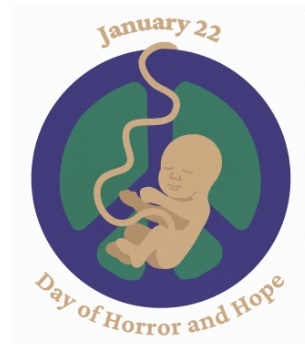
There’s an analogy with another January 22 event – the entry into force of the United Nations Treaty on the Prohibition of Nuclear Weapons in 2021. It helps tremendously that nuclear weapons are explicitly illegal, but it’s not had much impact on those countries that actually have nuclear weapons. The treaty wasn’t an end point. It allowed for more effective organizing.
In the same way, we know that while some states will move to protect unborn children, others will push for their destruction all the more. And even the states that do pass laws to protect the babies will need to be pushed to do more than merely prohibit killing them, but also to provide for the flourishing of mothers, fathers, and children. Providing for such human flourishing is both worthwhile on its own merits and also makes it less likely parents will arrange to kill the unborn children in a different U.S. state or by some hidden method.
And everywhere, we must keep educating about how using violence as a problem-solver on this or any other issue is usually counterproductive and always wrong.
For those wanting a review of issues surrounding our new situation, especially since you may be having more discussions with others as people have taken an interest, see:
Dobbs & Regulations
Reflections on the Alito Draft Leak of May 2, 2022 (several groups)
Should Abortions be Illegal? / Bill Samuel
Who the Law Targets / Rachel MacNair
My Ideas for Post-Roe Legislation / Rachel MacNair
What Studies Show: Impact of Abortion Regulations / Rachel MacNair
Social Programs to Help the Poor are Pro-life / Sarah Terzo
“The Daily Show” Doesn’t Do Its Homework / Rachel MacNair
Restorative Justice After Abortion | Rehumanize
Harms of Abortion
How Abortion is Useful for Rape Culture / Rachel MacNair
Abortion Facilitates Sex Abuse: Documentation / Rachel MacNair
The Message of “Never Rarely Sometimes Always”: Abortion Gets Sexual Predators Off the Hook / Rachel MacNair
Gendercide: Millions of “Missing” (Dead) Women
Abortion and Violence Against Pregnant Women / Martha Shuping, M.D.
The Myth of Sexual Autonomy / Julianne Wiley
Must We Resign Ourselves to Violence?
by Julia Smucker
Once while taking a graduate-level test in cultural anthropology, I had a revelation of sorts. In the class, we’d been discussing what’s revealed when different cultural values come into tension. The test essay question went something like, “What would the repeal of motorcycle helmet laws say about American cultural values, and how does this relate to issues like abortion and gun control?” Seeing these three examples in juxtaposition, I realized that the preservation of human life, essentially a universal value, was clashing with something else that often takes precedence over it in U.S. socio-political discourse – not without controversy, but strongly enough to compete, and often win, against life itself. That something, I realized, is individual autonomy.
The relatively innocuous case of motorcycle helmet laws points to the likelihood that a critical mass of Americans might prefer to endanger themselves – or at least to have the choice of endangering themselves – rather than be required to use a piece of protective equipment. More recently, this has been paralleled in the forceful resistance to precautions against Covid-19, which also has the effect of endangering others. The vigorous pushback that occurs in response to any suggestion of legal limits on guns or abortion has an even more insidious effect: facilitating the direct killing of human beings.

One common defense of the value of autonomy over that of preserving life relies on the premise that the taking of life is so inevitable that it’s useless to regulate. Criminals will find a way to obtain guns no matter what, the reasoning goes, so making it harder to get one will only make law-abiding people less safe because only the criminals will be armed. Or, others argue, women with unwanted pregnancies will find a way to obtain abortions no matter what, so making it harder to get one will only make them less safe because the abortions will be done by illicit and dangerous methods.
I see at least three problems with these arguments.
Problem 1 : Presumption of Unchangeability
The language used to talk about criminality often treats “criminal” and “law-abiding” as fixed, innate categories of human beings. The truth this dichotomy obscures is that nobody is inherently criminal. Anyone is capable of committing a crime or violent act, and anyone is capable of choosing not to. Similarly, generalized narratives about women seeking abortions often presume a universal need or desire for one, which can’t be altered by circumstance. In both cases, an unchangeable nature or an unchangeable necessity is presumed.
In reality, there’s always a conceivable possibility that different circumstances could help lead to different choices – on both the “supply” side (if there are barriers to access making violent choices harder) and the “demand” side (if certain underlying causes that may lead to violent choices are addressed before a situation gets to the point where violence is considered). In all issues, if we want to reduce violence, we should be doing everything in our power to make it less easy to kill, and easier to choose life over unnatural death in all circumstances.
Problem 2: All or Nothing
Some arguments against regulation set an impossibly absolute all-or-nothing standard on the effectiveness of any public policy measures meant to curb violence: they must be 100% effective at stopping every occurrence of the thing they’re meant to prevent, or else they’re useless.
Another related dichotomy presumes that legislative means of preventing violence must either be the only solution or have no part to play at all. But if we’re serious about preventing violence, we should be using every tool in the toolbox. No tool, legislative or otherwise, is likely to be 100% effective in preventing all violence. But there are tools, legislative and otherwise, that could prevent some violence. Wouldn’t any human lives saved from violent death or trauma be worth the effort to prevent such tragedies when we can? If not, what is it exactly that’s worth more?
Problem 3 : Same Reasoning, Flipped Sides
As explained above, both arguments use strikingly similar logic whether applied to legal limits on guns or legal limits on abortion. As someone who considers human life to be of higher value than individual autonomy no matter the issue, I answer in both cases that even if we can’t save all human beings from being victims or perpetrators of violence, we should be doing all we can to save as many as we can. But for those who weigh life and autonomy differently depending on the issue, the arguments undermine each other. If you argue that regulations on guns are useless unless 100% effective, how do you answer someone who argues the same thing about regulations on abortion, or vice-versa?
What pains me most in these debates is having them with people I agree with on other life-and-death issues. People see us defending life on one issue, and then just as vehemently defending some means of inflicting death, and they see hypocrisy. Sadly, they’re not wrong (even though some who call out such hypocrisy are blind to the same hypocrisy the other way). I can only answer that not all of us think that way. Giving credence to charges of pro-life or pro-peace hypocrisy only hurts the cause.
=================================
For a post on a similar topic, see:
Guns and Abortion: Extremists Resemble Each Other
For more of our similar posts from Julia Smucker, see:
Threats to the Unborn Beyond Abortion
The Price of Violence: When Dehumanizing the Vulnerable Hurts One’s Own Causes
What Does it Mean to be Inconsistent?
Buy the Time to Make Peace: Seeking a Cease-Fire in the Ukraine War
by John Whitehead
The Ukraine-Russia war recently passed its 100-day mark. In those 100 days, the war has killed huge numbers of people (precise numbers are unclear) and displaced millions. The war also still threatens to cause harm beyond Ukraine’s borders, whether through a broader conflict between Russia and the west or through an international food crisis. Yet as the fighting between Ukrainians and Russians moves towards a possible stalemate, an opportunity to stop the war might be appearing. Policymakers on both sides should seize such an opportunity.

To date, the Ukrainians have successfully prevented the Russians from seizing Ukraine’s capital, Kyiv, while inflicting what seem to be grievous casualties on the invaders. However, the Russians still have made slow but notable gains, occupying large areas of Ukraine’s eastern regions of Donetsk and Luhansk as well as part of the country’s southern coast. Ukrainian President Volodymyr Zelenskyy recently described the Russians as occupying about a fifth of his country.
Meanwhile, Russia is using its naval forces in the Black Sea to blockade Ukraine’s trade. This blockade has slowed the export of Ukrainian grain to other countries, raising the possibility of food crises in certain parts of the world.
African nations receive roughly 40 percent of their wheat from Russia and Ukraine. The blockade poses a threat to their food security. Macky Sall, the president of Senegal and also of the African Union, told Russian President Vladimir Putin that “our countries, even if they are far from the theatre [of action], are victims of this economic crisis.” Amin Awad, the United Nations’ crisis coordinator, has warned “Failure to open those ports will result in famine.”
The current situation is a bitterly tragic one. However, a possibility to end the fighting, even if temporarily, may be in sight. The major parties to the conflict may now be in a better position to pursue diplomacy leading to a cease-fire.
Zelenskyy and other Ukrainian policymakers have the same strong incentive to stop the fighting that they always did. A cease-fire means at least a temporary end to Ukrainian troops and civilians dying from Russian aggression and no Russian occupation of more Ukrainian territory. A cease-fire now would also stop the fighting with the Ukrainian government still in control of most of the country.
Putin and other Russian policymakers currently have their own incentive to stop the fighting. A cease-fire means at least a temporary end to Russian troops dying in what has proved a costly military adventure for Russia. Russian territorial gains, especially in eastern Ukraine, offer Putin the opportunity to declare a face-saving victory: Putin can claim that Russia has liberated the peoples of Donetsk and Luhansk (or at least most of them) or otherwise improved Russia’s position in the world.
Policymakers in the United States and other NATO members also currently have an incentive to stop the fighting. A cease-fire means at least a temporary end to the fighting with Ukraine still largely free of Russian occupation and without direct conflict between NATO and Russia. Western policymakers thus can achieve a face-saving victory of their own: they checked Russian aggression in Ukraine without falling into a wider war.
The world’s peoples also have an incentive to stop the fighting, the same incentive we have always had. A cease-fire means at least a temporary end to our fellow human beings dying in war and a diminished risk of the conflict escalating into World War III.
Despite these incentives for a cease-fire, I acknowledge that a cease-fire also has major disadvantages. As I have emphasized, a cease-fire is only a temporary end to the fighting. Without a larger political settlement, the fighting could begin again, whether because of renewed Russian aggression or for some other reason. The Russian invasion of Ukraine and accompanying Ukrainian civil war of 2014, for example, diminished but never truly ended, eventually flaring up again this year.
Also, a cease-fire does not address the larger injustice: Russia’s aggressive occupation of eastern and southern Ukraine and the various human rights violations committed by Russian forces. A far better resolution to the current war would be for all Russian forces to withdraw from Ukraine and for the Ukrainians to resolve their internal political conflicts without foreign military intervention.
While a more stable resolution to the conflict that restores Ukrainian independence would be preferable to freezing the conflict with a cease-fire, such a scenario might not be realistic at this stage. Continuing the war in the hopes that the Ukrainians will eventually push the Russians out of all their territory risks the many dangers that have loomed over the war from the start.

Consider some alternative scenarios for a continued war. Both sides might continue to fight, with neither one able to prevail, and the war will continue to grind up lives in a bloody stalemate. The Russians might gain the upper hand and occupy still more Ukrainian territory. The Ukrainians might gain the upper hand, causing the Russians to resort to some extreme escalation—in the worst-case scenario, the use of nuclear weapons. Any of these scenarios, or some other chain of events, might also lead to NATO intervention, with all the dangers that includes.
Despite its disadvantages, a cease-fire is preferable to many other alternatives. Seeking a cease-fire provides a stop, however temporary, to the fighting and also provides time for policymakers to negotiate. As Zelenskyy has commented, the war will “only definitively end through diplomacy.”
Italy has already proposed the outlines for a possible diplomatic resolution. The proposal includes a cease-fire, plans for a guarantee of both Ukrainian security and Ukraine’s neutrality toward NATO, talks about certain Russian-occupied regions of Ukraine receiving future autonomy within the country; and withdrawal of Russian troops in return for lifting of sanctions on Russia.
I admit to being skeptical about whether the different sides will agree to this proposed solution—Russian Foreign Minister Sergei Lavrov has spoken dismissively of it, and I don’t think other parties are willing to make the necessary concessions either. Still, at least some type of resolution may become possible with a cease-fire. Even if finding a political settlement takes years, a frozen conflict is better than a hot one.
Besides stopping the fighting, the other urgent problem that needs to be addressed is the possible food crisis caused by the Russian blockade. Ukraine and its western allies should consider a two-fold response to the blockade.
First, they should make an all-out push to bypass the blockade and transport Ukrainian grain to other countries or areas outside the blockade’s reach so they can be properly exported abroad. Efforts to ship Ukrainian grain out through Romania, Poland, and Germany are already underway. These and similar efforts should be accelerated. The United States has already invested considerable money and energy into providing Ukraine with weapons and other aid. Making a comparable investment of resources in getting Ukrainian food exports to those who need them should be a still greater priority.
Second, diplomats should pursue negotiations with the Russians (whether as part of larger talks to resolve the conflict or separately) to allow food exports through the blockade. Unpleasant though it may be, such negotiations might require some concessions to Russia. Perhaps lifting sanctions on Russian food exports—an approach recommended by President Sall—would be an appropriate offer in exchange for allowing Ukrainian food exports.
These are some of the steps policymakers and diplomats can take to check the Ukraine war’s violence. Ukrainians at the grassroots can also potentially make a contribution to achieving a just peace in this conflict.
Ukrainians in areas occupied by Russia might wish to consider pursuing a campaign of nonviolent resistance to the occupiers’ rule. The recent call by Vice Prime Minister Iryna Vereshchuk for teachers in the occupied territories to leave their jobs and for parents in those territories not to send their children to school reflects the basic idea of what such a campaign might look like.
Consistent noncooperation with the Russian occupiers may contribute to undermining their control of eastern Ukraine. Those living in the occupied territories must of course decide for themselves what is a prudent and appropriate path to take. Yet nonviolent resistance could prove a better, less bloody way of weakening Russian influence in Ukraine.
An end to the Ukraine war still seems far off. Also, even ending the war today cannot restore the lives already lost or undo the other harm caused. Moving the war closer to a peaceful resolution may be possible, though, and is well worth trying.
======================
For more of our posts on war policy, see:
Russia and Ukraine:
Not Your Pawns: A CLE Examination of the Russia-Ukraine Conflict
A Hidden Cost of the Ukraine War: How Russia’s Invasion Encourages the Spread of Nuclear Weapons
A Catastrophe Decades in the Making: The Russian Invasion of Ukraine
Untying the Knot of War: Seek Negotiation, Not Escalation in Ukraine
In general:
Would Nonviolence Work on the Nazis?
The Darkest Hour: “Glorifying” War?
The Civil War Conundrum, 150 Years Later
Seeing War’s Victims: The New York Times Investigation of Civilian Casualties in Iraq and Syria
In Defense of Detachment: The Different Approaches to Protecting Lives
by John Whitehead
A commitment to the consistent life ethic is a commitment to protect people’s lives against violence or other threats. This essential commitment is present among all varieties of consistent life advocates and their different approaches to the ethic.
Sometimes, though, consistent life advocacy can involve a more personal, concrete, and emotional type of commitment. People can be moved to protect life because they encounter a specific case of violence or suffering that is especially vivid. They might hear someone tell their story of being affected by violence or hear the story of a victim of violence recounted by someone else. They might see a photograph or watch a video showing an act of violence and its victims.
These presentations of specific people and how violence affects them are immensely important. They can put a human face on those killed or otherwise harmed by abortion, executions, suicide, war, or other forms of violence. They make the horror of violence apparent, free of euphemisms or other methods that distance people from violence’s reality. They can awaken empathy and motivate action.

For all their importance, these powerful presentations of violence and the emotions they evoke also have significant limitations. They provide motivation but not necessarily guidance. They can sometimes leave out or obscure certain types of violence and those threatened by it. Stories and depictions of violence can strengthen a larger consistent commitment to protecting people’s lives, but they are not identical to such a commitment.
Sometimes a commitment to protecting people from violence requires detachment. Sometimes consistent life advocates need to step back from presentations of specific victims and consider other factors, which may be more abstract and less emotionally gripping. When trying to protect life, distance can sometimes help.
What to Do?
Although they can take a variety of forms, presentations of victims of violence share a very obvious limitation. They can show us the reality of an injustice and make us want to do something about it, but they don’t tell us what to do. Finding a prudent and just way of protecting lives from abortion, the death penalty, war, and other forms of violence may require taking a broader, more dispassionate look at these issues.
This limitation becomes especially apparent if we consider that people on the other sides of these issues can also invoke presentations of violence to support their positions. Consistent life advocates can point to pictures or stories of the children killed by abortion and the women harmed by it; but advocates of abortion access can point to their own presentations of women killed by illegal abortions or life-threatening pregnancies. Consistent life advocates can provide examples of the horrors of execution or other aspects of legal punishment; but advocates of a more punitive type of law enforcement can provide examples of the horrors of violent crime. Consistent lifers can invoke the many victims of waging war; but hawks can invoke the victims of tyranny or aggression who allegedly will be saved by waging war. And so on.
Opposing presentations of violence and its victims can end up cancelling each other out. Resolving different views on these issues and identifying an effective response to violence often requires analyzing larger questions that specific human stories cannot address.
A Tilted Playing Field?
Presentations of violence’s victims has another, perhaps less obvious, limitation: an emphasis on specific cases of people harmed by violence tends to favor certain victims of violence over others. Not everyone harmed or threatened by violence has an equal opportunity to have their situations recognized.
Sometimes distance plays a role. People are more likely to see and hear about acts and victims of violence in their own country than victims of violence in other countries. Victims of war are thus often at a disadvantage compared to victims of violence closer to home.
Also, not all victims of war receive equal attention: in the United States, for example, Russia’s invasion of Ukraine received more air time on network newscasts during a single month (March 2022) than the Syrian Civil War received in all 2012, its year of highest network news coverage. The brutal war in Yemen received less network attention in roughly the first five years it was waged than the Ukraine war received in March of this year.

Sometimes the nature of the victim plays a role. People who can tell their own stories of being threatened or harmed by violence, or who have family and friends to tell their stories, are more likely to be recognized than those who cannot. One group of victims obscured as a result are victims of abortion, as children in the womb by definition cannot speak for themselves and never had people who knew them in the same way as already-born victims of violence did. This same situation presents an obstacle in defending the rights of animals, another cause important to many consistent life ethic advocates. While many people with disabilities are very eloquent self-advocates, some people with certain disabilities may not be able to tell their own stories and advocate for themselves.
Sometimes scale plays a role. As many have noted, violence becomes less emotionally affecting as the number of victims increases. If violence claims a relatively small number of lives, the victims’ names and photos can be seen and remembered. If violence claims thousands or tens of thousands or millions of lives, the victims quickly become an abstraction. An emphasis on representing specific victims of violence may paradoxically obscure the violence that claims the greatest number of victims.
Sometimes the nature of the violence plays a role. Arguably the greatest threat to human lives today is nuclear war, which would kill untold millions and possibly wipe out humanity. Yet this colossal threat is also a somewhat shadowy one, since, as long as it’s a concern for consistent life advocates, the threat must always remain a hypothetical and future one. If nuclear war ever becomes real and vivid, it will be quite definitively too late to do anything about it. Opponents of nuclear war can tell the stories of those harmed by specific instances of nuclear weapons’ use (Hiroshima and Nagasaki, nuclear testing), but most of the victims they are concerned with must always (we hope) be only potential victims.
The Value of Different Approaches
In summary, stories and other representations of specific victims of violence are vital tools in protecting life against threats. Such representations are not the only tools, however, and they may not always be the most useful tools. Consistent life ethic advocacy can also benefit from taking a broader, more abstract view of violence and its victims. A certain degree of detachment can coexist with, and sometimes strengthen, the commitment to protecting people’s lives that is at the heart of the consistent life ethic.
==============================
For more of our posts with philosophical takes on the consistent life ethic, see:
The Price of Violence: When Dehumanizing the Vulnerable Hurts One’s Own Causes
Specialization or Generalization? The Many Ways of Following the Consistent Life Ethic
“Is One Life Issue More Important Than the Rest?”: A Question That Might Not Need an Answer
More than Double the Trouble: Another Way of Connecting [intersectionality]
My Ideas for Post-Roe Legislation
by Rachel MacNair
Now that Roe’s overturn looks like a real possibility, I want to suggest some ideas for legislation. When the Biden administration started, I wrote My Ideas for 2021 Legislation, detailing what I would advise if I were asked, knowing I wouldn’t be asked. I still hold to ratifying the United Nations Treaty on the Prohibition of Nuclear Weapons (TPNW) and the International Covenant on Civil and Political Rights to abolish the death penalty, along with a whole host of legislation to prevent killing.
Here I’m going to focus entirely on abortion in what we hope will be a post-Roe world – state and federal legislation. As usual, these are my own thoughts, not official positions of the Consistent Life Network.
Point 1: Taking Care of Everybody
Several things should have been done all along that, in addition to their own merits, work as abortion prevention – whether abortion’s legal or not. But the idea that states banning abortion have all the more responsibility to pass these has come up in several media spots. For those states insisting on keeping abortion legal, these are some of the things that will be all the more important.
 All programs that effectively reduce rape, domestic violence, and sex trafficking should get very, very high priority.
Henry Hyde made a good pro-life case for parental leave; see Paid Family and Medical Leave for the speech and more. The parental leave bill passed, but it’s unpaid, making it unworkable for many.
Raising the minimum wage, by reducing poverty, reduces abortion.
Bolstering Community Health Centers in general – and especially in the vicinity of Planned Parenthood centers that don’t have any nearby – will bring greater access to health care. Even a gridlocked Congress may be able to do this, because both Republicans and Democrats support Community Health Centers. It’s already in the CHC’s legal definition that they don’t do abortions.
The idea of a child allowance was originally proposed to be done through Social Security, but ended up as an expanded tax credit. It was wildly successful in reducing childhood poverty. But then it ended. My opinion is that Social Security payments make a better fit: being a parent is work, and work we need people to do. Sharing in the cost of that makes as much sense as sharing for people with disabilities and retirees. Social security might be more permanent than a tax credit.
One year the National Right to Life Committee and the National Organization for Women had their national conventions in Denver on the same weekend, so I went to major chunks of both. One button popular in both: “Every mother is a working mother.”
There should never family caps on any kind of poverty-relief payments; those have been shown to increase abortions.
Increasing affordable child care options.
Increasing access to affordable housing.
Finding better solutions to crime that don’t involve mass incarceration, which can break up families and other support systems for children. Cash bail for those safe enough to be let out can threaten jobs and make pregnancy harder. The exception to the abolition of slavery for those convicted of a crime encourages mistreatment of prisoners.
We need to find ways to make the Hyde amendment permanent. The Hyde Amendment bars federal Medicaid dollars from paying for most abortions. It’s a rider every year. It’s a life-saving measure, as shown in studies. It’s helpful to low-income women, since it removes some of the pressures to abort. Democrats have recently made its passage much more precarious than it used to be.
Anything that helps with access to health care: expanding Medicaid, the Children’s Health Insurance Program (CHIP) or any other method that works.
Point 2: A Horse Trade
I propose a bill that would expand Medicare to cover everyone from conception up to age 18, plus all obstetric care for pregnancies, plus include that the Hyde amendment is permanent and covers all federal programs.
Why Medicare? Because an age-based set of benefits is already established and doesn’t mark the recipient as poor. It has a better reputation with doctors, is more stable, and doesn’t rely on state governments who cut Medicaid.
Children as a whole aren’t the most expensive health care group. Medicaid and CHIP dollars could go into the Medicare budget to cover the same people. Medicare already covers children with disabilities (although that could be better done), so the most expensive children are already in the budget.
For Republicans, having the Hyde amendment permanent, and having conception be the beginning point – would that be so very valuable as to let them swallow their aversion to expanding Medicare?
For Democrats, having a substantial expansion of Medicare – would that be so very valuable as to let them swallow their aversion to the Hyde amendment?
Actually, I doubt it. I fear this is fantasy; positions are so entrenched. But if either one of the parties did decide to propose it, it would surely put the party in a spot, wouldn’t it?
In the meantime, those who follow Catholic and Mennonite doctrine, a large hunk of evangelicals, and us pro-life feminists and consistent lifers would all regard it as a win-win. We like both parts of the deal and wouldn’t regard it as a horse trade at all.
Point 3: Laws Directly on Abortion
Comedian Stephen Colbert noted (at 3:13-3:34) Texas Attorney General Ken Paxton’s remark, “We can’t stop bad people from doing bad things. They’re going to violate murder laws, they’re not going to follow gun laws. I never understood that argument.” Colbert responded, “I’ve got to say – ‘Laws are pointless’ is a bold position for the attorney general.” Having heard arguments recently that laws against abortion won’t stop all abortions, I apply the same point: for both guns and abortions, laws won’t stop the problem entirely, but they’ll have a substantial impact, and that’s life-saving. You don’t avoid saving some lives just because you can’t save them all.
I’ve written on the effectiveness of parental involvement for abortions on minors, as well as what studies show about various kinds of abortion laws on the books.
Suggestions we’ve already made for referendums can also apply to legislation, once allowed:
 On stopping late-term abortions, where the best public support is: cast the proposal not in terms of restriction, but protection – it gets the same result, but frames it better. And it will be far more effective and persuasive if other protections of late-term babies are added. Say, health coverage and other supports for the mother, the unborn child, and for children born with disabilities. (We have a list of possibilities and would like to add to it if anyone has suggestions.)
Conscientious objection on state tax dollars could apply to both abortion and the death penalty, and military-related expenditures where that’s in state budgets.
Meanwhile, what’s the impact of laws that ban abortion outright, or after heartbeat detection? We all know women will travel to other states eager to receive them. But there’s a continuum of how much women actually want to do this:

Those who are being pressured or are unsure obviously benefit from having the ready availability of abortion removed. Those who only need a small obstacle or information on alternatives will mostly make their way to birth just fine.
Sidewalk counselors find a steady stream of such women in the most unlikely of places – namely, walking into the facility with an abortion appointment. There are far more such women elsewhere.
When the media report an upsurge of women trying to get appointments in neighboring states, they don’t notice those are only the women on one extreme of the continuum. Pro-lifers encounter women on the other parts all the time.
Also, couples will take more care about getting pregnant when getting un-pregnant is so hard. More women won’t get themselves on that continuum.
In any event, the major impact of abortion-banning legislation will be to close abortion facilities, or the abortion-performing part of some medical clinics. Shutting down the assembly lines of current abortion practice will have a major impact on abortion numbers.
We don’t have to do draconian things to make sure each and every abortion doesn’t happen. Numbers will drop precipitously (they already have in Texas) simply with the passage of the law alone.
At which point, all the things mentioned in Point 1 above, along with more prenatal justice education, become all the more crucial.
================================
For more of our posts on similar topics, see:
Why the Hyde Amendment Helps Low-Income Women
Removing Health Care Access is an Act of Violence
Racism Kills: Several Perspectives
Quotations compiled in PowerPoint by Rachel MacNair
Feel free to copy and paste any you find suitable in your social media.

Keeping You & Your Kids Sexually Pure , p. 86

The Poor Cry Out for Justice, and We Respond with Legalized Abortion

“Is It Too Late?” 1971 Speech of Fannie Lou Hamer


“Why an Heiress Spent Her Fortune Trying to Keep Immigrants Out”, The New York Times


========================
For more of our posts on racism, see:
Historical Black Voices: Racism Kills
Voices on Police Brutality in the Aftermath of the Murder of George Floyd
Police Brutality to the Preborn
“The Affairs of a Handful of Natives”: Nuclear Testing and Racism
Movies with Racism Themes: “Gosnell” and “The Hate U Give”
Reflections on the Alito Draft Leak of May 2, 2022
The May 2 article in Politico has caused quite a stir: a leaked February 10 draft of a proposed opinion in Dobbs v. Jackson. The draft says that “Roe was egregiously wrong from the start,” and explicitly overturns Roe v. Wade and Casey. Here we offer a variety of responses.
The Work Ahead
Excerpt from Statement of Democrats for Life of America, a CLN member group
Kristen Day, Executive Director
 The Court clearly made a mistake 50 years ago when it took away these decisions from the people, and now we as a nation are so polarized that we forget that there are real people involved. This should not be about the next election. This should be about women, their families, and their children.
Many states have chosen to eliminate health and safety regulations governing abortion in response to the possibility that the Supreme Court might overturn Roe. They have voted to allow non-doctors to perform abortions on women. They have lowered their regulatory oversight of chemical abortions. Mail-order abortion pills have inflicted significant trauma on many women who used them and even sent them to emergency rooms.
On the other side of the spectrum, we have states limiting abortion from 6 weeks to 20 weeks. Still, some of those states lack the infrastructure to connect pregnant women with available resources to help them stay in school, continue their careers or have essential resources to support their growing families. More needs to be done in this regard.
Excerpt from Statement of Feminists for Life of America, a CLN member group
Serrin Foster, President
 Our goal . . . is to make abortion unthinkable. And for us, it means helping women achieve what they really deserve: practical resources and support to support nonviolent choices.
Angry voices are masking so much pain. Efforts by big corporations to pay employees to travel to “abortion destination states” will only create a new generation of women who mourn or mask their pain.
And using poor women and women of color to defend abortion is unacceptable. Nothing is more racist than abortion. Their children are just as precious as any other.
Economic justice does not come from women laying their bodies down for brutal procedures or taking a series of poisonous pills to accommodate unsupportive administrators, bosses, or partners.
On the Streets
Excerpt from Response from Rehumanize International, a CLN member group
Herb Geraghty, Executive Director
Since the news broke, our team has been a presence outside the court nearly nonstop — staying out until past 2 AM and heading back at 8 AM the next morning. As a result, our secular, nonpartisan, and consistently pro-life message has been shared by media to millions of viewers. In this moment it is more critical than ever that our paradigm-shifting ideas are heard far and wide . . .
At many points, our small group were the only pro-life voices present outside the court — that means if we weren’t there, the media would only be able to report on the desperate talking points of the profit-hungry abortion industrial complex. The Supreme Court’s decision is not yet final — and the pro-abortion movement is working very hard to manufacture enough public pressure on key justices to intimidate them into changing their minds.
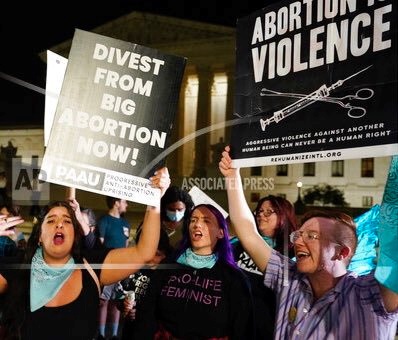
We must not allow the abortion industrial complex to take control of the narrative. We must use this time to lend our voices to the cause of justice for the unborn.
This witness has not been easy. We have faced more violence from pro-abortion protesters outside the court than ever before. I have been intentionally elbowed, pushed, shoved, hit on the head with signs, and had water thrown at me. I have had multiple signs ripped out of my hands and ripped up in front of my face or thrown far away into a crowd. I have seen my fellow activists punched, slammed in the head with megaphones, pulled to the ground, and even groped. Of course, as always, we have responded with nothing but nonviolence and de-escalation tactics.
Protection
Blog post – After Roe: A World beyond Abortion?
Aimee Murphy, Rehumanize International founder
 We must create a new, human-centered paradigm for criminal justice after the offense of abortion, and of a life-affirming reproductive justice to prevent abortion.
I encourage my pro-life friends and colleagues to share a bold proposal for holistic, human-centered restorative justice after abortion with their communities, legislators, and leaders. Punitive, dehumanizing, and vengeful justice within our current retributive model is incongruous with human dignity. As pro-lifers we should understand that our retributive justice system — which only compounds and multiplies trauma and harm — can never be a human-centered, healing response to the communal pain and trauma of abortion. Instead, we need to see holistic, comprehensive community-based care for pregnant people, their prenatal children, and their families. Let’s build a world beyond abortion: protect the preborn in the law, and ensure families have the food, housing, childcare, healthcare, living wage, and paid leave to choose life and parent confidently.
I support restorative justice after abortion. I want to see healing for all who have suffered at the hands of the abortion industrial complex and their dehumanizing lies. I want to see healing for those who have chosen abortion and suffered the loss of their own child, or for those who mourn lost siblings, cousins, or other family members. I want to see healing for the clinic workers, the abortionists, and the corporations who participated in abortions, who should be given the space to come to terms with their complicity and openly grieve the children killed and missing today due to the violence of abortion. I want to see a justice system that acknowledges the loss of countless preborn children, helps offenders make restitution for the harm done, and more than anything that works together with families and communities to heal and make abortion unthinkable by providing the resources that will end the “demand” for this violent procedure.
Kevin D. Williamson
National Review, May 5, 2022
Kevin is not a consistent-lifer, but makes good points here. National Review accounts itself conservative in the William F. Buckley tradition.
The desire to punish is distinct from the desire to protect — it is rooted in an entirely different psychology and it produces very different policy prescriptions. If, as seems likely, Roe v. Wade is vacated and the matter of abortion regulation is properly returned to the state legislatures, we should be mindful of that difference and emphasize protection over punishment when crafting our statutes . . .
As I often observe, we Americans are not the Swiss — or even the Germans or the Dutch. We are not an especially ruly or easily governed people, as witnessed by our unusually high homicide rates . . . So it is unlikely that we will achieve 100 percent compliance with any abortion prohibitions we enact.
. . . even if we assume that every single one of the abortions that happen in the United States in a typical year (estimates vary, but probably around 850,000) would otherwise result in a pregnancy subsidized by Medicaid or another government program, this would not add up to a great deal of money — probably less than half a day’s worth of Social Security spending. If additional support for vulnerable mothers is required, then that is a bearable cost. As with practically every other welfare initiative, our problem there is going to be program design and administration, not resources.
Where There’s Value to the Leak
Excerpt from There’s an upside to the Alito draft leak
Mercatornet, May 6, 2022
Richard Stith, CLN Board member
 The leak of Justice Alito’s draft of the majority decision in Dobbs v. Jackson Women’s Health Organization, unfortunate as it may be, should not delegitimate the US Supreme Court.
If a snarky, plotting, election-related draft had been revealed, that would have truly delegitimated the court. But in the draft one only finds very solid scholarship . . .
Why should close reading, historical insight and an abundance of footnotes delegitimate the Court?
As a pro-life writer, I actually was a bit disappointed in the draft’s content. It contains no mention of the horror of abortion . . . it doesn’t mention any of the arguments that abortion hurts women . . .
[T]he leak has a silver lining. People will read through the draft opinion with greater care than they would ordinarily lavish on an actual Supreme Court opinion, where only the final result matters . . . And people find it plain exciting to read stuff that’s supposed to be secret.
Here is some evidence for my silver lining. The Washington Post yesterday published an annotated albeit somewhat simplified version of the text. I thought that both the abridgment and the textual comments were remarkably fair-minded, really devoted only to explicating Alito’s reasoning, not to unfairly debunking it.
Others are no doubt doing what the Washington Post did. This will soften support for Roe. If more and more people learn what an unfounded opinion it was, they will have less reverence for it . . .
But maybe advance titillation is slightly better than a done-and-dusted announcement in June.
And More

If Roe Is Overturned, Where Should the Pro-Life Movement Go Next? – in this New York Times article, Tish Harrison Warren does another excellent roundup of several viewpoints.

The Price of Roe – our website showing how Roe has sabotaged peace and justice and equality goals.
Our blog posts:
What Studies Show: Impact of Abortion Regulations
“The Daily Show” Doesn’t Do Its Homework
Abortion Facilitates Sex Abuse: Documentation
How Abortion is Useful for Rape Culture
Why the Hyde Amendment Helps Low-Income Women
The Poor Cry Out for Justice, and We Respond with Legalized Abortion
Threats to the Unborn Beyond Abortion
by Julia Smucker
The primary focus of pro-life advocacy (as conventionally understood in reference to the defense of prenatal human lives) is on opposing abortion – and rightly so, since the legalized killing of the unborn claims thousands of lives daily and is at the root of their dehumanization. Consistent life ethicists, while advocating strongly against abortion, also apply the term “pro-life” to the entire natural lifespan – again rightly so, reflecting the principle that all human life is inherently valuable and worthy of protection. Additionally, applying pro-life principles consistently means expanding our concern for the unborn to include all circumstances that endanger them, even when abortion isn’t considered, of which there are all too many.
Lack of Adequate Nutrition and Health Care

Julia Smucker
As an interpreter, I regularly encounter immigrant families starting new life chapters in the U.S., many of whom are refugees or asylum-seekers. When these families expand, so does their need for care, including essential prenatal checks and sometimes nutritional services such as WIC. Of course, immigrant families are far from the only people needing these services, but that’s the context in which I observe them. When I do, I’m often struck by the thought that, without even mentioning abortion, these service providers’ work could hardly be more pro-life. The very purpose of programs like WIC is to ensure born and unborn children get the nutrition they need at vital stages of development. Seeing these services in action brings home to me how essential they are from a pro-life perspective: when mothers are at risk of food insecurity during or after pregnancy, their developing children become even more at risk.
Maternal Stress
The negative health effects of poverty are easily passed from mother to child, not only directly by undernourishment, but also through the effects of stress on the body. Research has increasingly shown how toxic stress, which happens when stress hormones are released constantly over time, affects fetal development when those stress hormones are passed from mother to baby through the bloodstream. A 2019 documentary focused this research on poverty-related stresses to explain how they can “essentially handicap a baby for life literally before birth.” On a more hopeful note, the research also indicates “that the imprint of poverty and its toxic stressors can actually be reversed — just by making some radical shifts in prenatal care for poor moms, through programs that provide consistent, empathic one-on-one coaching with the mother while she is pregnant, and continuing through early childhood.”

Numerous studies focusing on race-related stress have come to similar conclusions, finding correlations between day-to-day experiences of racial prejudice and consistently high levels of stress hormones in the body, leading to multiple health risks that can be passed on to babies in the womb. Some studies have linked the stress caused by lifelong experiences of racial prejudice to low birth weight in babies. Others have found that, across multiple levels of education and financial status, Black women are disproportionately at risk of preterm labor and/or losing their babies within the first year after birth.
Police Brutality

Julia Smucker at
a protest of police brutality
A more immediate threat to life occurs with direct incidents of racialized violence. In 2020, Sarah Terzo compiled several news reports of such violence against pregnant Black women by police – which of course also gravely endangered their unborn children. Two of the five incidents Terzo cites involve Black women giving birth prematurely after experiencing excessive force at the hands of police officers. In the other three incidents, in which pregnant Black women were beaten or kicked, their babies died. All the above incidents, as reported, easily fit the categories of police brutality and excessive force; in most of them, the women who experienced the violence weren’t charged with any crimes. Even when a crime has been committed, it would be impossible for an unborn child to bear any responsibility for it. Therefore any use of police force that knowingly endangers an unborn child is reckless at best.
War
The world recently watched in horror as Russia’s military bombed a maternity hospital in Mariupol, Ukraine, killing at least one pregnant mother and baby. This was an especially egregious example of the callous disregard for vulnerable human lives that occurs in war, but sadly, it’s not as anomalous as some might think. In fact, Rehumanize International author Samuel Parker noticed parallels between the Mariupol hospital bombing and a 2015 U.S. airstrike on a trauma hospital run by Doctors Without Borders in Kunduz, Afghanistan.

Just as it would be naïve to assume the only people harmed in war are armed combatants, it would be naïve to assume unborn children aren’t among the innocent victims of war too frequently dismissed as “collateral damage.” As the nonprofit Fields of Peace noted in a recent statement, “Today’s wars are fought in cities – the bombing of neighborhoods, apartments, schools, and hospitals. In modern war, for every one combatant killed, nine civilians are killed, the majority of them children…. War has become primarily the killing of children.”
Exposure to Toxins
Risks to babies in the womb from alcohol and other substances are well-established, and their avoidance during pregnancy is routinely advised. Developing babies may be exposed to harmful substances in additional ways, including the types of direct violence described above. Some evidence has suggested that tear gas – used in international conflict and by hypermilitarized police forces against protestors in multiple countries, including the U.S. – may be linked to miscarriages.

Another culprit: corporate carelessness with pollutants. To name one example, the 2019 film Dark Waters (summarized here) was based on the true story of a corporate lawyer who chose to represent his grandmother’s community, whose water supply was tainted by a company’s production of a chemical compound found to cause health problems in cows and humans – including birth defects. Multiple studies have also linked serious and sometimes life-threatening birth defects to air pollution.
Domestic Violence
A 2017 court battle in which an undocumented teenager sought and obtained an abortion was tragic on multiple levels. Among the several tragedies compounding the situation was the fact that the girl’s parents had previously forced her sister to miscarry – a grossly abusive act that not only killed one child but also contributed to the killing of another.
That domestic violence increases the risk of miscarriage, along with other health risks for mothers and babies who do survive to term, is well documented. This is a sadly global problem, borne out by studies in various countries including Egypt, Bangladesh, the U.S., New Zealand, Turkey, India, and Ethiopia.
Gun Violence
When interpersonal violence involves a deadly weapon, the situation becomes even more dangerous. And in a country with more civilian-owned guns than people, reports of shootings of pregnant women are shockingly numerous, whether by current or former partners, as innocent bystanders, or in unknown circumstances. Even if a pregnant woman is fatally shot in an altercation for which she may bear some responsibility, her death is still needless and tragic, and her baby is certainly blameless.
Mistreatment of Pregnant Inmates & Detainees
Babies of incarcerated mothers have similarly committed no crime, yet it’s their lives that are most endangered when their mothers are mistreated or neglected. In the worst cases, babies have died after being born prematurely in prisons or jails where they and their mothers were denied urgent medical care.
Similarly dangerous conditions have been reported for pregnant women in immigration custody, whose babies are innocent regardless of whether their parents have broken any laws. A fact sheet by Physicians for Human Rights reported multiple cases of severe neglect of detained women with pregnancy complications, and a total of 28 miscarriages experienced in ICE custody, between 2016 and 2018. Fortunately, more recent ICE policy imposed stricter limits on detention of pregnant and postpartum women, although the same limits don’t apply to Customs and Border Protection.

Conclusion
To be sure, abortion is the most direct attack on the lives of prenatal humans. Still, the examples above show that even if one focuses solely on protecting unborn lives, a purely single-issue focus only on opposing abortion is inadequate to the task. If we’re truly motivated by concern for the well-being of the unborn, this should naturally lead us to oppose any threats to them – and to their mothers – wherever such threats occur.
On the other side of the same coin, there’s a revealingly uncontroversial concern that arises instinctively in response to actual or potential harm to babies in the womb when it occurs outside the abortion debate – including among those who don’t take a strong position on abortion or even some who identify as pro-choice. If unborn children are so easily recognized as vulnerable human beings worthy of protection in those contexts, why should they be considered any less human or less worthy of life when their lives are deliberately and directly taken in medical settings?
Concern for the unborn, then, cannot exclude any injustices that endanger them. And concern for those made vulnerable by injustice cannot exclude the unborn.
=========================
For more of our posts from Julia Smucker, see:
The Price of Violence: When Dehumanizing the Vulnerable Hurts One’s Own Causes
What Does it Mean to be Inconsistent?
Is Abortion Different from Other Violence?
To Know a Person is to Recognize a Human
A Healing Metaphor: Pandemic as War
Defining Reproductive Justice: An Encounter
My Christian CLE Perspective: Absolute Nonviolence Across the Issues